The art of barbering is a craft that blends precision, creativity, and technical skill. Behind every sharp fade, clean lineup, and perfectly styled haircut is a professional armed with a specific set of high-quality tools. While passion and practice are essential, the equipment a barber uses has a direct impact on the quality of their work and the efficiency of their service. Investing in the right tools is not just about making the job easier; it is about delivering consistent, top-tier results that keep clients coming back.
From the hum of a powerful clipper to the whisper-quiet slice of a finishing shear, each tool in a barber’s kit has a distinct purpose. A well-curated collection allows a barber to tackle any hair type, texture, or style request with confidence. For those aspiring to enter the profession or for seasoned barbers looking to upgrade their arsenal, understanding the function and importance of each tool is fundamental. This guide details ten must-have tools that form the foundation of any successful barbering career, enabling professionals to execute their craft at the highest level.
1. High-Quality Electric Clippers
The electric clipper is the workhorse of the modern barbershop, responsible for removing bulk hair, creating fades, and executing buzz cuts. A professional barber needs a reliable, powerful, and versatile clipper that can handle hours of continuous use without overheating or losing power. There are two main types: corded and cordless. Corded clippers are known for their consistent power and are ideal for heavy-duty work, ensuring there is no drop in performance during a busy day. Cordless clippers offer unparalleled freedom of movement, allowing for better angles and easier maneuverability around the client’s head without the cord getting in the way.
Investing in a high-quality clipper from a reputable brand is non-negotiable. Premium clippers feature durable motors, sharp blades that can be zero-gapped for close cutting, and ergonomic designs that reduce hand fatigue. Many professionals own both a corded and a cordless model to get the best of both worlds. The clipper is the tool used most frequently throughout the day, so its reliability directly affects a barber’s ability to create clean, smooth blends. A cheap clipper will snag hair, run inconsistently, and ultimately produce subpar results that reflect poorly on the barber’s skill.
2. Professional Trimmers (Outliners)
While clippers handle the bulk of the haircut, trimmers—also known as outliners or edgers—are all about the fine details. These smaller tools are used for creating sharp lines around the hairline, neck, and beard. They are essential for achieving the crisp edges that define a professional-quality haircut. A good trimmer has a very fine, sharp T-blade that allows the barber to get extremely close to the skin, creating clean lines and intricate designs. The precision of the trimmer is what transforms a good haircut into a great one. Any top-tier Barbershop in New York will have a barber whose trimmer work is impeccable.
Like clippers, trimmers come in corded and cordless varieties. Cordless trimmers are overwhelmingly popular because the freedom of movement is critical for detailed work. When creating a sharp lineup, a barber needs to be able to twist and turn the tool without a cord interfering with their line of sight. Professional trimmers are often zero-gapped, meaning the blades are adjusted to cut as closely as possible without breaking the skin. This tool is what barbers rely on for the finishing touches that make a client look in the mirror and say “wow.” Without a quality trimmer, achieving that photo-finish look is nearly impossible.
3. A Set of Professional Shears
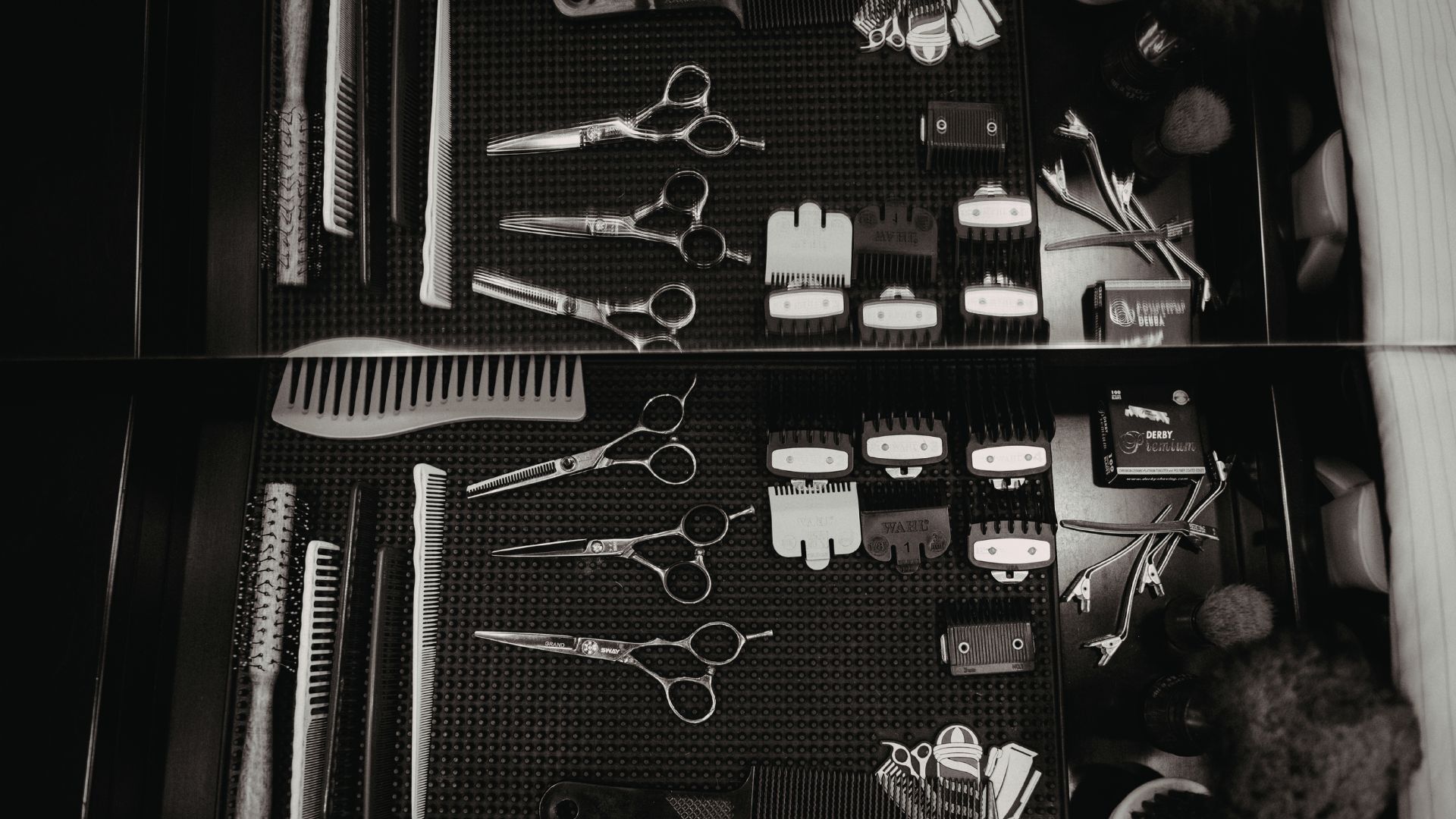
Barbering is not just about using clippers; the art of scissor work is equally important. A quality set of shears (scissors) is essential for cutting longer hair on top, texturizing, and blending. Shears come in various lengths, typically ranging from 5.5 to 7 inches. Longer shears are great for scissor-over-comb techniques, allowing a barber to cut a larger section of hair with each pass. Shorter shears provide more control for detailed point cutting and working around the ears. Most barbers own several pairs of different lengths to suit different tasks.
The material and craftsmanship of the shears are critical. High-quality shears are typically made from Japanese or German steel, which holds a razor-sharp edge for a long time. They should feel balanced and comfortable in the hand to prevent strain during a long day of cutting. In addition to standard cutting shears, thinning or blending shears are also essential. These have teeth on one or both blades and are used to remove bulk from thick hair or to soften lines between different sections. Mastering the use of shears is a hallmark of a well-rounded barber who can handle any hairstyle, not just short fades.
4. Straight Razor and Blades
The straight razor is an iconic symbol of traditional barbering, and its importance has not diminished. It is used for providing close shaves, lining up beards and hairlines with ultimate precision, and adding a clean finish to the back of the neck. There are two main types used today: the traditional straight razor, which is a single piece of steel that must be stropped and honed, and the shavette-style razor, which uses disposable blades. Most modern barbers prefer the shavette for hygiene reasons, as a fresh blade can be used for every client, eliminating any risk of cross-contamination.
Using a straight razor requires a steady hand, skill, and an understanding of skin types and hair growth patterns. It provides a level of sharpness and closeness that no other tool can replicate. Beyond the haircut itself, offering a hot towel straight razor shave is a luxury service that sets a barbershop apart. It is a relaxing, pampering experience that clients are willing to pay a premium for. This service is not just about hair removal; it is also about providing a high-end grooming experience. A straight razor, along with other Must-Have Products like quality shaving cream and aftershave, elevates a barber from a simple hair cutter to a master groomer.
5. A Variety of Combs and Brushes
Combs and brushes are fundamental tools that are used in every single service a barber provides. A barber needs a wide assortment to handle different tasks effectively. A cutting comb, which has both fine and wide teeth, is the standard for sectioning hair and for scissor-over-comb work. A fade brush, with its soft bristles, is used to brush away loose hairs while fading, allowing the barber to see their work clearly and ensure a smooth blend. A clipper comb is thicker and wider, designed specifically to be used as a guide for clippers when cutting longer lengths on top.
In addition to combs used during the cut, styling brushes are also necessary. A vent brush is great for quick blow-drying and creating basic shapes, while a round brush is essential for adding volume, creating waves, or styling a pompadour. A paddle brush can be used to smooth long hair. Each brush interacts with the hair and the heat from a blow dryer differently, so having the right one for the desired style is crucial. These simple tools are the unsung heroes of the barber station, playing a vital role in sectioning, blending, and finishing every haircut.
6. A Powerful Blow Dryer
A blow dryer is much more than a tool for drying hair; it is a styling tool that provides volume, direction, and shape. A professional-grade blow dryer is essential for any barber who wants to offer modern hairstyles like quiffs, pompadours, or textured sweeps. A quality dryer should have multiple heat and speed settings to adapt to different hair types and styles. High heat is used to shape the hair, while a “cool shot” button helps to lock the style in place. Ionic technology is another feature to look for, as it helps to reduce frizz and drying time.
The blow dryer is particularly useful for controlling unruly hair or shaping hair that has difficult growth patterns. For clients with Receding Hairlines, a barber can use a blow dryer to add volume to the front and create an illusion of fullness. By directing the hair forward or upward, the focus is drawn away from the temple area. Without a blow dryer, a barber is limited to styles that lay flat. By mastering heat styling, a barber can unlock a whole new range of services and provide clients with a polished, salon-quality finish that they cannot easily replicate at home.
7. Disinfectants and Sanitizing Jars
Hygiene is the most critical aspect of professional barbering. Clients place their trust in their barber to provide a clean and safe service. Disinfectants and sanitizing jars are non-negotiable tools for ensuring that every piece of equipment is properly sanitized between clients. A hospital-grade, EPA-approved disinfectant solution, commonly known as barbicide, is the industry standard. This solution kills bacteria, viruses, and fungi, preventing the spread of infections. All non-porous tools, such as combs, shears, and clipper guards, should be fully immersed in this solution for the recommended amount of time.
A visible sanitizing jar on the station, with combs and shears soaking in the bright blue liquid, is a powerful signal to clients that the barber takes their health and safety seriously. In addition to immersion, clipper blades and other metal tools should be sprayed with a disinfectant spray. Surfaces, chairs, and capes also need to be cleaned and sanitized regularly. Proper sanitation is not just a best practice; it is required by state board regulations. Failing to maintain a hygienic workspace can lead to fines, license suspension, and a complete loss of client trust.
8. A Comfortable Barber Chair
The barber chair is the centerpiece of the barbershop and has a huge impact on both the client’s comfort and the barber’s ability to work effectively. A good barber chair is a significant investment, but it is one that pays off in the long run. The chair should be comfortable for the client to sit in for the duration of the service, which can sometimes be over an hour for a cut and shave. It needs to be adjustable, allowing the barber to raise, lower, and recline the client to the perfect height and angle for whatever they are working on. A top-tier Barber in New York knows that the client experience begins with a comfortable chair.
From the barber’s perspective, a chair with a reliable hydraulic pump is crucial for preventing back and shoulder strain. Being able to easily adjust the client’s height means the barber can maintain good posture throughout the day, reducing fatigue and the risk of long-term injury. A chair that swivels smoothly allows the barber to access all sides of the client’s head without awkward reaching. The chair is more than just a piece of furniture; it is an ergonomic tool that is essential for a barber’s health and career longevity.
9. A Mirror and Good Lighting
A barber cannot cut what they cannot see. Excellent lighting is absolutely essential for performing precise, detailed work. A barbershop should be brightly lit with a combination of overhead and task lighting. Many barbers now use ring lights or LED bar lights at their stations to eliminate shadows and illuminate the hair from all angles. This is particularly important when fading, as poor lighting can hide imperfections in the blend that will become obvious once the client steps outside into natural light. Good lighting ensures that the barber can see every detail, from stray hairs to subtle transitions in color.
The mirror is another critical component of the workstation. A large, clean mirror at the front of the station allows the barber to see the front and sides of the cut as they work, checking for symmetry and balance. A handheld mirror is also a must-have for showing the client the back of their head at the end of the service. This final reveal is a key part of the client experience, allowing them to inspect the clean neckline and smooth taper they have just received. Together, good lighting and clear mirrors create a visual environment where precision work can thrive.
10. Barber Cape and Neck Strips
Protecting the client’s skin and clothing is a fundamental part of providing a professional service. A quality barber cape is an essential tool for this purpose. The cape should be large enough to cover the client completely, preventing loose hair and water from getting on their clothes. Capes are available in a variety of materials, from classic nylon to modern waterproof and chemical-resistant fabrics. The closure at the neck should be comfortable and adjustable to fit clients of all sizes securely. A clean, well-maintained cape contributes to the overall professional image of the barbershop.
Equally important are disposable neck strips. These paper or cloth strips are wrapped around the client’s neck before the cape is fastened. They serve two crucial functions. First, they prevent the cape, which is used on multiple clients, from touching the client’s skin directly. This is a vital sanitation measure that is required by most health boards. Second, they create a barrier that stops small, itchy hairs from falling down the client’s neck and shirt, which greatly improves the client’s comfort during and after the haircut. It is a small, inexpensive item that makes a huge difference in hygiene and client experience.
Conclusion
The tools of the trade are an extension of the barber’s hands and vision. While a true professional can achieve decent results with basic equipment, investing in high-quality, specialized tools is what separates the average from the exceptional. From the foundational power of clippers and trimmers to the fine-tuning precision of shears and a straight razor, each tool plays a specific and vital role. Good hygiene practices, a comfortable chair, and proper lighting create an environment where both the client and the barber can have the best possible experience.
For any aspiring or practicing barber, building a kit with these ten must-have tools is the first step toward a successful and fulfilling career. This professional-grade equipment not only enables the creation of superior haircuts but also demonstrates a commitment to the craft that clients will recognize and appreciate. By arming themselves with the right tools, barbers can confidently execute any style, ensuring every client leaves the chair looking and feeling their absolute best.