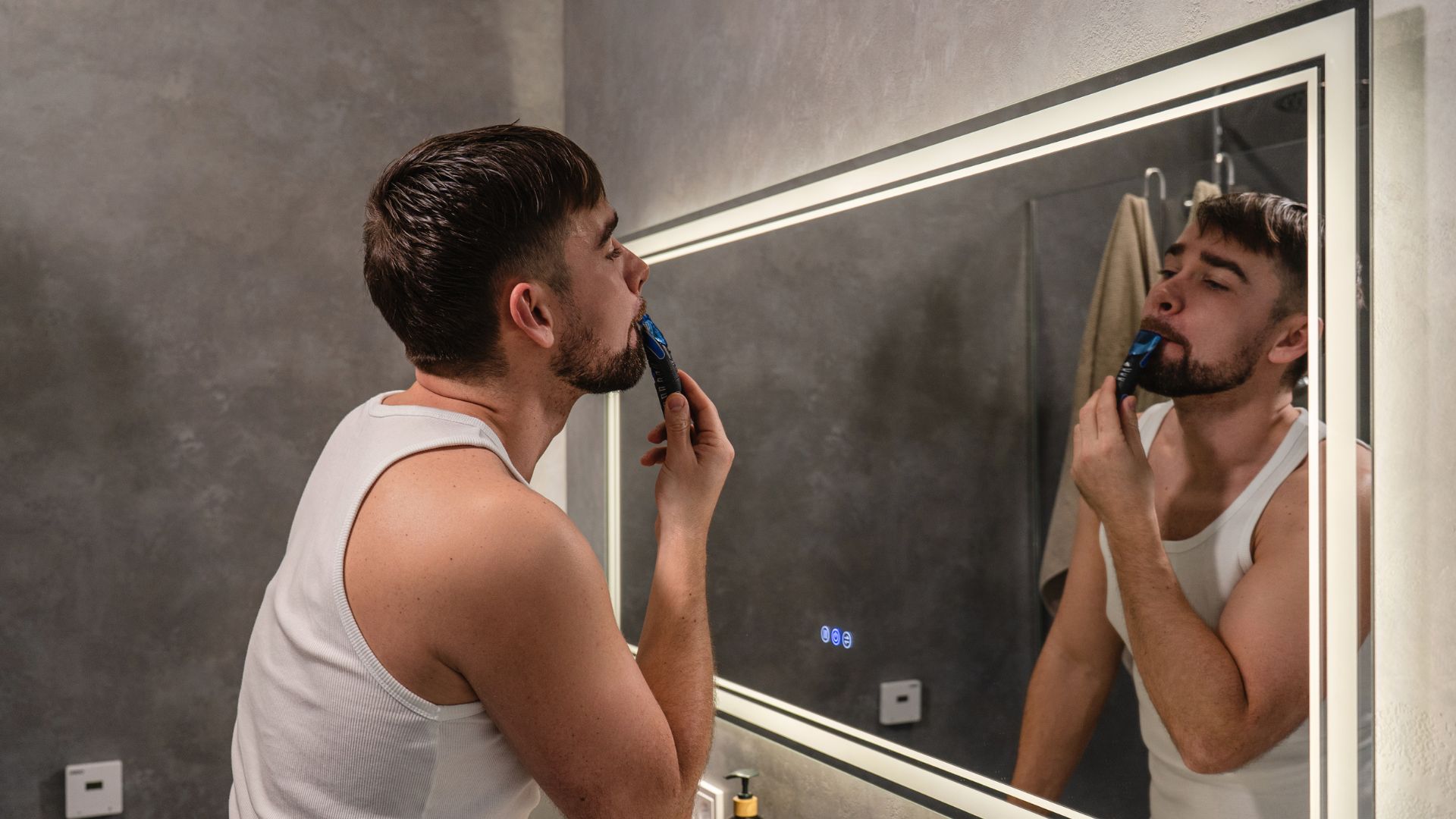
Achieving a well-groomed beard does not require a daily trip to the barber. With the right tools and techniques, a professional-looking beard trim is entirely possible at home. This guide breaks down the process into ten simple steps, empowering anyone to maintain their facial hair with confidence and precision.
Step 1: Gather Your Tools
Before embarking on the beard trimming process, it is important to assemble all the necessary tools to ensure precision, ease, and efficiency. Start with a quality beard trimmer equipped with multiple guard lengths. This allows for versatile trimming, whether you’re maintaining a uniform length or creating a fade effect. Complement the trimmer with a sturdy pair of barbering scissors. These are indispensable for fine detail work, such as snipping stray hairs or adding sharp, defined lines to your beard shape.
Next, secure a fine-toothed comb, which helps in detangling the beard and ensuring even trimming. Pair this with a boar bristle brush—an essential tool for smoothing and distributing natural oils throughout the beard. The combination of a comb and brush allows for better management of unruly hairs, ensuring they are aligned and ready for even trimming.
Equally important are the finishing products. Pre-shave oil is highly recommended as it softens the beard and prepares the skin underneath, reducing irritation during trimming. Beard oil, on the other hand, is the final touch that gives your beard a polished appearance while moisturizing and nourishing both hair and skin. Lastly, a mirror is indispensable, and for added convenience, consider a multi-angled or magnifying mirror, which provides a clear view of hard-to-see areas, helping you achieve professional results.
Having all of these tools prepared and within reach not only saves time but also prevents interruptions mid-process. This setup mirrors the careful preparation you would observe in a premium Beard Trim experience at any top-tier barbershop.
Step 2: Start with a Clean, Dry Beard
The foundation of a great beard trim lies in its preparation, and starting with a clean, dry beard is critical. Begin by thoroughly washing your beard using a high-quality beard shampoo. Unlike regular shampoos, beard shampoos are specially formulated to cleanse facial hair without stripping it of its natural oils. This step rids your beard of dirt, product buildup, sweat, or any other debris that could interfere with an even trim.
After washing, rinse thoroughly to ensure no residue remains, as leftover shampoo can affect your trimming tools and make the hair feel sticky. Once cleansed, pat your beard gently with a towel to remove excess water. Avoid vigorous rubbing, which can cause tangling or damage to your beard hair. After patting, allow the beard to air dry completely, or use a blow dryer on a low-heat setting, ensuring not to overdry or irritate the skin underneath.
It’s essential to trim only when the beard is completely dry. Hair appears longer and lies differently when wet, and trimming a damp beard often results in cutting more hair than intended. This common mistake can drastically alter the beard’s shape and length. By waiting for it to dry, you’ll have better control over the final look, ensuring accuracy and avoiding regrets.
These preparatory steps not only make the trimming process easier but also align with principles followed in professional Beard Trim in New York. A clean and dry beard promotes precision, prevents mistakes, and ensures that the end result is sharp and well-maintained.
Step 3: Brush and Comb Thoroughly
When preparing to trim your beard, one of the most important steps is to ensure that the hairs are properly brushed and combed. Start by using a high-quality boar bristle brush to brush your beard in a consistent downward motion. The natural stiffness of the bristles helps to train the beard hairs to lie in a single direction, taming unruliness and laying the foundation for an even trim. This step is crucial for revealing the beard’s natural shape and creating a smooth canvas for further grooming.
After brushing, follow up with a fine-toothed comb. The comb helps to detangle any knots subtly missed by the brush and ensures that the beard hairs are straightened completely. Additionally, the comb allows you to work through different layers of the beard, ensuring that even the hairs closer to the skin are smooth and lying in place.
Proper brushing and combing not only make the trimming process easier but also help in identifying uneven patches or problem areas. A well-combed beard brings out its true length, eliminating any surprises during the trim. This step provides clarity on how much hair to trim for an even, professional-grade result while reducing unnecessary mistakes.
Step 4: Choose Your Desired Length
Once the beard is brushed and combed thoroughly, it’s time to determine and work on your preferred beard length. Selecting the correct guard size for your trimmer is pivotal at this stage. Ideally, attach a guard that is longer than your desired final length; this approach is a safeguard against removing too much hair too early in the process. Starting with a higher guard gives you the flexibility to go progressively shorter, ensuring precision at every pass.
Slowly trim the beard with the trimmer using clean, downward strokes. Be sure to move in the direction of the hair growth, as trimming against the grain might lead to uneven results and unnecessary irritation to the skin underneath. During this initial trimming pass, the goal is to remove excess bulk from the beard evenly and establish a preliminary length. It’s important to assess the results periodically by stepping back and viewing your beard from different angles to ensure consistent symmetry.
This phase is a critical part of effective hairgrooming routines, laying the groundwork for a polished and natural look. For longer beards, this step also ensures that volume is maintained in areas you want to keep fuller, such as along the jawline or chin. Take your time—rushing through this stage could lead to mishaps that are difficult to rectify.
Step 5: Define the Neckline
A well-defined neckline can immediately elevate the appearance of your beard, creating a sharper, neater, and more intentional look. To define your neckline correctly, visualize a soft, curved line starting from behind each ear. This imaginary curve should slope gently downward and meet at a central point approximately one inch above the Adam’s apple.
Precision matters here, so don’t hesitate to draw the line lightly with a washable beard pencil or even use a guide tool if available for accuracy. Below this line, shave all the hair cleanly. For a sharper, cleaner result, using a razor is recommended, as it provides significant definition to this area. If you prefer to use a trimmer, simply remove the guard and trim carefully to create clean edges along the neckline.
Take caution not to set the neckline too high, as doing so can make the beard appear unnatural or too “boxy.” On the other hand, leaving the neckline untrimmed can give the beard a scruffy or unfinished appearance. Defining the neckline adds structure to the beard, distinguishing the well-groomed areas from the surrounding skin. This small but impactful detail emphasizes a polished look that can elevate your entire grooming style, blending seamlessly with more advanced steps like contouring the cheek lines or tapering the sides. Spend extra time double-checking your work here, as a precise neckline is a hallmark of professional-quality beard grooming.
Step 6: Shape the Cheek Line
Achieving a clean and natural-looking cheek line is a vital step in refining the overall appearance of your beard. A slightly softened cheek line is typically preferred over a sharp, rigid one, as it offers a more relaxed and natural aesthetic that complements various beard styles. To perfect this detail, you will need a steady hand and the right tools—a trimmer without a guard or a quality razor. Start by identifying the natural boundary of your beard where the main growth meets the upper cheek area. Use the trimmer or razor to carefully tidy up any stray hairs above this line, being mindful not to trim too far into the main beard. This process requires precision, as your aim is to create a clean definition without carving out an overly harsh, artificial line. Many grooming experts suggest making gradual adjustments and regularly stepping back to assess your work in the mirror for symmetry and balance.
For beginners, it may help to use gentle, short strokes with the trimmer or razor to avoid accidental over-trimming. Pro tip: if you find it difficult to establish a consistent line, you can use a beard shaping tool as a guide. These tools provide a template that can assist with creating symmetrical cheek lines. Remember, less is more when it comes to shaping the cheek line. Always lean toward subtlety, as it’s much easier to remove additional hairs later than to correct an overzealous cut. This technique of softening and shaping the cheek line is often employed in traditional barbershops, resulting in a polished yet natural appearance that enhances the overall grooming style.
Step 7: Trim the Mustache
The mustache plays an essential role in tying together your entire facial hair look. Proper maintenance ensures it complements rather than detracts from the overall beard style. Start by combing the mustache hairs downward using a fine-tooth comb. This step helps reveal any unsightly overgrowth and aligns the hairs for a more even trim. With a pair of sharp, high-quality grooming scissors, carefully trim any hairs that extend over the upper lip. This step is critical for maintaining a clean and neat appearance while avoiding the discomfort of stray hairs interfering when eating or speaking.
For those opting for a more styled look, the mustache can be blended seamlessly into the beard. To do so, focus on trimming the ends of the mustache where it transitions into the beard. Subtle blending creates cohesion and avoids the appearance of a separate, disjointed mustache. Scissors are preferred for this step because they provide greater control and precision than electric trimmers, especially in this delicate area where accuracy is paramount. Take your time, and make small, controlled cuts to ensure symmetry on both sides. If a sharper, standout look is desired, you may use a razor or detailing trimmer to define the edges of the mustache for a more pronounced shape.
Lastly, it’s a good habit to step back and evaluate your progress multiple times throughout the trimming process. This ensures that your mustache aligns well with the rest of your facial hair and remains balanced. For those seeking expert-level results, this attention to detail mimics the work done in professional grooming settings and can help you achieve a mustache to rival the artisanship of a traditional barbershop stylist.
Step 8: Detail with Scissors
The finishing touch to any beard grooming routine lies in meticulous detailing, and this is where scissors become an indispensable tool. This step is all about perfection, transforming a good trim into a great one. Start by switching back to your comb and scissors, ensuring both tools are clean and sharp for optimal precision. Comb through the beard in the direction of natural growth to identify any noticeably longer hairs that stand out from the bulk of the beard. These stray hairs can disrupt the uniformity of your beard’s shape, so snipping them will create a more polished, well-maintained look.
Pay special attention to the areas around your mouth, particularly the soul patch and the edges of the mustache beneath the nose. These regions are prone to uneven growth and can easily become unruly if neglected. Comb through these sections multiple times, and take small snips to avoid removing too much hair at once. It’s always better to take your time and make gradual adjustments.
The scissor detailing step not only enhances neatness but also allows for a level of customization that sets your grooming apart. You can emphasize certain areas by blending or tapering specific sections, making your beard uniquely your own. This technique mirrors the careful attention provided by barber in New York City, where precision and artistry are paramount to their craft. By dedicating time to these final touches, you’ll achieve a beard that looks professional, polished, and perfectly suited to your style.
Step 9: Moisturize and Soothe the Skin
After trimming your beard, the skin underneath may feel sensitive or irritated, especially around the neckline and cheek area. To address this, it’s essential to apply a nourishing product such as pre-shave or aftershave oil. These products are designed to soothe irritation, reduce redness, and replenish the skin’s natural moisture barrier. Start by dispensing a small amount of oil—just a few drops are typically enough—and gently massage it into the areas most susceptible to post-trimming irritation.
Focus on the neckline and cheeks, where trimming and shaping often make direct contact with the skin. The oil will create a layer of hydration, helping to prevent razor burn and maintaining the health of the underlying skin. Not only does this step provide immediate relief, but it also contributes to a smoother, healthier foundation for your beard, ensuring that both skin and hair look their best over time.
Step 10: Apply Beard Oil for a Healthy Finish
The final step in achieving a well-groomed beard is to nourish and condition the beard itself using a high-quality beard oil. Beard oil offers multiple benefits, including moisturizing the hair, reducing itchiness, and enhancing the overall appearance of your beard with a healthy, polished shine. To apply, begin by pouring a few drops of oil into the palm of your hand. Rub your hands together to spread the oil evenly across your fingers and palms.
Then, work the oil into your beard, starting at the roots and extending out to the tips. Use your fingers to ensure that the oil reaches every strand, and don’t neglect the skin underneath the beard; this area can benefit just as much from the hydrating properties of beard oil.
If your beard is particularly thick, you may wish to use a comb to help distribute the oil evenly. This step not only helps to keep the beard soft and manageable but also creates a polished, well-maintained appearance that complements your overall style. A well-oiled beard not only feels better but also reflects the care and attention you dedicate to your grooming routine, leaving a lasting impression.
Conclusion
Mastering the at-home beard trim is a matter of practice and patience. By following these ten steps consistently, it becomes easy to maintain a sharp, well-defined beard every day. Regular maintenance with the right techniques ensures the beard always looks its best, saving time and building confidence in personal grooming skills.