
What the Chair Notices Before You Say a Word
The Neckline Tells the First Story
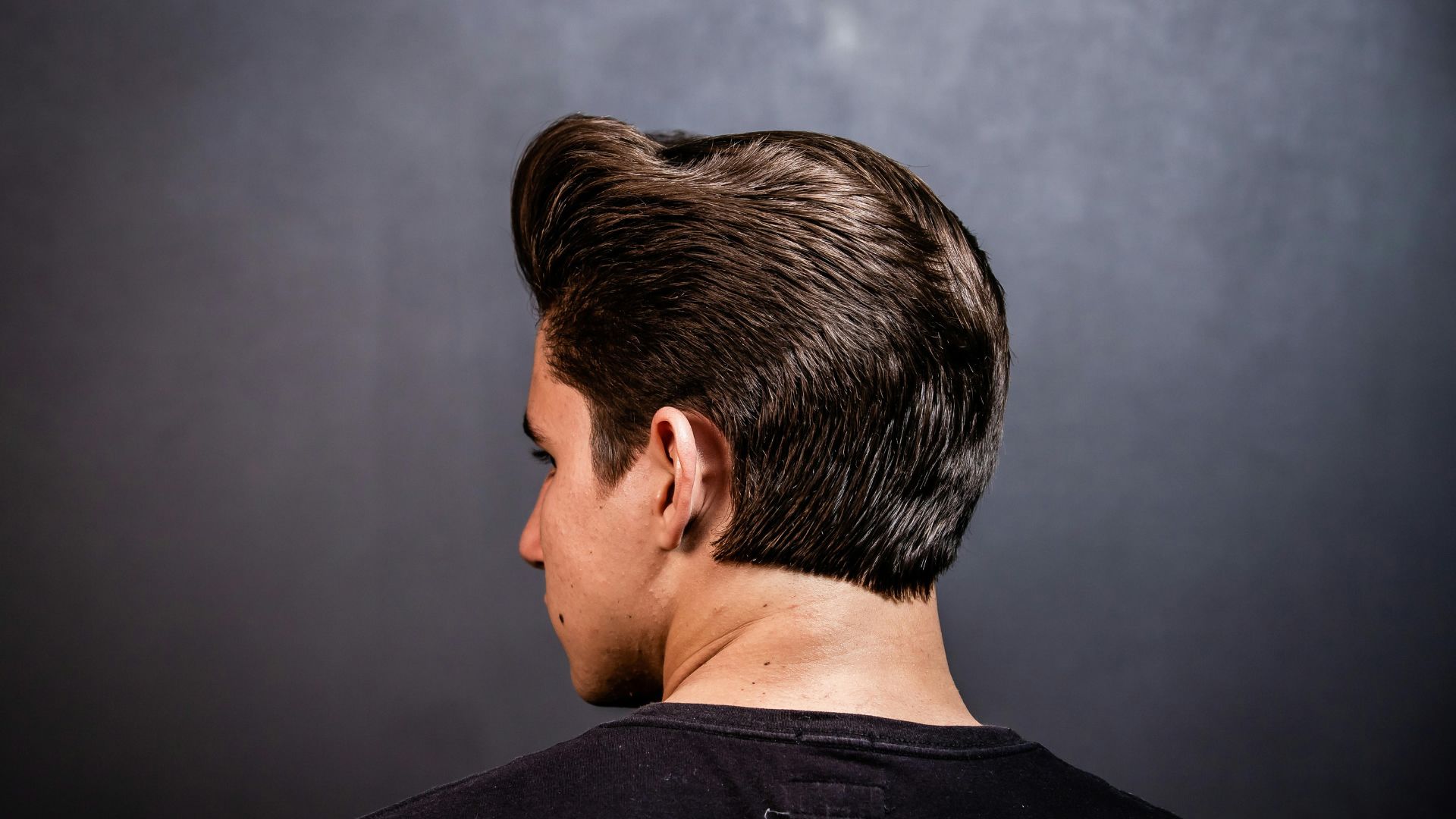
The cape goes on with a soft snap. The leather of the chair creaks as a man settles in, and before he says a word about what he wants, I’m already reading the back of his neck.
That might sound strange. But after more than twenty years of standing behind men with steel scissors in hand, I’ve noticed the neckline is usually the first honest thing a head of hair tells me. A clean, faded nape says he was in here three weeks ago. A fuzzy shelf creeping down toward the collar says it’s been closer to eight. A crooked line that dips on one side? That’s often a bathroom mirror, a hand mirror and a little too much confidence on a Sunday night.
None of this is judgment. Truly. It’s more like a mechanic hearing an engine idle. The sound tells him something about how the car’s been driven, and that helps him take better care of it.
Reading a Head of Hair Like a Logbook
Hair is one of the few parts of you that keeps a record. Skin renews itself every few weeks. But the hair on your head carries the last several months of your life right there in its length, its ends and its texture.
The ends near the tips have been around for a while. They’ve seen your shower temperature, your blow-dryer, your summer at the lake, your habit of towel-scrubbing like you’re polishing a bowling ball. The hair near your scalp is newer and tells the story of the last few weeks.
So when I run my fingers through a client’s hair before cutting, I’m reading something like a logbook. Is there product sitting at the roots from yesterday? Are the ends dry and splitting? Is the scalp tight and flaky, or calm? Each answer points toward a habit.
Why I Stopped Guessing and Started Asking
Early in my career, I’d make quiet assumptions. Dry ends? He must be using cheap shampoo. Product buildup? He must be lazy about washing.
I was wrong more often than I’d like to admit. The dry ends belonged to a lifeguard. The buildup belonged to a man who’d been told by someone, somewhere, that washing daily would make him go bald. These weren’t careless men. They were men doing their best with the information they had.
So now I ask. “How do you usually wash it?” “What do you put in it in the morning?” “How long since your last cut?” Perhaps that’s the real lesson of this whole guide. Your haircut reveals a lot about your routine, but it doesn’t reveal why. That part only comes from conversation.
Before we go further, it helps to agree on what a grooming routine actually includes.
What We Mean by a Grooming Routine
Cut, Care and Finish
When most men hear “grooming routine,” they picture a bathroom shelf crowded with bottles. But a routine is simpler than that. I tend to think of it in three layers.
Cut is the shape itself: the fade, the length on top, the neckline, the edges. It’s what happens in the chair.
Care is what you do to keep hair and scalp healthy between visits: washing, conditioning, drying, protecting from sun and heat.
Finish is how you style it each day: the product, the comb or brush, the direction you push it, whether you use heat.
A great cut with no care looks tired by week two. Great care with the wrong finish looks flat. And a perfect finish can’t rescue a cut that’s three months overdue. The three layers lean on each other, much like the legs of a stool.
Daily Habits vs. Visit Habits
Your routine runs on two clocks. One ticks every morning. The other ticks every few weeks.
| Factor | Daily Habits | Visit Habits |
| How often | Every day or two | Every 2 to 8 weeks |
| Who’s in control | You | You and the person cutting your hair |
| What it shapes | Texture, shine, scalp health, style | Shape, length, edges, balance |
| What shows when it slips | Flatness, frizz, flakes, buildup | Shaggy neckline, lost fade, heavy sides |
| How fast you notice | Within days | Within weeks |
| Easiest fix | Adjust products or washing | Book the next visit sooner |
I noticed years ago that most men are strong on one clock and weak on the other. Some never miss an appointment but have no idea what shampoo they use. Others have a careful morning ritual but stretch their cuts until the shape disappears. Which clock do you tend to keep better?
Where the Haircut Fits in the Bigger Picture
A haircut sits at the center of your grooming, but it’s surrounded by other habits: your beard, your skin, your eyebrows, even your sleep and stress levels.
Think of it like a house. The cut is the front door. People notice it first, and it sets the tone. But if the paint is peeling on the windows and the lawn hasn’t been mowed, a beautiful door can only do so much. Perhaps that’s why a fresh cut sometimes feels incomplete. The rest of the house hasn’t caught up yet.
With that picture in mind, let’s look at the specific clues your hair gives away.
The Clues Hiding in Plain Sight
Growth and the Calendar on Your Head
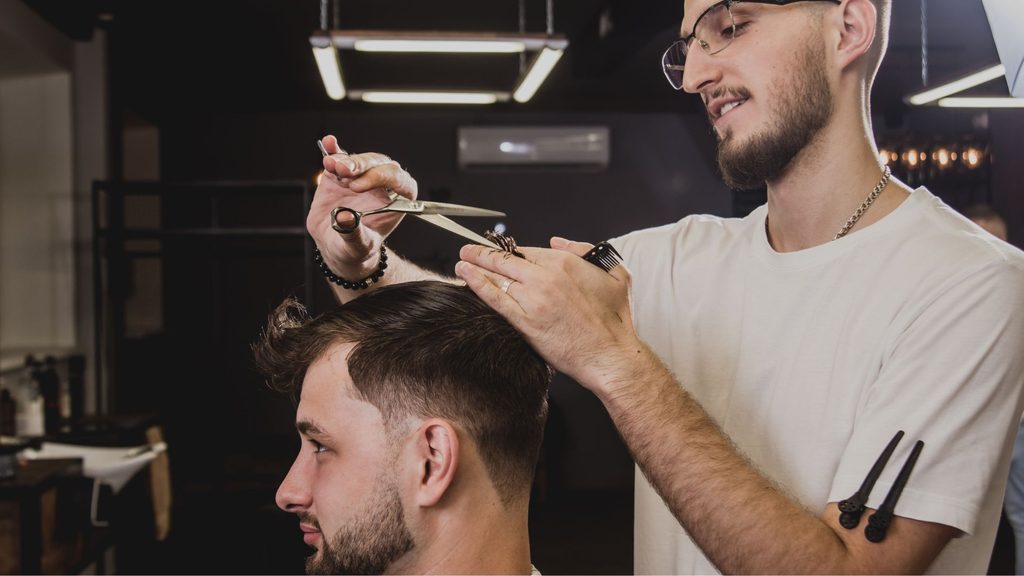
The simplest clue is time. Every cut has a “best before” date, and the length tells me roughly how far past it you are.
A skin fade softens into a shadow within ten days. The sideburns start to look heavy around week three. Hair around the ears begins to fold over by week four or five. By week six, most short styles have lost their shape entirely.
It seems that men often don’t notice their own grow-out, because it happens slowly, a little each morning. It’s like watching your kids grow. You see them every day, so you don’t notice the inches. Then a relative visits and says, “My, he’s gotten tall.”
Product Buildup and Residue
Run a comb through a man’s hair, and sometimes it pulls a waxy film along with it. That’s buildup: product layered on product, day after day, without a full wash in between.
Buildup tells me a few possible things. Perhaps he’s using an oil-based pomade but only rinsing with water. Perhaps he’s using a heavy clay daily and washing every few days. Or perhaps he’s simply using too much. A pea-sized amount is usually plenty for short hair, and I’ve seen men scoop out enough to grease a skillet.
Ends, Edges and Scalp
The tips of the hair, the outline of the cut and the skin underneath all carry their own messages.
| Clue | What It Often Suggests | Gentle Question to Ask Yourself |
| Fuzzy, overgrown neckline | 5 or more weeks since last cut | Has my schedule been slipping? |
| Crooked or uneven neckline | Home trimming | Am I trimming more than I should? |
| Waxy film on comb | Product buildup, light rinsing | Am I washing product out fully? |
| Dry, split ends | Heat, sun, rough towel-drying | How am I drying and protecting my hair? |
| White flakes on shoulders | Dry scalp or dandruff | Is my shampoo right for my scalp? |
| Greasy roots by midday | Oily scalp, heavy product, under-washing | Am I washing often enough for my scalp? |
| Flattened ring around head | Daily hat wearing | Could I give my hair a break sometimes? |
| Red bumps along edges | Irritation from close shaving | Am I shaving against the grain? |
None of these clues are flaws. They’re signals. And signals are useful, because they point toward small changes that can make a big difference.
To understand why hair records these habits so faithfully, it helps to know a little about how it grows.
The Science of How Hair Records Your Habits
The Half-Inch Clock
According to the American Academy of Dermatology, scalp hair grows about half an inch per month, or roughly six inches a year. That steady pace is why your haircut works like a calendar. Measure the growth on the sides of a fade, and you can estimate the weeks since your last visit almost to the day.
The same group notes that shedding 50 to 100 hairs a day is normal. So a few hairs in the shower drain aren’t a sign that something’s wrong. They’re simply the old giving way to the new.
What I find interesting is that the hair you see is technically not alive. It’s made of a tough protein called keratin, pushed out from the living follicle below the skin. That means once a strand leaves your scalp, it can’t repair itself. Every bit of damage stays with it until it’s cut away. Your ends, in other words, remember everything.
Sebum, Scalp and the Washing Question
Your scalp produces sebum, a natural oil that protects and softens hair. Some men produce a lot. Others produce very little. That one factor shapes almost every part of a healthy routine.
If you produce plenty of sebum, your roots look slick by the end of the day, and you may need to wash more often. If you produce less, especially with curly or coily hair, sebum has a harder time traveling down the twists of each strand, so the ends stay dry. The American Academy of Dermatology suggests that people with oily hair may need to wash daily, while those with dry or tightly coiled hair can often go much longer between washes.
Perhaps that’s why one-size-fits-all advice tends to fall short. Your scalp is a bit like a thermostat set at the factory. You can work with the setting, but you can’t pretend it isn’t there.
Heat, Friction and the Ends
Hot showers, blow-dryers on high, rough towels and long days in the sun all wear down the outer layer of the hair, called the cuticle. When the cuticle lifts and chips, hair looks dull and feels rough. Eventually, the ends split.
This is where your overall Hair Appearance starts to tell a deeper story than the cut alone. Two men can walk out of the shop with the exact same fade and top length. A month later, one looks polished and the other looks frayed. The difference, more often than not, lives in the small daily habits: water temperature, how they dry, whether they protect hair from the sun.
| Habit | Gentle Version | Rough Version | What the Rough Version Shows |
| Water temperature | Lukewarm | Very hot | Dry scalp, dull hair |
| Towel-drying | Pat and squeeze | Hard scrubbing | Frizz, breakage |
| Blow-drying | Medium heat, moving | High heat, close and still | Brittle, split ends |
| Sun exposure | Hat or shade on long days | Bare head all summer | Faded color, rough texture |
| Combing wet hair | Wide-tooth comb, gently | Fine comb, yanking | Broken strands |
The science explains why hair holds onto your habits. Now let’s see how that shows up week by week.
Fresh Cut vs. Overdue Cut
Week One vs. Week Six
There’s a particular feeling to a fresh cut. The breeze on your neck. The way your hat fits differently. The faint scent of talc that lingers on your collar for the rest of the afternoon.
By week six, that feeling is long gone, and the cut has quietly changed shape.
| Factor | Week One | Week Six |
| Neckline | Crisp and clean | Fuzzy, creeping down |
| Sides | Tight, shaped | Puffy or heavy |
| Around the ears | Clear | Hair folding over |
| Top | Balanced with sides | Often heavier, less structured |
| Styling time | Quick, easy | Longer, more product needed |
| First impression | Sharp, intentional | Relaxed, possibly unkempt |
Princeton psychologists Janine Willis and Alexander Todorov, in a 2006 study published in Psychological Science, found that people form judgments about a face after seeing it for as little as a tenth of a second. That’s not much time. Perhaps it’s worth asking: what does the person across the table see in that tenth of a second, a week-one cut or a week-six one?
Fades Keep Short Memories
A fade is the most honest cut there is. Because the sides are so short, even a few days of growth show. A skin fade looks crisp for about a week, then softens into a shadow. By week three, the blend starts to blur.
That’s why men who wear fades tend to have a tight visit rhythm, often every two to three weeks. If you see someone with a sharp fade, you’re often looking at someone who keeps a regular calendar. If you see a fade that’s lost its contrast, the calendar may have slipped.
Scissor Cuts Age More Gracefully
Scissor cuts, where the sides are left longer and shaped with shears rather than clippers, grow out more slowly and evenly. There’s no harsh line to blur, so they can look good for four to six weeks.
I sometimes compare it to two kinds of shoes. A fade is like a pair of crisp white sneakers. Stunning when new, but every scuff shows. A scissor cut is more like a pair of good leather boots. They look fine on day one and arguably better on day thirty.
Which kind of shoe fits your life? That question tends to shape a man’s routine more than any product ever could.
And when we talk about how a cut ages, the edges usually show it first.
Necklines and Edges: The Quiet Tell-Tales
Blocked vs. Tapered
There are a few common ways to finish the back of the neck, and each one grows out differently.
| Factor | Blocked Neckline | Tapered Neckline |
| Look | Straight, squared line | Gradual fade into skin |
| Fresh appearance | Very sharp, structured | Soft, natural |
| How it grows out | Fuzzy shelf appears fast | Blends gradually |
| Looks clean for | About 1 to 2 weeks | About 3 to 4 weeks |
| Maintenance needed | Frequent cleanups | Less frequent |
| What it says about routine | Regular, detail-oriented | Relaxed, low-maintenance |
A blocked neckline (also called squared) is crisp but demanding. A tapered neckline is forgiving. A rounded neckline sits somewhere in between. Neither is better. But if you choose a blocked neckline and visit every six weeks, you may spend four of those weeks with a fuzzy shelf. Perhaps the neckline you pick should match the schedule you actually keep, not the one you wish you kept.
Home Trims and the Wandering Line
I can spot a home trim from across the room. Not because men do it badly, but because the back of the neck is nearly impossible to see clearly yourself. Even with two mirrors, you’re working backwards, like trying to parallel park while looking only at your side mirror.
What usually happens is the line creeps upward a little each time. One trim lifts it a quarter inch. The next lifts it again. Over a few months, the neckline ends up much higher than it should be, and the cut looks unbalanced.
Do I mind? Not at all. It just tells me a man cares about looking clean between visits. Perhaps the gentlest fix is simply to trim only the stray hairs below the line and leave the line itself for the next visit.
Sideburns, Ears and the Little Things
Sideburns grow quickly and frame the face more than most men realize. Long sideburns can make a face look wider. Uneven ones make the whole cut look tilted.
Then there’s the hair around the ears. When it starts folding over, the cut immediately looks older. It’s a small detail, maybe an inch of hair in total, but it changes the outline of the head.
I noticed that men who keep their sideburns even and their ears clear between visits often look freshly cut even at week four. These little details do a lot of quiet work.
Edges are one half of the picture. The other half is what you put in your hair each morning.
What Your Products Say About You
Pomade vs. Matte Clay
Few things reveal a man’s routine as clearly as the product in his hair. I can usually tell what he uses just by the shine and the feel when I run my fingers through.
| Factor | Pomade | Matte Clay |
| Finish | Shiny or semi-shiny | Flat, natural |
| Feel in the hair | Smooth, slick | Dry, gritty, textured |
| Common base | Petrolatum and waxes, or water-based polymers | Kaolin or bentonite clay with waxes |
| Washes out | Water-based easily, oil-based slowly | Usually needs shampoo |
| Best for | Side parts, slick backs, pompadours | Textured crops, messy tops, short styles |
| What it suggests | Classic, polished routine | Relaxed, modern routine |
| Common mistake | Too much, looks greasy | Not washing out, causes buildup |
A man with a neat side part and a soft shine is often someone who enjoys a bit of ritual: a comb, a mirror, a moment. A man with matte texture tends to prefer speed: rub it between the palms, push it through, go. Neither is better. They just reflect different mornings.
Gel, Cream and the Too-Much Problem
Gel gives strong hold and a wet look, and it dries hard. Cream gives light hold and a soft, natural finish. Both have their place.
The most common issue I see isn’t the wrong product, though. It’s too much of the right one. Hair that’s crunchy, stiff or greasy usually means a man used three times more than he needed. There’s a kind of logic to it. If a little works, surely more works better? But hair isn’t like seasoning a steak. More product often just weighs it down.
A good starting point: a pea-sized amount for short hair, a fingertip-sized amount for medium length. Warm it between your palms first. Then add more only if you need it.
Reading the Label
Products can feel mysterious until you know what a few common ingredients do.
| Ingredient | What It Does | Who Tends to Like It |
| Beeswax | Firm hold, natural shine | Classic styles, thicker hair |
| Petrolatum | Smooth, long-lasting hold | Traditional pompadour wearers |
| Kaolin or bentonite clay | Absorbs oil, matte texture | Oily scalps, textured styles |
| Shea butter | Softens, moisturizes | Curly and coily hair |
| Panthenol | Adds moisture and body | Fine or thinning hair |
| Alcohol (drying types) | Helps products dry fast | Gels; can dry hair if overused |
| Silicones | Smooth surface, add shine | Frizz-prone hair; may build up |
I noticed that men who read labels, even casually, tend to have healthier hair. Not because they’re experts, but because they’re paying attention. And attention, it seems, is half of any good routine.
Of course, whatever goes into your hair has to come back out. That brings us to the shower.
Washing, Conditioning and the Scalp
Shampoo vs. Co-Wash
Shampoo cleans by removing oil and dirt. A co-wash (short for conditioner wash) cleans gently without stripping natural oils. Which one suits you depends largely on your hair type and scalp.
| Factor | Shampoo | Co-Wash |
| Cleaning power | Strong | Gentle |
| Removes product buildup | Yes, well | Partly |
| Effect on natural oils | Can strip them | Preserves them |
| Best for | Oily scalps, heavy product users | Curly, coily or dry hair |
| Risk if overused | Dry, itchy scalp | Buildup, limp roots |
| What it suggests about routine | Focus on clean, fresh feel | Focus on moisture and softness |
Many men I see benefit from using both: a co-wash most days and a real shampoo once or twice a week to clear out buildup. It’s like sweeping the floor daily and mopping once a week.
How Often Is Enough?
This question comes up more than almost any other, and the answer is always “it depends.” Perhaps that’s frustrating, but it’s honest.
| Hair and Scalp Type | Suggested Wash Frequency | Why |
| Oily scalp, straight hair | Daily or every other day | Oil shows quickly on straight strands |
| Normal scalp, wavy hair | 2 to 3 times a week | Balance between clean and moisture |
| Dry scalp, any hair | 1 to 2 times a week | Avoid stripping natural oils |
| Curly hair | 1 to 2 times a week, co-wash between | Curls need moisture to hold shape |
| Coily hair | Once a week or every other week | Very prone to dryness |
| Heavy daily product user | Shampoo at least 2 to 3 times a week | Prevent buildup |
The American Academy of Dermatology suggests that people with tightly coiled hair may only need to wash once a week or every other week, while those with oily hair may need to wash daily. The academy also recommends applying conditioner after every shampoo and focusing shampoo on the scalp rather than the length of the hair.
Flakes, Itch and the Signals Worth Hearing
When I see white flakes on a dark collar, I don’t jump to conclusions. Dry scalp and dandruff can look similar, but they come from different places.
Dry scalp often shows small, white, dry flakes and improves with less washing and more moisture. Dandruff, often linked to an overgrowth of a yeast called Malassezia, tends to produce larger, oilier, yellowish flakes and may need a medicated shampoo. In a 2010 review published in the International Journal of Trichology, researchers S. Ranganathan and T. Mukhopadhyay estimated that dandruff affects roughly half of the world’s adult population at some point.
So if you’re dealing with flakes, you’re far from alone. Perhaps the most useful question isn’t “Why me?” but “What is my scalp asking for?” If flakes, redness or itching persist despite changes, it’s worth seeing a dermatologist.
Washing advice only goes so far, though, because so much depends on the hair you were born with.
How Hair Type Shapes the Routine
Straight and Fine
Straight, fine hair is honest hair. It shows oil quickly, flattens easily and reveals every product mistake. A man with fine hair who looks greasy by noon isn’t necessarily washing less than anyone else. His hair just shows it faster.
Lightweight products help here. Heavy pomades and creams tend to weigh fine hair down. Light clays, sea salt sprays and volumizing products often work better. Washing more frequently with a gentle shampoo can also keep fine hair looking full.
Wavy and Thick
Wavy, thick hair has a mind of its own. It grows outward as much as downward, so the sides puff up faster than you’d expect. A man with thick hair often needs more frequent cuts, not because of length, but because of bulk.
His routine tends to lean on taming rather than building. Creams and light pomades help control frizz and give waves some shape. Air-drying with a little product often works better than blow-drying, which can turn waves into a cloud.
Curly and Coily
Curly and coily hair carries its own beautiful set of needs. Because natural oils struggle to travel down a tight curl, the ends tend to stay dry. Breakage is more common, especially with rough combing or frequent washing.
A healthy routine for curly and coily hair often includes less frequent shampooing, regular co-washing or deep conditioning, and leave-in moisture like shea butter or a curl cream. A satin or silk durag or pillowcase can reduce friction at night.
Edges and line-ups deserve extra care too. The American Academy of Dermatology notes that curly hair is more prone to razor bumps (pseudofolliculitis barbae), because the curved hair can grow back into the skin after a close shave. Red bumps along the hairline or beard line often tell me that a man is shaving too close or against the grain.
Thinning or Graying
For men noticing thinning, the routine shifts gently. According to the American Hair Loss Association, about two-thirds of American men experience some noticeable hair loss by age 35, and roughly 85 percent have significantly thinning hair by age 50. It’s common, and it’s nothing to be ashamed of.
Thinning hair often benefits from lighter products, volumizing shampoos and shorter, textured cuts that don’t expose the scalp. Heavy, shiny products can clump strands together and reveal more scalp. Gray hair, meanwhile, can turn coarse and wiry and may take on a yellow tint from sun or hard water. A purple shampoo used occasionally can keep gray looking crisp and silver.
| Hair Type | Routine Focus | Product Tendency | Common Clue in the Chair |
| Straight and fine | Volume, oil control | Light clays, sprays | Flat roots, oily by midday |
| Wavy and thick | Bulk control, frizz | Creams, light pomades | Puffy sides, heavy weight |
| Curly | Moisture, definition | Curl creams, leave-ins | Dry ends, frizz |
| Coily | Moisture, breakage prevention | Butters, oils | Breakage, dry scalp, edge irritation |
| Thinning | Fullness, scalp coverage | Volumizers, matte products | Visible scalp, clumping |
| Graying | Softness, brightness | Moisturizers, purple shampoo | Coarse texture, yellow tint |
Hair type shapes your routine on top. But your face tells its own story, just inches below.
The Face Around the Cut
Beard Lines and Cheek Lines
A fresh haircut paired with an overgrown beard is a bit like wearing a new suit with scuffed shoes. The eye is drawn to the mismatch.
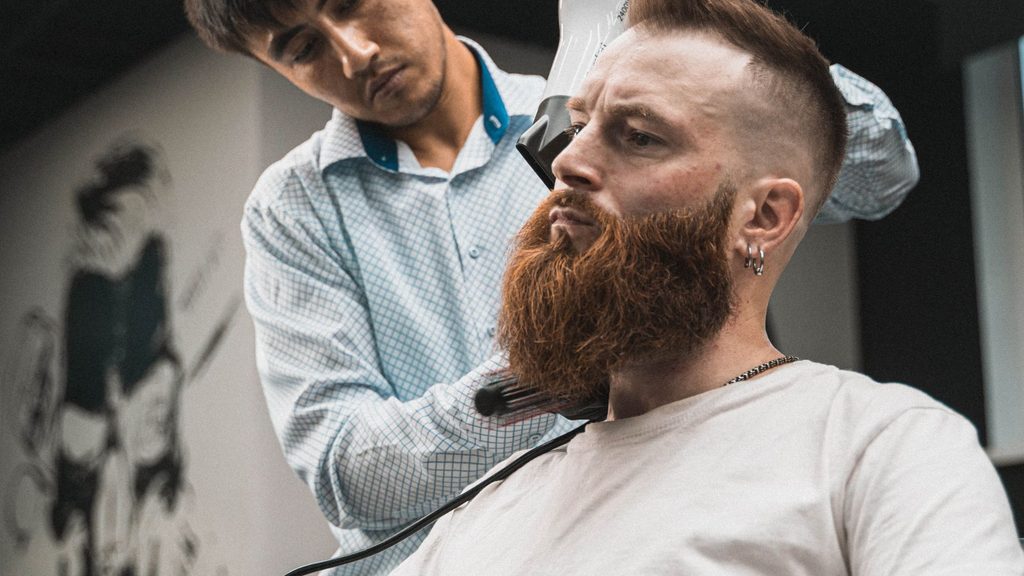
When I look at a client’s beard, I’m noticing the cheek line (the upper edge of the beard on the cheek) and the neckline (where the beard meets the throat). A clean, intentional cheek line and a neckline about one to two finger-widths above the Adam’s apple usually mean a man has a regular beard routine. A beard that fades into the neck or creeps up toward the eyes often means he’s letting it grow without shaping.
There’s no wrong beard length. What tends to matter is whether the edges feel intentional.
Trimmer vs. Straight Razor
How a man keeps his face tells me a lot about his patience and his skin.
| Factor | Electric Trimmer | Straight Razor |
| Closeness | Leaves slight stubble | Smoothest possible finish |
| Speed | Fast | Slower, requires care |
| Skin irritation risk | Lower | Higher, especially with curly hair |
| Skill needed | Low | High |
| Best for | Daily upkeep, sensitive skin | Special occasions, smooth faces |
| What it suggests about routine | Practical, efficient | Patient, ritual-minded |
I’ll admit a soft spot for the hot towel and lather of a traditional razor shave. The warmth, the scrape of steel, the bay rum splash at the end. It’s one of the oldest rituals in grooming. But at home, most men are better served by a good trimmer or safety razor. A straight razor in untrained hands tends to leave more nicks than memories.
Brows, Ears and the Overlooked Details
Here’s something I’ve noticed: some of the details that make a man look most “put together” are the ones he rarely thinks about. Stray brow hairs. Hair on the tops of the ears. Nose hair peeking out.
As men age, these hairs tend to grow longer and coarser. A quick tidy every few weeks makes a surprising difference. It’s like dusting the top of the picture frame. Nobody compliments you for it, but they notice when it’s not done.
Seeing the full picture helps reveal the most common habits that quietly undermine a good cut.
Mistakes Your Haircut Gives Away
Over-Washing vs. Under-Washing
These two mistakes often look surprisingly similar from a distance, which is why they’re worth comparing side by side.
| Factor | Over-Washing | Under-Washing |
| Scalp feel | Tight, dry, itchy | Oily, heavy, itchy |
| Flakes | Small, white, dry | Larger, oily, yellowish |
| Hair texture | Dull, frizzy, brittle | Limp, greasy, clumped |
| Common cause | Daily harsh shampoo | Fear of washing, heavy product |
| Gentle fix | Wash less, use milder shampoo | Wash more, clarify weekly |
I’ve seen men who wash twice a day and men who wash twice a month, both complaining about the same itchy scalp. Perhaps the lesson here is that “clean” is not one setting. It’s a balance you find by paying attention.
Too Much Product, Too Little Rinse
Product buildup is one of the clearest clues I find in the chair. It makes hair feel heavy, look dull and resist styling. Over time, it can also make the scalp feel itchy.
The fix is usually simple: a clarifying shampoo once a week, a little less product each morning, and a proper rinse until the water runs clear. It’s a bit like a cast-iron skillet. A little oil keeps it seasoned. Too much, and everything starts to stick.
Stretching Visits Too Far
Stretching time between cuts is probably the most common habit I see. A man meant to come back in three weeks. Then work got busy. Then the kids had a tournament. Suddenly it’s been nine weeks.
| Style | Ideal Visit Gap | What Shows When Stretched |
| Skin fade | 2 to 3 weeks | Lost contrast, shadowy sides |
| Low taper | 3 to 4 weeks | Fuzzy neckline, heavy sides |
| Classic side part | 3 to 5 weeks | Ears covered, part blurred |
| Scissor cut | 4 to 6 weeks | Lost shape, heavy weight |
| Buzz cut | 2 to 3 weeks | Uneven length, softer outline |
| Longer styles | 6 to 10 weeks | Split ends, lost shape |
Missing a visit isn’t a moral failure. Life happens. But it seems that the men who book their next appointment before they leave the shop are far more likely to keep their rhythm. Is it possible that the simplest routine improvement isn’t a product at all, but a calendar reminder?
DIY Fixes vs. Professional Touch-Ups
Between visits, many men reach for the clippers themselves. Sometimes that works. Sometimes it creates a bigger job next time.
| Factor | DIY Touch-Up | Professional Touch-Up |
| Cost | Free after tools | Usually $10 to $25 |
| Neckline accuracy | Hard to see, often uneven | Precise |
| Risk of mistakes | Medium to high | Low |
| Best uses | Stray hairs, beard tidy, sideburn edges | Necklines, fades, line-ups |
| What it often shows | Pride, care, sometimes overreach | Consistent upkeep |
A gentle middle path: handle your beard, brows and stray hairs at home, and leave the neckline and blend to the chair.
Mistakes and tables only go so far, though. Real people tend to tell the story better.
Stories From the Chair
The Student Who Lived in a Cap
He was nineteen, home from college for the summer. He sat down and pulled off a baseball cap, and his hair underneath was pressed flat, with a clear ring around the sides where the band had been.
“I wear it every day,” he admitted. “Didn’t want to deal with my hair.”
His scalp was a little oily, and his fade had grown out into a shapeless ring. We talked about a shorter, textured cut that would need almost no styling, and a light matte clay that took ten seconds. He came back three weeks later without the cap. “Turns out I just didn’t know what to do with it,” he said. Perhaps the hat wasn’t about hiding. It was about not knowing.
The Night-Shift Nurse
A man in scrubs came in one morning after a twelve-hour shift. His hair was clean but dry, and the ends were frayed. He washed twice a day: once before work, once after, because of hospital exposure.
That routine made perfect sense for his job. But his hair was paying the price. We switched him to a gentle, moisturizing shampoo for the second wash and a light leave-in conditioner. A few weeks later, his hair felt softer. His routine hadn’t changed in frequency, only in kindness.
I think about him often. A haircut can reveal a habit, but the habit may be there for a very good reason.
The Retiree Who Never Missed
He came in every three weeks for twenty-two years. Same day, same time, same classic side part, same small dab of cream. His neckline was always crisp. His ears always clear. His brows always tidy.
One day I asked him why he never skipped. He said, “My father went every three weeks his whole life. It’s the one hour where nobody needs anything from me.” That stuck with me. His routine wasn’t about vanity. It was about rest.
The Father and Son Who Matched
A father brought in his twelve-year-old for his first “real” cut. The boy wanted whatever his dad had. So we gave them both a low taper with a little texture on top.
On the way out, the father showed his son how much product to use: “Just a pea, warm it up, push it back.” I watched the boy copy him in the mirror, serious as a surgeon. That, perhaps, is how most grooming routines begin. Not from a magazine or a screen, but from watching someone we trust.
Stories like these show what a routine can be. The next step is shaping one for yourself.
Building a Routine That Matches Your Cut
The Five-Minute Morning vs. the Fifteen-Minute Morning
Here’s a question I like to ask: how much time do you actually want to spend on your hair each morning? Not how much you think you should. How much you want.
| Factor | Five-Minute Morning | Fifteen-Minute Morning |
| Best cuts | Buzz, crop, short textured top, fade | Side part, pompadour, longer styles |
| Tools | Fingers, maybe a towel | Comb, brush, blow-dryer |
| Products | One light product or none | Pre-styler plus finishing product |
| Visit frequency | Often more frequent | Often less frequent |
| Best for | Busy schedules, active lifestyles | Men who enjoy ritual |
There’s no prize for spending more time. A five-minute routine with the right cut can look sharper than a fifteen-minute routine with the wrong one. Perhaps the smartest move is choosing a cut that fits the morning you actually have.
Matching Visit Frequency to Your Style
If you love a sharp fade but only want to visit once every six weeks, there’s a mismatch. You’ll spend most of that time looking past your best. Many men find it easier to adjust the cut than force the calendar.
Talk with your barber about this directly. Something like, “I can realistically come in every five weeks. What cut will still look good at week five?” That one question can save months of frustration. It invites a plan built around your life instead of an ideal.
Tools Worth Owning
A good routine doesn’t need a lot of gear. A few well-chosen tools usually do the job.
| Tool | Why It’s Worth Owning | Who Benefits Most |
| Wide-tooth comb | Detangles without breaking hair | Wavy, curly, coily hair |
| Fine-tooth comb | Clean parts and polished styles | Side parts, slick styles |
| Boar bristle brush | Distributes natural oils, smooths | Straight and wavy hair |
| Quality beard trimmer | Keeps edges clean between visits | Anyone with facial hair |
| Blow-dryer with diffuser | Adds volume, defines curls gently | Fine or curly hair |
| Microfiber towel | Reduces frizz and friction | Curly, coily or fine hair |
| Satin pillowcase or durag | Protects hair overnight | Curly, coily or long hair |
None of these need to be expensive. A sturdy comb and a decent towel go a long way. Speaking of money, let’s look at what all of this actually costs.
What a Good Routine Really Costs
The Annual Math of Visits
Visit frequency shapes your yearly spending more than almost anything else.
| Visit Schedule | Visits Per Year | Cost at $35 Each | Cost at $50 Each |
| Every 2 weeks | 26 | $910 | $1,300 |
| Every 3 weeks | 17 | $595 | $850 |
| Every 4 weeks | 13 | $455 | $650 |
| Every 6 weeks | 9 | $315 | $450 |
| Every 8 weeks | 6 or 7 | $210 to $245 | $300 to $350 |
Looking at it this way can be eye-opening. A skin fade every two weeks costs roughly three times as much per year as a scissor cut every six weeks. Neither is wrong. But knowing the math helps you choose a cut that fits both your face and your wallet.
Products: Where to Spend, Where to Save
According to McKinsey’s 2023 State of Beauty report, the global beauty industry generated about $430 billion in revenue in 2022, and men’s grooming is a growing slice of that. With so much on the shelves, it’s easy to overspend.
| Category | Where to Spend | Where to Save |
| Shampoo | Medicated or curl-specific if needed | Basic gentle shampoo for normal hair |
| Conditioner | Deep conditioner for dry or coily hair | Simple rinse-out for most men |
| Styling product | One you use daily and love | Trendy extras you rarely use |
| Tools | Trimmer, blow-dryer | Combs, towels |
| Scalp care | Treatments for persistent issues | Basic moisture for mild dryness |
A sensible approach, it seems, is to spend more on what touches your hair or skin every day and save on what you use occasionally.
Gifts That Build Better Habits
If you’re buying for a son, a partner, a father or a friend, grooming gifts can do more than fill a stocking. They can gently support a better routine.
A gift card for a cut and consultation encourages a fresh start. A quality trimmer helps a man keep his beard edges sharp between visits. A starter kit with a good shampoo, a light conditioner and one well-chosen styling product can quietly replace the bargain bottle he’s used for a decade.
The most meaningful grooming gift I’ve seen? A father who prepaid six visits for his son’s first year of college, with a note that said, “Look after yourself.” I’ve thought about that note more than once.
Costs and routines also shift with the times. It’s worth looking at where things have been and where they’re heading.
Trends and Insights From Behind the Chair
From Brilliantine to Clay: A Short History
Men’s grooming routines have always mirrored the hair of their era.
| Era | Signature Look | Signature Product | What It Said About Routine |
| 1900s to 1920s | Slick, center or side part | Brilliantine, hair tonic | Daily polish, formal habits |
| 1928 to 1950s | Neat side part, pompadour | Brylcreem, pomade | Comb in the pocket, regular visits |
| 1960s to 1970s | Longer, natural hair | Little to none | Freer, fewer visits |
| 1980s | Volume, mullets, feathering | Mousse, hairspray | Blow-dryer mornings |
| 1990s | Spikes, curtains | Gel | Crunchy hold, quick styling |
| 2000s | Faux hawks, messy looks | Wax, paste | Texture over shine |
| 2010s | Undercuts, skin fades | Pomade revival | Frequent cuts, sharp edges |
| 2020s | Textured crops, natural curls, softer tapers | Matte clay, sea salt, curl creams | Scalp health, lower maintenance |
Brylcreem, first launched in Britain in 1928, became so tied to its era that “a little dab’ll do ya” turned into a household phrase. Every product has a cultural moment, and in a way, so does every routine.
Low Maintenance Is the New Polished
I’ve noticed a quiet shift over the past few years. More men want cuts that look good at week four, not just day one. Softer tapers, textured tops and natural curls have grown in popularity, partly because they forgive a busy schedule.
During 2020, many men cut their own hair for the first time, and some discovered they liked a looser, longer look. Others realized how much they missed a professional cut. Either way, it seems that routine became something men started choosing more deliberately.
The Scalp-Care Era
Perhaps the biggest change I’ve seen is attention moving from the hair to the scalp. Scalp scrubs, serums and gentle exfoliating shampoos are now common. Men ask about flakes, oiliness and itch more openly than they used to.
There’s also more awareness about sun. The American Academy of Dermatology recommends protecting the scalp, especially along a part or thinning area, with a hat or sunscreen made for the scalp. That’s a habit few men’s fathers ever practiced, and one that might matter a great deal over the long run.
With the trends in view, here are the questions I hear most often in the chair.
Frequently Asked Questions
How often should I get a haircut?
It depends on your cut. Skin fades and buzz cuts look best with visits every two to three weeks. Tapers and side parts usually need three to five weeks. Scissor cuts and longer styles can stretch to six weeks or more. A good rule: book your next visit for the week your cut usually starts to feel “off,” not after.
Can someone really tell my routine just from my haircut?
Often, yes, at least partly. The neckline shows how long it’s been since your last cut. Product residue shows how you style and wash. The ends show how you dry and protect your hair. The scalp shows how your washing routine suits your skin. What a haircut can’t show is why you do what you do, which is why a good conversation always helps.
Is it bad to wash my hair every day?
Not necessarily. If you have an oily scalp, straight hair or use heavy products daily, washing every day with a gentle shampoo may be just right. If your hair is curly, coily or dry, daily shampooing may strip too much oil. Watch for signs like tightness, itching or dullness, and adjust from there.
Why does my hair look greasy even after I wash it?
Several things can cause this: not rinsing shampoo or product out fully, using a heavy conditioner on fine hair, or having product buildup that regular shampoo isn’t clearing. Try a clarifying shampoo once a week, rinse longer than you think you need to, and use less product.
Does wearing a hat every day hurt my hair?
There’s little solid evidence that ordinary hats cause hair loss. But wearing one daily can flatten your hair, trap sweat and oil, and leave a visible ring. Washing your hats regularly and giving your hair some time uncovered can help your cut look its best.
What’s the difference between dandruff and dry scalp?
Dry scalp usually produces small, white, dry flakes and tends to improve with gentler washing and more moisture. Dandruff often produces larger, oilier, yellowish flakes and is commonly linked to an overgrowth of yeast on the scalp. Medicated shampoos often help dandruff. If symptoms persist, a dermatologist can give a clear answer.
How much product should I use?
Less than you think. Start with a pea-sized amount for short hair or a fingertip-sized amount for medium hair. Warm it between your palms, apply from back to front, and only add more if you truly need it. Most styling problems come from too much product, not too little.
What’s a good grooming gift for a son or a dad?
A prepaid cut and consultation is one of the most thoughtful options, because it encourages a fresh start without pressure. A quality beard trimmer, a good comb or a simple starter kit with shampoo, conditioner and one styling product are also useful. The best gifts tend to support habits the person already wants to build.
With those questions answered, let’s bring everything together into a plan you can use.
Your Routine Check-Up and a Final Word
The Self-Audit Checklist
Take a moment with this list. There are no right or wrong answers, just useful observations.
| Question | What a “Yes” Might Mean | Small Next Step |
| Is my neckline fuzzy most of the month? | Visits are stretching too far | Book your next visit before you leave |
| Does my scalp feel tight or itchy? | Washing may be too harsh or too rare | Adjust frequency or switch shampoo |
| Does my comb pull residue? | Product buildup | Clarify weekly, use less product |
| Are my ends dry or split? | Heat, sun or rough drying | Lower heat, pat-dry, wear a hat in strong sun |
| Do I wear a hat most days? | Possibly avoiding styling | Ask for a cut that’s easier to style |
| Is my beard edge blurry? | Beard routine has drifted | Trim cheek and neck lines weekly |
| Am I spending more than I’d like? | Cut doesn’t match budget | Choose a style with a longer visit gap |
Small Habits, Long Results
According to a 2009 study by Phillippa Lally and colleagues at University College London, published in the European Journal of Social Psychology, it took participants an average of 66 days to form a new habit, though the range stretched from 18 to 254 days. That’s worth remembering. A new grooming habit may not feel natural for a couple of months.
So perhaps start with one change. Lukewarm water instead of hot. A pea of product instead of a scoop. Booking the next visit before you leave. Small, steady steps tend to stick better than overhauls, much like a training plan built week by week rather than in one heroic weekend.
Conclusion
At the end of a cut, I like to wrap a warm towel around a man’s neck, brush the talc across his nape and spin the chair toward the mirror. That moment, when he sees himself fresh, is one of my favorite parts of the job. But I’ve come to believe that the real story isn’t told in that moment. It’s told three weeks later, when he walks back in. The neckline, the ends, the scalp, the product, they all quietly tell me how those three weeks went. Not in a way that judges. More in a way that understands. Your haircut, in the end, is a kind of mirror for your habits. It reflects your mornings, your schedule, your patience, your priorities, even the people who taught you how to comb your hair. What would yours say right now? And what might you like it to say a month from today? If any of this feels useful, take it with you into your next visit. Ask a question you’ve never asked. Try one small change. If it doesn’t fit, that’s fine too. The chair will be waiting, warm leather and all, ready for whatever story you bring in next.