
Sitting in the chair without knowing what you actually want is how most men end up with a beard that’s too short, a neckline that’s uneven, or a shave that leaves their skin red for two days. The right service depends on your face shape, skin type, hair growth pattern, and what you need your look to do for you at work, at a wedding, or on a random Tuesday. This guide breaks down every major facial hair service available at a grooming shop today, from a five-minute cleanup to a full straight razor experience, and gives you the vocabulary, science, and decision-making tools to ask for exactly what you need. You’ll also find pricing benchmarks, maintenance schedules, and answers to the questions men actually type into their phones before booking an appointment.
Key Takeaways
- A trim maintains length and shape; a shave removes hair entirely down to the skin. Confusing the two is the single most common reason men leave the chair disappointed.
- Face shape, skin sensitivity, hair density, and growth direction should all factor into which service you request.
- A straight razor shave and a cartridge razor shave produce very different skin results, largely due to blade angle, heat, and the prep involved.
- Regular maintenance (every 2 to 4 weeks for most services) preserves the shape and health of facial hair far better than sporadic, reactive visits.
- Knowing the correct terms for what you want (taper, blend, hard part, skin fade) dramatically improves communication and results.
When You Sit Down in That Chair, You Should Know What You’re Asking For
The difference between a trim and a shave (and why it matters more than you think)
A trim shortens hair while preserving its presence and shape. A shave removes hair completely, cutting it flush with or below the surface of the skin. These are not two points on the same spectrum; they’re entirely different services with different tools, different timeframes, and different aftercare needs.
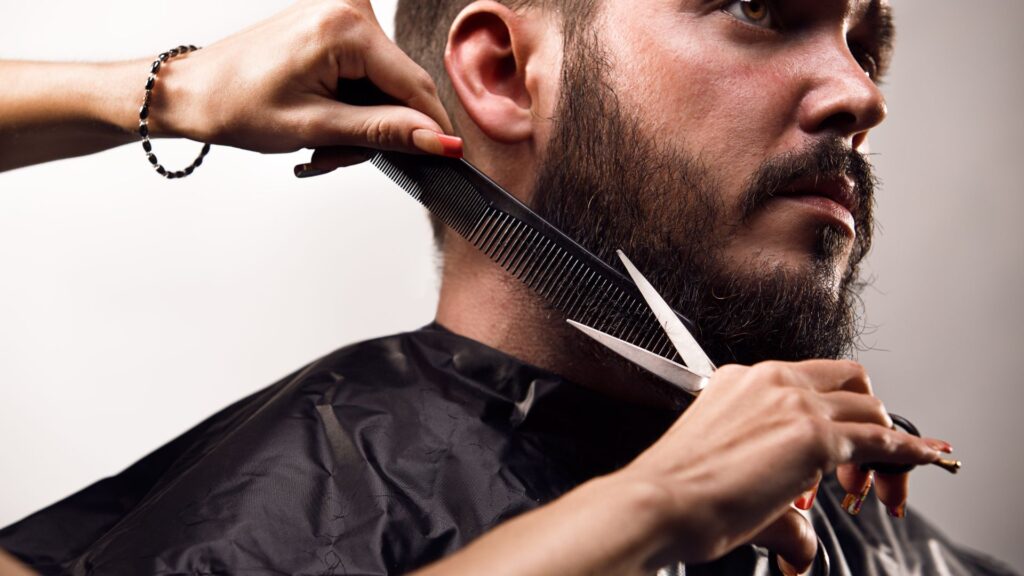
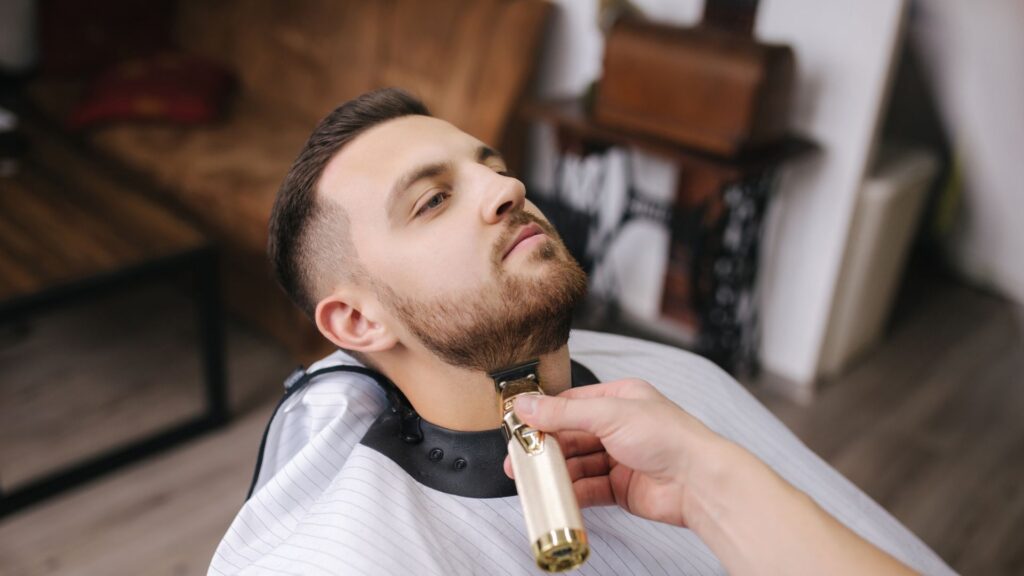
A trim uses clippers, guards, and scissors to sculpt existing growth into a defined shape. It respects the beard’s natural line while cleaning up strays, split ends, and uneven patches. A shave, on the other hand, uses a blade against the skin, either a straight razor, a safety razor, or a multi-blade cartridge, to strip hair away entirely. The goal isn’t shape. The goal is a smooth, bare surface.
Men who ask for “just a little off the top” when they actually want a clean-shaven jawline are going to leave frustrated. Likewise, a man who wants his beard shortened by a quarter inch shouldn’t casually say “shave it up a bit,” because that phrase can easily be misread as a request to remove hair entirely in certain spots.
How most men end up with the wrong service
Miscommunication is rarely about bad service. It’s about vague language. Common culprits include:
- Using “shave” and “trim” interchangeably
- Not specifying a guard number or length in millimeters
- Assuming the professional can read your mind based on a photo you saw once on Instagram
- Failing to mention skin conditions, ingrown hairs, or scarring before the blade or clippers touch your face
A grooming professional works from what you tell them and what they observe in the first thirty seconds. If you don’t speak up, they’ll default to a safe, standard service, which may not be what you actually wanted.
What a great consultation looks like
A strong consultation takes two to three minutes and covers:
- Your goal (maintain, shorten, reshape, or remove)
- Your face shape and any areas you want emphasized or minimized
- Skin sensitivities, recent breakouts, or known allergies to products
- How much time you have before the next event that matters (wedding, interview, date)
- A quick photo reference, if you have one, understanding that hair texture will change the final result
If your stylist skips this conversation entirely, that’s worth noting. The best results come from a two-way exchange, not a guess.
A Brief History of the Blade — From Ancient Egypt to the Modern Shop
Shaving through the centuries
Shaving is not a modern invention. Archaeological evidence shows that ancient Egyptians used copper razors as early as 3000 BCE, and shaving was closely tied to hygiene, status, and religious ritual. Priests shaved their entire bodies to maintain ceremonial cleanliness. In ancient Rome, a clean-shaven face was associated with youth and civility, while a beard often signaled mourning or philosophical rebellion.
Straight razors as we recognize them today developed in Europe over the 17th and 18th centuries, with Sheffield, England, becoming a major center of blade production due to its steel manufacturing expertise.
How the safety razor changed everything
King Camp Gillette patented the disposable safety razor blade in 1901, fundamentally shifting shaving from a professional service to a daily home task. Before Gillette’s innovation, most men either shaved themselves with a dangerous straight razor or paid a professional weekly. The safety razor made self-shaving accessible, safer, and cheap, and it changed the shop’s role from a shaving necessity to more of a grooming luxury.
The beard revival and what it means for shop services today
Beards moved in and out of fashion throughout the 20th century, but the last fifteen years have seen a dramatic resurgence in facial hair, driven partly by lumbersexual and craft culture trends starting around 2010 to 2014. This revival pushed grooming shops to expand their menus well beyond haircuts, adding dedicated beard sculpting, hot towel shaves, and skin treatments to meet demand. What used to be a simple two-service menu (haircut, shave) is now often a dozen or more distinct offerings.
Know Your Face Before You Book Your Service
Face shape and how it affects service selection
| Face Shape | Characteristics | Best Suited Services |
| Oval | Balanced proportions, slightly narrower at jaw | Most styles work; versatile, low-risk choice |
| Round | Width and length similar, soft jawline | Angular shaping, longer sides, defined edges to add length |
| Square | Strong, angular jaw | Rounded edges to soften; medium-length beards |
| Long/Rectangular | Face length notably greater than width | Fuller cheeks, shorter chin length to reduce apparent length |
| Diamond | Narrow forehead and jaw, wide cheekbones | Fuller chin and jaw hair to balance cheekbone width |
| Heart | Wide forehead, narrow chin | Fuller jawline beard to add width at the chin |
Skin type, sensitivity, and what your stylist needs to know
Dry, oily, combination, and sensitive skin all react differently to blades and products. Sensitive skin is more prone to razor burn, ingrown hairs, and irritation from fragranced products. If you’ve had reactions to aftershaves, witch hazel, or alcohol-based tonics before, say so before the service starts, not after your face is already burning.
Hair texture, growth patterns, and beard density
Coarse, curly hair is significantly more prone to ingrown hairs because the sharp cut end can curl back into the follicle. Straight, fine hair shaves cleaner and grows back with less irritation risk. Growth patterns (whorls, cowlicks, patchiness) also affect how evenly a beard fills in and how it should be shaped to disguise gaps.
The role of age and hormones in beard growth
Facial hair density is largely driven by dihydrotestosterone (DHT), an androgen hormone derived from testosterone. Beard growth typically continues to thicken through the mid-20s and can keep developing into a man’s 30s. This is why some men in their late teens or early 20s struggle with patchiness that resolves naturally within a few years, without any product or treatment required.
Beard Trimming — The Art of Controlled Grooming
What Beard Trimming actually involves (step by step)
- Combing the beard to assess true length and identify unruly areas
- Clipper work with a guard to establish overall length
- Detail work with scissors for precision around the mustache and lip line
- Edging the neckline and cheek line with a trimmer or straight edge
- Final comb-through and stray-hair check under bright light
The tools behind a professional trim
| Tool | Purpose |
| Clippers with guards | Bulk length reduction, even overall shortening |
| Detail trimmer | Precise line work on neck, cheeks, and mustache |
| Scissors | Texturizing and blending longer beards |
| Straight edge or T-blade | Crisp borderlines |
| Boar bristle comb | Detecting snags and directing hair for even cutting |
Neckline, cheek line, and fade — the three pillars of a clean beard
The neckline should sit roughly one to one and a half fingers above the Adam’s apple, following a natural curve rather than a harsh straight line. The cheek line defines where beard hair stops and bare cheek begins; a natural, slightly soft line generally looks more intentional than an aggressively sharp one. A fade blends the beard length into the sideburns and haircut, so there’s no jarring transition between hair and hairline.
How often should you get a beard trim?
Most beards need a trim every two to four weeks to maintain a defined shape. Faster-growing or coarser beards may need attention closer to the two-week mark, while slower-growing or shorter styles can stretch to four or five weeks between visits.
Beard trim vs. beard shaping — they are not the same thing
| Factor | Beard Trim | Beard Shaping |
| Primary goal | Shorten and clean up existing length | Redefine lines and silhouette |
| Frequency | Every 2 to 4 weeks | Every 3 to 6 weeks, less length-focused |
| Tools emphasized | Clippers and scissors | Trimmer, straight edge, sometimes razor for lines |
| Result | Same shape, shorter length | New or refreshed shape |
The Straight Razor Shave — Old School, New Standards
What happens during a professional straight razor shave
A straight razor shave typically follows a sequence: pre-shave cleansing, hot towel application, pre-shave oil, lather application (often with a brush), the first pass with the grain, a second lather and pass across or against the grain for closeness, a cold towel to close pores, and finally balm or moisturizer.
The hot towel ritual and why it works
Heat softens the hair shaft and opens pores, making hair easier to cut and reducing the tug-and-pull that causes irritation. Steam from a hot towel also relaxes facial muscles, which is part of why the experience feels so distinctly different from a five-minute shave at home over a sink.
Skin benefits of a straight razor shave vs. a cartridge razor
| Factor | Straight Razor Shave | Cartridge Razor Shave |
| Blade contact | Single, sharp edge, precise angle control | Multiple blades, more skin contact per stroke |
| Irritation risk | Lower when done by a trained professional | Higher, especially with dull or overused cartridges |
| Closeness | Extremely close | Close, but slightly less than a straight razor |
| Time required | 30 to 45 minutes typically | 5 to 10 minutes |
| Skill ceiling | High, professional-grade skill needed | Low, designed for home use |
Who should (and should not) get a straight razor shave
Men with sensitive skin, active acne, or eczema flare-ups should approach a straight razor shave cautiously and mention their skin condition upfront. Men with very curly or coarse facial hair prone to ingrown hairs often benefit the most, since a professional shave reduces the aggressive tugging that triggers irritation at home.
Beard Shaping vs. Full Shave — Choosing Sides
Direct comparison — beard shaping vs. full shave
| Factor | Beard Shaping | Full Shave |
| Time commitment | Moderate | Longest of any facial hair service |
| Maintenance frequency | Every 3 to 6 weeks | Every 2 to 5 days at home, or weekly professional touch-ups |
| Skin exposure | Minimal | Full exposure to blade contact |
| Look conveyed | Defined, rugged, intentional | Clean, youthful, buttoned-up |
| Best for | Men wanting a signature look with less daily upkeep | Men wanting a polished, corporate-ready face |
The hybrid option — shaved sides, shaped beard
Many men now combine a fully shaved neck and cheek line with a fuller, shaped chin and jaw beard. This hybrid approach isolates hair growth to areas that flatter the face while removing patchy or unpredictable growth zones like the neck and upper cheeks.
Decision framework — how to pick the right service for your lifestyle
- Choose full shave if your workplace has a strict grooming policy or you dislike any facial hair maintenance between visits.
- Choose beard shaping if you want a defined look with moderate upkeep and enjoy the aesthetic of facial hair.
- Choose the hybrid approach if your beard grows unevenly and you want to hide patchy zones while keeping some length.
The Science Behind Facial Hair Growth
How facial hair grows — follicles, phases, and hormones
Hair growth cycles through three phases: anagen (active growth), catagen (transition), and telogen (resting, followed by shedding). Facial hair follicles are highly sensitive to DHT, which is why beard growth tends to increase substantially during and after puberty and continues developing into a man’s mid-20s and beyond.
Why some men grow thick beards and others struggle
Genetics primarily determine follicle density and DHT sensitivity in the face. Two brothers can have dramatically different beard thickness because of inherited variation in androgen receptor sensitivity, not lifestyle or grooming habits.
Ingrown hairs, razor bumps, and how professional shaving prevents them
Ingrown hairs occur when a cut hair curls back and re-enters the skin, often triggering inflammation known as pseudofolliculitis barbae. Shaving with the grain, using a sharp single-pass blade, and properly softening hair beforehand all reduce this risk. This is one of the clearest advantages of a professional straight razor shave over a rushed home shave with a dull cartridge.
Dermatology research on shaving frequency and skin health
Dermatologists commonly note that shaving less frequently, or using single-blade tools instead of multi-blade cartridges, can reduce irritation for men prone to razor bumps, since each additional blade pass increases skin contact and inflammation risk.
Skin Prep and Aftercare — What Happens Before and After the Blade
Pre-shave prep done right
Washing the face with warm water removes oil and debris that dull a blade’s edge. A pre-shave oil adds a slip layer that protects skin from friction during the first pass.
Products your stylist uses and why they work
| Product | Purpose |
| Pre-shave oil | Softens hair, protects skin from blade friction |
| Shaving cream or soap | Lubrication and cushioning against the blade |
| Alum block | Antiseptic, closes small nicks, tightens pores |
| Aftershave balm | Soothes and hydrates without alcohol sting |
| Beard oil | Softens beard hair, adds shine, reduces itch during growth |
Post-shave care — balms, oils, and what to avoid
Avoid alcohol-heavy aftershaves on freshly shaved skin, since alcohol can dry out and irritate the surface right when it’s most vulnerable. A fragrance-free balm with soothing ingredients like aloe or chamomile is generally a safer daily choice.
Building a home aftercare routine that extends your shop results
- Moisturize daily, not just after shaving
- Exfoliate gently once or twice a week to prevent ingrown hairs
- Use a boar bristle brush on your beard to redistribute natural oils
- Trim stray hairs between visits with small precision scissors, not clippers
Service Menus Decoded — What Every Shop Offering Actually Means
Breaking down the most common service names
| Menu Term | What It Actually Means |
| Line-up / Edge-up | Sharpening the beard’s borders without changing length |
| Skin fade beard | Blending beard into bare skin gradually |
| Hot towel shave | Full straight razor shave with heat treatment |
| Beard sculpt | Custom shaping based on face structure |
| Buzz and blend | Short clipper cut blended into beard length |
Add-on services — hot towel, facial massage, beard oil treatment
Add-ons typically cost between $5 and $20 each and can meaningfully improve comfort and results. A facial massage relaxes jaw tension that otherwise makes precise line work harder. A beard oil treatment adds shine and softness that lasts several days beyond the appointment.
How to read a menu like a pro
Look for verbs, not just nouns. “Shave” implies full removal. “Trim” implies length reduction. “Shape” or “sculpt” implies line redefinition. If a menu item combines two of these words, expect a longer appointment and a higher price point.
Pricing, Value, and What You’re Really Paying For
Average pricing across service types
| Service | Typical Price Range |
| Basic beard trim | $15 to $30 |
| Beard shaping/sculpting | $25 to $45 |
| Straight razor hot towel shave | $35 to $65 |
| Full grooming package (cut + shave + facial) | $60 to $120 |
What separates a $15 trim from a $65 experience
Price differences typically reflect time, product quality, add-ons like hot towels and facial massage, and the experience level of the professional performing the service. A $65 shave often includes multiple hot towels, premium lather, and a longer, more meticulous process than a $15 trim, which focuses purely on function.
When to splurge and when to save
Splurge before major events (weddings, interviews, big presentations) or when trying a straight razor shave for the first time. Save on routine maintenance trims where the primary goal is simply keeping your existing shape intact.
Tipping culture and how it reflects the relationship
A standard tip in most U.S. shops runs 15 to 20 percent of the service cost, with slightly higher tips common for exceptional or lengthy sessions. Tipping consistently well also tends to translate into better appointment availability and more attentive service over time.
Common Mistakes Men Make When Choosing a Grooming Service
Asking for the wrong thing because you don’t know the vocabulary
Saying “clean it up” is vague enough to mean five different things to five different professionals. Specific language (length in millimeters, guard numbers, or reference photos) removes ambiguity.
Not communicating your skin issues
Failing to mention a recent breakout, sunburn, or known sensitivity before a blade touches your face is one of the most preventable causes of post-shave discomfort.
DIY disasters and when to call in the professional
At-home clipper mishaps, especially uneven necklines or an accidentally shaved-off section of a beard, are among the most common reasons for emergency same-week bookings.
Skipping maintenance and what it does to your look
Letting a shaped beard grow out unchecked for six or eight weeks often erases the very lines that made it look intentional in the first place, forcing a more dramatic reshaping session later.
Grooming Services for Different Beard Styles
The short stubble and how to maintain it professionally
Short stubble (roughly 1 to 3 millimeters) requires frequent, light clipper maintenance every one to two weeks to keep length consistent and avoid an unkempt, patchy look.
The full beard — shaping, bulk removal, and blending
Full beards benefit from scissor-over-comb texturizing to remove bulk while preserving length, paired with a defined neckline and cheek line for a controlled silhouette.
The corporate beard — clean, tailored, office-ready
A corporate beard typically stays short and tightly lined, often paired with a sharp fade, to project a polished, professional appearance suited to conservative workplace norms.
The designer beard — intricate lines and artistic shaping
Designer beards incorporate deliberate geometric lines, sometimes combined with a connected mustache or intentional gaps, requiring a skilled hand with a straight edge or T-blade trimmer.
Booking Smart — How to Get the Most Out of Every Visit
How to choose the right grooming professional for your beard goals
Look at portfolio photos of beard work specifically, not just haircuts, since beard sculpting and hair cutting draw on different specialized skills.
What to say (and not say) when you sit in the chair
Say specifics: desired length in millimeters, which lines to sharpen, any skin sensitivities. Avoid vague requests like “surprise me” unless you’re genuinely open to any outcome.
Building a long-term relationship with your stylist
Returning to the same professional consistently means they learn your face, your growth pattern, and your preferences, which compounds into steadily better results over time.
Scheduling strategy — how often for each service type
| Service | Recommended Frequency |
| Beard trim | Every 2 to 4 weeks |
| Beard shaping | Every 3 to 6 weeks |
| Straight razor shave | Weekly to biweekly, or as a treat service |
| Full grooming package | Monthly, or before major events |
Special Scenarios — Weddings, Events, and First-Time Visitors
Pre-wedding grooming — timing your services right
Book your final grooming appointment 2 to 3 days before the wedding, not the morning of, since fresh straight razor shaves can leave mild redness that typically settles within 24 to 48 hours.
First-time visits — what to expect
Expect a consultation, a walkthrough of your hair and skin type, and open questions about your goals. A good first visit ends with clear notes (guard numbers, product used) for future consistency.
Bringing your son — introducing kids to the experience
Many shops offer kid-friendly first-cut services designed to be short, low-pressure, and reassuring, often including a small reward like a lollipop or certificate to make the experience positive.
Gift bookings — what to buy and how to brief the professional
Gift certificates work well for grooming packages or straight razor shaves, since these feel like an indulgent treat rather than routine maintenance. When gifting, briefly note the recipient’s beard length and any known preferences to help the professional prepare.
Frequently Asked Questions
How do I know if I need a trim or a full shave?
If you want to keep your beard but tidy it up, ask for a trim. If you want bare skin, ask for a shave. If you’re unsure, describe your goal in terms of how you want to look, not which tool you think should be used, and let the professional recommend the right service.
How much does a beard trim usually cost?
Most beard trims cost between $15 and $30, though pricing varies by region and shop tier. Add-ons like hot towels or beard oil treatments typically add $5 to $20 to the total.
Is a straight razor shave safe for sensitive skin?
Yes, when performed by a trained professional using proper hot towel prep and sharp blades, a straight razor shave is often gentler than a rushed at-home shave, though you should always mention sensitivity or skin conditions beforehand.
How often should I get my beard trimmed to maintain shape?
Every two to four weeks is standard for most beard lengths and growth rates, with faster-growing beards needing attention closer to the two-week mark.
What’s the difference between a neckline and a cheek line?
The neckline defines where beard hair ends at the throat, typically just above the Adam’s apple, while the cheek line defines the upper boundary where beard hair meets bare cheek.
Can a professional shave help with ingrown hairs?
Yes, professional shaving techniques, including cutting with the grain and proper pre-shave softening, significantly reduce the risk of ingrown hairs compared to rushed home shaving with dull blades.
How do I find a good grooming shop if I’ve just moved to a new city?
Searching “barber near me” alongside reading recent reviews and checking beard-specific portfolio photos is one of the most reliable ways to find a quality shop quickly in an unfamiliar area.
Should I tip differently for a trim versus a full shave experience?
A standard 15 to 20 percent tip generally applies to both, though longer, more elaborate services like a straight razor shave with multiple add-ons may warrant a slightly higher tip given the added time and skill involved.
Trends Shaping the Future of Grooming Services
The rise of skin-first grooming
Shops increasingly frame facial hair services around skin health first and aesthetics second, incorporating dermatology-informed practices like patch testing and fragrance-free product lines.
Technology in the shop — precision tools and digital consultations
Digital imaging tools that map face shape and simulate beard styles before a single cut is made are becoming more common in higher-end shops, reducing guesswork during consultations.
Sustainability and clean grooming products
Demand for cruelty-free, naturally derived shaving products has grown steadily, pushing more shops to stock brands that avoid sulfates, parabens, and synthetic fragrances.
The Right Choice Is the One That Fits Your Life
Pulling it all together — your personal grooming decision checklist
- Identify your goal: maintain, reshape, or remove
- Match your service to your face shape and skin sensitivity
- Set a realistic maintenance schedule you’ll actually keep
- Communicate clearly, using specific lengths and reference points
- Budget for quality before high-stakes events, and save on routine upkeep
Conclusion
Every great result starts with clarity, not luck. The best-looking beards and the cleanest shaves belong to men who know their face, understand the vocabulary, and communicate exactly what they want before the first cut is made. Once you know the difference between a trim and a shave, and understand how your own skin and hair behave, choosing the right service stops being a guessing game and starts being a simple, confident decision every time you sit down.