
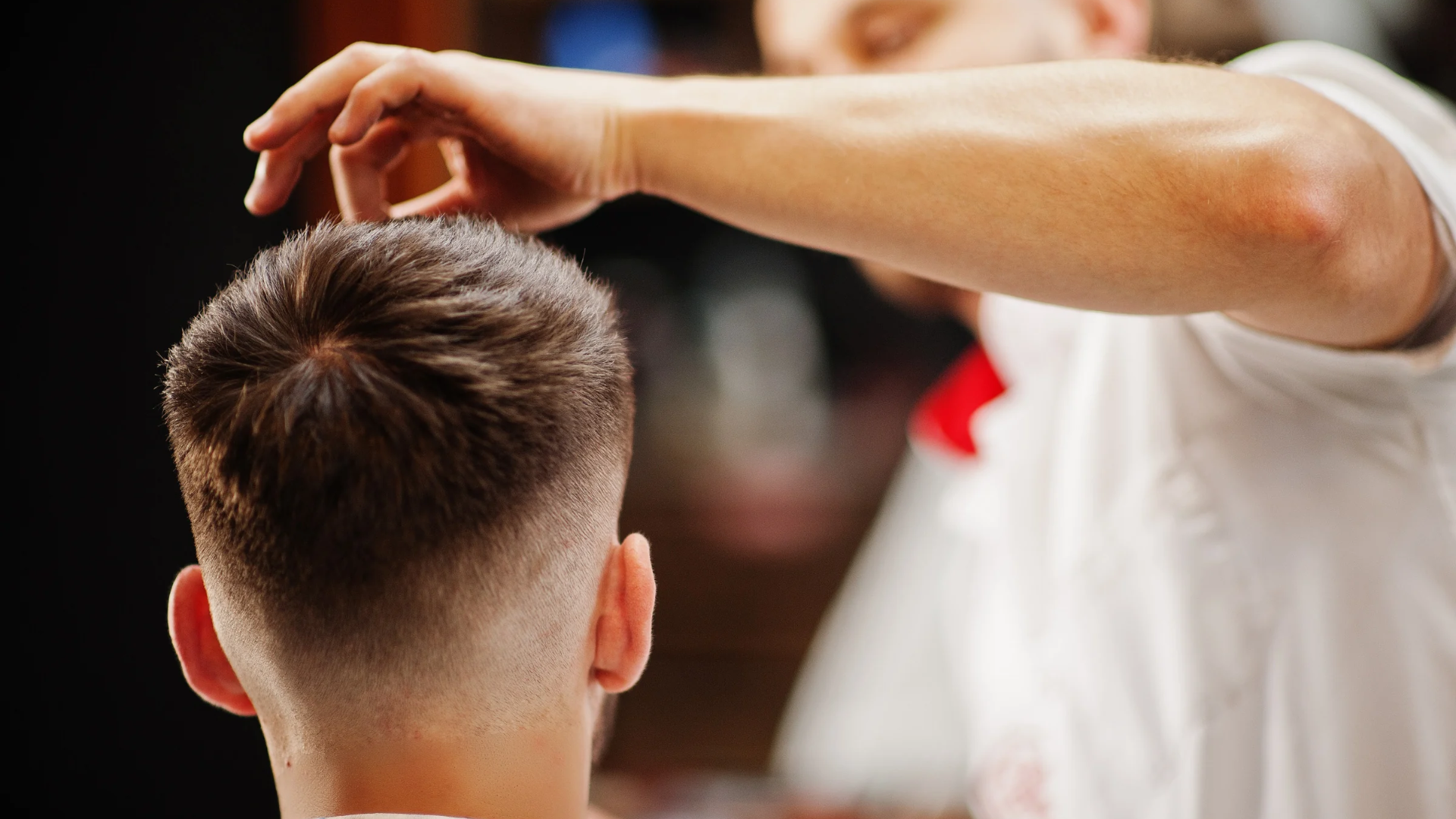
There’s a small manila envelope in the top drawer of my station. Inside sits a curl of blond baby hair, soft as dandelion fluff, tied with a piece of blue thread.
It belongs to a young man named Marcus. I cut that curl when he was fourteen months old, sitting on his mother’s lap, crying like I’d stolen his favorite truck. His mom forgot the envelope on the counter that day. She came back for it the next week, saw how carefully I’d kept it, and told me to hold onto it “until he’s grown.”
Marcus is twenty-six now. Last spring he sat in my chair the morning of his wedding. When I finished, I slid that envelope out of the drawer and handed it to him. He opened it, looked at the curl, and didn’t say anything for a good long while. Then he laughed and said, “I don’t remember crying.” I told him he did. A lot.
I’ve been a barber for more than twenty years, and that’s the part of this job nobody puts on the sign out front. You don’t just cut hair. You watch lives happen, a few weeks at a time.
Why Men Mark Big Moments With a Cut
Men aren’t always great at saying how we feel. We don’t throw ourselves parties for getting a promotion or write in journals about becoming a father. But we do get haircuts.
A fresh cut is one of the few rituals men reliably keep. It’s how a lot of us say, without saying it, something important is about to happen. The first day of school. The interview. The wedding. The funeral. The day we hold a newborn and realize we’re somebody’s dad now.
There’s a practical side too. Big days come with cameras, handshakes and first impressions. Nobody wants to look back at his wedding album and see a shaggy neckline or a blowout that collapsed by the reception. A well-timed cut is like a pressed shirt. You may not notice it when it’s right, but you’ll notice it forever when it’s wrong.
And there’s a quieter side. The chair is a place to slow down. For thirty minutes, with a warm cape around your shoulders and the steady hum of clippers in your ear, you get to sit with what’s coming. Some men talk the whole time. Some say nothing at all. Both are fine.
What You’ll Take Away From This Guide
This guide follows a man’s life the way my appointment book does, from a toddler’s first trim to a retiree’s last day on the job. Along the way, you’ll learn:
- How to time each milestone cut so it looks its best on the day that matters
- Which styles suit each stage of life, and how to choose between them
- How hair type changes your planning
- The mistakes that wreck big-day hair, and how to avoid them
- What milestone cuts cost, and where the real value lives
- A simple checklist you can use for any big moment
Before we walk through a lifetime of cuts, it helps to know that men have been marking milestones with hair for thousands of years.
A Short History of the Milestone Cut
Ancient Rites and Coming-of-Age Hair
Cutting hair to mark a turning point is one of the oldest habits people have.
In ancient Greece, young men often dedicated a lock of hair to a god or river when they came of age. In ancient Rome, a boy’s first shave, called the depositio barbae, was a family celebration, and the whiskers were sometimes kept in a small box as an offering. In feudal Japan, a coming-of-age ceremony called genpuku traditionally included a new hairstyle that announced a boy had become a man.
Many traditions still live on today. Jewish families celebrate upsherin, a boy’s first haircut around age three. Hindu families hold a mundan ceremony, shaving a young child’s head as a blessing. In many Muslim families, a newborn’s head is shaved in the first week, with the weight of the hair given to charity in silver.
Different places, different customs. The idea underneath stays the same: when a life changes, the hair changes with it.
The Saturday Shop and the Sunday Best
In America, the neighborhood shop became the stage for these moments.
Through much of the twentieth century, a boy’s Saturday morning cut was a weekly appointment with manhood. He sat on a padded board laid across the arms of a big leather chair, breathing in bay rum and talc, listening to grown men argue about baseball and politics. He learned how men talked by listening to them.
Then came Sunday. The fresh cut met the church clothes, the shined shoes and the family photo on the front steps. Weddings, graduations and first communions all ran through that same Saturday chair. Many older clients still tell me they can’t walk into a shop without hearing their father’s voice saying, “Sit up straight, he’s working.”
Milestone Cuts Through the Decades
| Decade | Signature Milestone Cut | Where You’d See It |
| 1920s | Slick side part with tonic | Weddings, first jobs, church |
| 1940s | Military crew cut | Induction day, homecoming photos |
| 1950s | Flattop or pompadour | Prom, graduation, the first car |
| 1960s | Ivy League and longer mop tops | Senior portraits, college send-offs |
| 1970s | Longer layers, full sideburns | Weddings with wide lapels |
| 1980s | Feathered sides, early high-top fades | Prom and yearbook photos |
| 1990s | Caesar cut, curtains, buzz cuts | Graduations and first interviews |
| 2000s | Spiky tops, short faux hawks | School pictures and proms |
| 2010s | Undercuts, skin fades, full beards | Weddings and groomsmen photos |
| 2020s | Low tapers, textured crops, groomed beards | Every milestone, often with matching groomsmen |
Look at any family photo album and you can almost date the pictures by the haircuts. Your grandfather’s wedding part, your dad’s feathered prom hair, your own questionable choices from middle school. Hair doesn’t lie about the year.
History explains why we mark milestones with a cut. Science explains why it actually works.
Why a Fresh Cut Changes How You Feel and Look
First Impressions Happen in a Blink
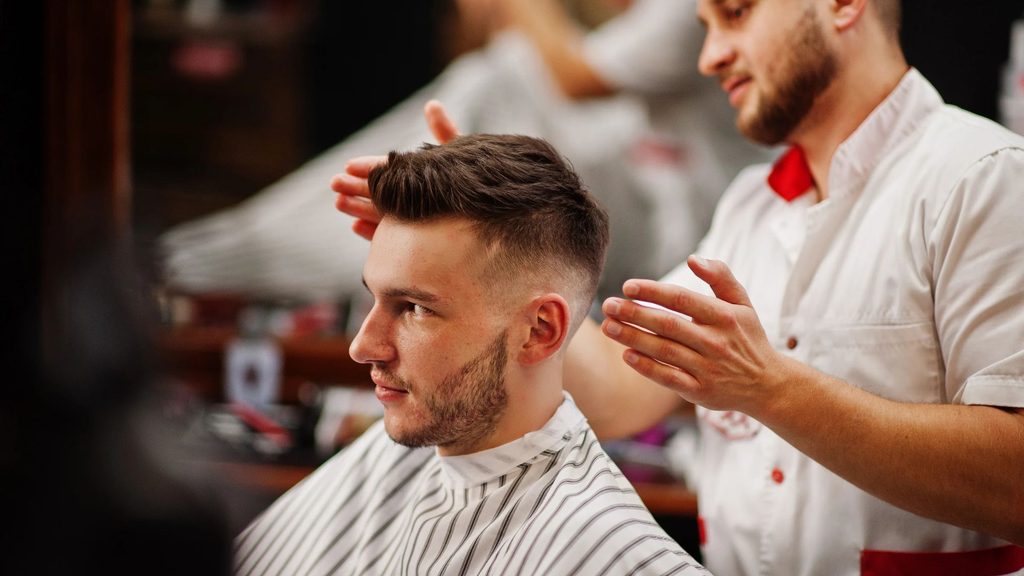
Researchers Janine Willis and Alexander Todorov at Princeton University found in a 2006 study that people form judgments about a face’s trustworthiness and competence after seeing it for just one tenth of a second. Longer viewing didn’t change those judgments much. It mostly made people more confident in them.
That’s not a lot of time to make your case. Hair frames the face, so it’s part of that split-second read. A clean neckline and a shape that fits your head tell people you pay attention. A grown-out, uneven cut tells them something else, fair or not.
This matters most at milestones, where first impressions carry real weight. An interviewer, a future father-in-law, a new teacher. You can’t control everything they think. You can control whether your hair helps or hurts.
The Confidence You Feel at the Nape
There’s also the part that happens inside your own head.
Every man knows the feeling of walking out of the shop with a fresh cut. The cool air on the back of the neck. The way you check your reflection in a car window. You stand a little straighter. It’s like putting on a new pair of cleats before a big game. They don’t make you faster, but somehow you play like they do.
I see it most with kids on the first day of school and grooms on their wedding morning. The nerves are real. But a fresh cut gives them one less thing to worry about. When you know you look sharp, your attention can go where it belongs: on the people and the moment in front of you.
Timing the Cut Around Hair Growth
According to the American Academy of Dermatology, scalp hair grows about half an inch per month, roughly an eighth of an inch per week. That steady growth is the secret behind all milestone timing.
A cut looks its absolute sharpest in the first day or two, but it often looks its most natural a few days later, once the edges soften and the hair settles. How much time you want depends on the style.
| Style | Ideal Days Before the Event | Why |
| Skin fade | 1 to 2 days | Fades lose crispness fastest |
| Low or mid taper | 3 to 5 days | Soft blend settles in nicely |
| Classic scissor cut | 5 to 7 days | Edges relax, top falls naturally |
| Uniform buzz | 2 to 4 days | Short hair shows growth quickly |
| Longer styles (3 inches or more on top) | 7 to 10 days | More time for shape to settle |
| Beard shape-up | 1 to 2 days | Lines blur quickly on the cheeks and neck |
Notice the pattern. The shorter and sharper the cut, the closer to the event it should happen. The longer and softer the cut, the more breathing room it needs.
With that timing logic in mind, let’s start where every man’s hair story begins: the very first cut.
The Very First Haircut
Signs It’s Time
There’s no official age for a first haircut. Some babies are born with a full head of hair. Others stay nearly bald until they’re two.
Most families come in somewhere between 12 months and 2 years. The usual signs are easy to spot:
- Hair falling into the eyes
- Uneven tufts, often longer at the back like a tiny mullet
- Tangles that make bath time a wrestling match
- A family tradition or event, like a christening, birthday photos or a holiday card
If none of those apply, there’s no rush. Baby hair isn’t going anywhere, and a later first cut often goes more smoothly because the child is a bit calmer and more curious.
Parent’s Lap vs. the Big Chair
| Factor | On a Parent’s Lap | In the Big Chair (with booster) |
| Best age | Under about 2 and a half | Around 3 and up |
| Child’s comfort | High, feels safe | Depends on temperament |
| Cutter’s angle | Harder, works around the parent | Easier, cleaner result |
| Photos | Sweet family shots | The classic “big boy” photo |
| Parent’s outfit | Will be covered in hair | Stays clean |
| Time needed | 10 to 15 minutes | 10 to 20 minutes |
For most first cuts, I start on the lap. Mom or Dad wears a cape too, and we keep things quick and gentle. Scissors usually do all the work. Clippers can wait.
One tip from decades of first cuts: book the morning, after breakfast and before nap time. A rested, fed toddler is a cooperative toddler. A hungry one is a tiny tornado.
Saving the Keepsake
The first cut is one of the few milestones where the hair itself becomes the souvenir.
Before I start, I ask parents if they’d like a lock saved. I’ll clip a small piece from the back or the top, where the hair is longest, and tuck it into an envelope or a small bag. Some families tie it with ribbon. Many shops also offer a first haircut certificate with the date and a photo.
Write the date on the envelope. Trust me. Twenty years from now, nobody will remember whether it was the spring or the fall, and that little detail will matter more than you’d expect.
That first wobbly cut is just the warm-up. A couple of years later, the next big moment arrives with a backpack and a lunchbox.
First Day of School and the Lunchbox Years
Styles a Kid Can Actually Live With
The best school haircut is one a kid can’t mess up.
Think about a typical school day. Recess, gym class, a hat on the playground, a hoodie pulled over the head, a nap on the desk after lunch. Whatever style he walks in with at 8 a.m. needs to survive all of that.
| Grade Range | Good Style Choices | Why They Work |
| Pre-K and kindergarten | Short scissor cut, soft taper | No styling, easy to wash |
| Grades 1 to 3 | Short crop, classic side part, short buzz | Holds up through recess and hats |
| Grades 4 to 5 | Textured top with tapered sides | A little style, still low effort |
| Curly or coily hair, any grade | Short taper with natural top, soft edges | Shows texture, gentle on young scalps |
For young kids, I steer parents away from anything that needs gel or a blow-dryer. A six-year-old isn’t going to touch up his pompadour in the bathroom mirror after lunch. He’s going to stick his head under the drinking fountain.
Timing Before the First Bell
The first day of school is a huge moment. The National Center for Education Statistics reports that nearly 50 million students attend public elementary and secondary schools in the U.S., and late summer is when a big share of them seem to come through my door at once.
Here’s my honest advice: book early. The last week of summer is the busiest of the year for kids’ cuts. Wait too long and you’ll be scrambling for any open slot.
For most kids, five to seven days before the first day is perfect. The cut has time to settle, any little mistakes have time to soften, and he doesn’t walk in looking freshly scalped. If your child has a short fade, push it closer, two or three days out.
The National Retail Federation estimated that families with K-12 kids planned to spend around $870 per household on back-to-school items in 2024. A haircut is a small slice of that budget, but it’s often the one kids remember most when they see the class photo.
Picture Day Strategy
Picture day is its own little milestone, and it doesn’t always line up with the first day of school.
| Approach | Cut for First Day Only | Cut Timed for Picture Day |
| Visits needed | One | Possibly two in a few weeks |
| Photo result | Hair may be 3 to 5 weeks grown out | Fresh, sharp in the photo |
| Cost | Lower | Slightly higher |
| Best for | Slower-growing hair, longer styles | Short fades, tapers, thick hair |
If picture day falls more than three weeks after school starts, and your son wears a short style, a quick touch-up a few days before is worth it. That photo goes in the yearbook, on Grandma’s fridge and eventually into a frame on the wall at his wedding rehearsal. No pressure.
Then, somewhere around age eleven, something changes. He starts to have opinions.
The Teen Years: Middle School to Prom Night
When He Starts Bringing Photos
You’ll know the moment. Your son sits down in the chair, pulls out his phone and shows a photo of a soccer star or a musician. “Can you do this?”
This is a big step, and I take it seriously. It’s often the first time a boy chooses how he wants the world to see him. My job is to listen, look closely at his hair type and head shape, and tell him honestly what’s possible.
Sometimes the answer is “Yes, easily.” Sometimes it’s “Your hair’s too straight for those curls, but here’s how we get close.” I never laugh at a request. The kid who asks for something bold at twelve is building the confidence he’ll need at twenty-five.
Parent’s Pick vs. Kid’s Pick
Every family hits this one. Dad wants a neat side part. Son wants a fade with a design shaved in.
| Factor | Parent’s Pick | Kid’s Pick |
| Usual style | Classic, conservative | Trendy, inspired by athletes or creators |
| Upkeep | Often lower | Often higher, more frequent visits |
| School dress code risk | Low | Sometimes higher with designs or bright color |
| Kid’s confidence | Can drop if he hates it | Usually higher |
| Long-term lesson | Following rules | Owning choices and consequences |
My usual advice to fathers? Pick your battles. Hair grows back about half an inch a month. A haircut is one of the safest places for a kid to try something, get it a little wrong, and learn from it. Save the hard “no” for dress code issues or big events where the photos really matter.
A good compromise often works: the kid chooses the everyday style, the parent gets a say for family weddings and school photos.
Building the Prom Cut Around the Suit
Prom and homecoming are many young men’s first formal nights. Rented tux, boutonnière, photos on someone’s front lawn with twelve parents holding up phones.
The cut should match the outfit. A sharp tux usually pairs best with a clean, structured style: a side part, a short textured crop or a tidy taper. A more relaxed suit or a colored jacket can handle a bit more texture and movement.
Schedule the cut two to four days before prom for most styles, or one to two days for a skin fade. And please, tell him not to try a new product the morning of. I’ve seen more than one prom night look ruined by a heavy pomade he found in his uncle’s bathroom cabinet.
Classic vs. Trendy for Big Nights
| Factor | Classic Cut | Trendy Cut |
| Examples | Side part, Ivy League, soft taper | Skin fade with texture, modern mullet, curtains |
| How photos age | Timeless | Can look dated in 10 years |
| Fit with formalwear | Excellent | Depends on the outfit |
| Personality shown | Polished, mature | Bold, current |
| Risk of regret | Low | Moderate |
There’s no wrong answer. But I gently remind teens that prom photos have a long shelf life. Your dad’s feathered hair from 1986 is proof. A classic shape with a little modern texture usually gives you the best of both.
High school ends, the cap goes on, and suddenly the stakes get real.
Graduation and the First Job Interview
The Cap Problem Nobody Mentions
Here’s a graduation detail almost nobody thinks about until it’s too late: the cap.
A mortarboard sits right on top of the head and flattens whatever’s underneath. Tall styles and big quiffs don’t survive it. Long hair on the sides can puff out awkwardly under the brim.
The National Center for Education Statistics projects about 3.8 million high school graduates each year in the U.S., and I’d guess plenty of them are surprised by their hat hair in the photos. The best graduation cuts are short and close at the sides, with a top that looks good both pressed under a cap and tousled after tossing it in the air. Cut it about four to six days before the ceremony.
Interview Cuts That Say “Ready”
A first job interview is often the first time a young man is judged entirely as an adult. Hair should fit the field, without hiding who he is.
| Industry | Safe, Sharp Choices | Watch Out For |
| Finance, law, corporate | Side part, classic taper, short crop | Extreme fades, bold color |
| Tech and startups | Textured crop, modern taper, neat curls | Looking unkempt by accident |
| Trades and construction | Short crop, buzz, low-maintenance taper | Styles that fight a hard hat |
| Healthcare | Short, clean cuts that stay neat under caps | Long hair that needs tying back |
| Creative fields | More freedom: texture, length, personality | Grown-out shapes that look careless |
| Military and law enforcement | High and tight, short taper | Anything outside regulation |
The rule underneath every row is simple: look intentional. An interviewer can accept almost any style that looks cared for. What hurts you is the cut that looks like you forgot about it.
Beard or Clean Shave on Day One
| Factor | Clean Shave | Groomed Beard |
| First impression | Fresh, youthful | Mature, confident |
| Upkeep | Daily shaving | Trims every 1 to 2 weeks |
| Best for | Patchy growth, conservative fields | Full growth, relaxed or creative fields |
| Risk | Razor bumps, especially on curly hair | Looking scruffy if not shaped |
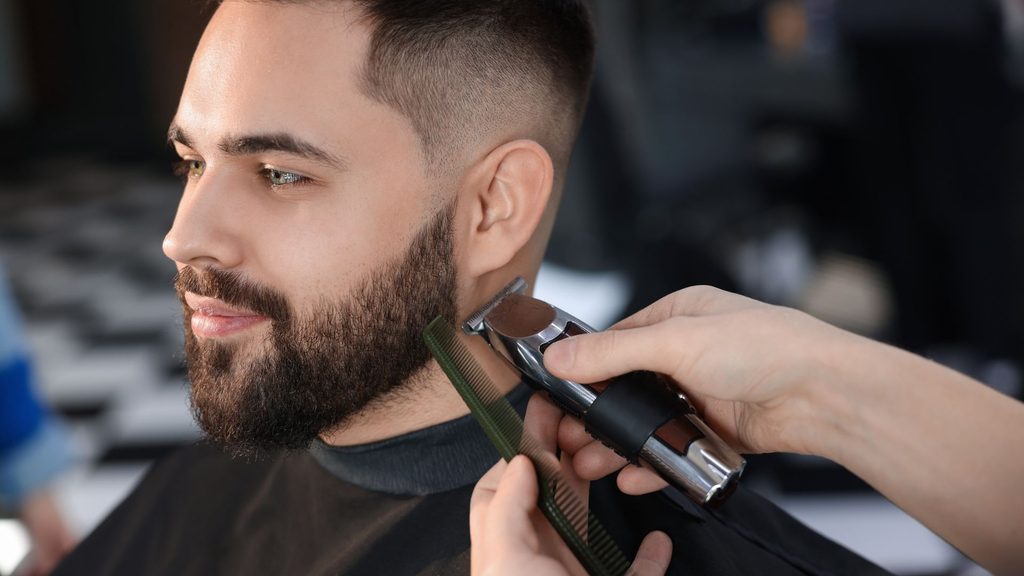
| Interview advice | Shave the night before to calm irritation | Shape-up 1 to 2 days before |
If your beard is full and even, keep it, just keep it sharp. If it’s patchy, shave it for the interview and try again once you’ve landed the job. That’s not a rule. It’s just the best bet.
Graduation often means leaving home, and that brings a whole new set of haircut questions.
Leaving Home: Military, College and the Big Move
Basic Training and the Induction Buzz
Few haircuts carry more weight than the one a recruit gets on his first day of basic training.
Every branch has its own grooming standards. The Army, for instance, sets its rules in Army Regulation 670-1, which covers hair length, bulk and tapering. For new recruits, though, the first-day cut is simple: nearly everything comes off.
Many young men come see me a week or two before they ship out. Some want to buzz it short themselves so the first day isn’t such a shock. Others want one last good cut before the clippers take over. I’ve had mothers stand by the chair and cry. I’ve had fathers who served shake their son’s hand afterward like they’d just welcomed him into a club.
If you’re heading to basic, my advice is to go short a week before you leave. It gives your scalp time to adjust, so the induction cut doesn’t sting as much, literally or emotionally.
The College Freshman Reinvention
College is a fresh start, and plenty of freshmen use it to try a new look. The kid who wore a neat part for twelve years shows up in the fall with longer hair, curls he finally stopped cutting off, or a beard he’s been dreaming about since tenth grade.
I love it. Freshman year is a low-stakes time to experiment. Nobody’s taking wedding photos. Your professors don’t care.
My only practical advice is to get one good cut right before you leave. That gives you a clean shape to grow from, so the “growing it out” phase looks intentional instead of neglected.
Keeping Your Cut When You’re Far From Your Regular Chair
Leaving home means leaving your regular cutter behind. That can feel like losing a good mechanic.
| Option | Stick With Your Hometown Shop | Find a New Shop Where You Live |
| Consistency | Knows your hair and history | Has to learn your hair |
| Convenience | Only on breaks and holidays | Every few weeks, nearby |
| Cut freshness | Long stretches between cuts | Regular upkeep |
| Cost | Familiar prices | Varies by city |
| Best approach | Use for big events and breaks | Use for everyday upkeep |
When you search for a barber near me in a new city, don’t just pick the closest pin on the map. Look at photos of real cuts on clients with hair like yours. Walk in, watch for a few minutes, and see if the room feels right. Take a photo of your favorite cut from home and bring it with you. A good pro can match it closely if you tell him what you liked about it.
All of this practice, all those years of cuts, eventually leads to the one day where the photos will hang on walls for generations.
Wedding Day: The Cut of a Lifetime
Your Wedding Hair Timeline
Weddings are big investments. The Knot’s 2025 Real Weddings Study put the average U.S. wedding cost at around $33,000, with roughly 116 guests. With that much planning and that many cameras, the groom’s hair deserves a real plan, not a rushed Friday afternoon slot.
The U.S. Census Bureau reports that the median age at first marriage for men is now about 30, which means most grooms have plenty of haircuts behind them. Still, a wedding is different. Here’s the timeline I give every groom.
| Time Before the Wedding | What to Do | Why |
| 3 to 6 months | Decide on a style, start growing if needed | Longer styles need time |
| 6 to 8 weeks | Trial cut with your regular cutter | Test the look and the photos |
| 3 to 4 weeks | Shaping cut | Sets the foundation |
| 5 to 7 days (scissor cuts, longer tops) | Final cut | Edges settle naturally |
| 1 to 3 days (fades, tapers) | Final cut and beard shape-up | Maximum sharpness |
| Morning of | Hot towel, neck cleanup, styling | Fresh for the camera |
Write these dates in your calendar the same day you book the venue. They’re easy to forget when you’re also tasting cake and arguing about seating charts.
The Trial Cut
A trial cut is exactly what it sounds like: a test run of your wedding look, done six to eight weeks before the big day.
Bring photos of the style you want. Bring a photo of your suit or tux if you have one. Bring your partner’s opinion, if you’re smart. Then get the cut and live with it. Take photos in daylight and indoor light. Style it yourself a few mornings. Notice what you like and what bugs you.
If it’s not right, you have time to adjust. That’s the whole point. A golfer doesn’t try a brand-new swing on the eighteenth hole of a championship. He practices on the range first.
Morning-of Grooming
Some grooms book a morning-of appointment, and I highly recommend it if you can fit it in.
The morning visit isn’t a full cut. It’s the finishing touches: a hot towel to open up the pores, a quick neck cleanup, a straight-razor shave or beard detailing, and styling with the product you’ll actually wear. The warm towel alone settles the nerves. I’ve watched grooms walk in pale and jittery and walk out breathing slowly, smelling of lather and witch hazel, ready to go.
This is also where a smooth Beard-to-Haircut blend matters most. On a wedding morning, the transition between your sideburns and your beard should flow like one continuous line. Up close photos catch everything, and that seam is right at the edge of the frame in half your pictures.
One more tip: keep a small comb and a travel-size version of your styling product in your jacket pocket. Hugs, wind and dancing will test your hair all evening.
Getting the Groomsmen on the Same Page
A wedding party in matching suits with mismatched hair looks like a team photo where half the players forgot their jerseys.
| Approach | Everyone Gets Similar Cuts | Everyone Keeps His Own Style |
| Photo look | Polished, unified | Natural, personal |
| Planning | Group booking needed | Easy |
| Best for | Formal, traditional weddings | Relaxed, casual weddings |
| Fair to different hair types | Needs flexibility | Yes |
| Bonding | A great pre-wedding hangout | Less shared experience |
You don’t need everyone to have identical cuts. What you need is everyone looking fresh and finished. Ask your groomsmen to get cut within the same few days. Better yet, book a group appointment. Some of the best laughs I’ve heard in my shop have come from a groom and his buddies sitting in a row, giving each other a hard time about bald spots.
After the wedding comes the long middle of life, and that has its own milestones worth marking.
Fatherhood, Big Birthdays and the Middle Chapters
Becoming a Dad
According to the CDC’s National Center for Health Statistics, about 3.6 million babies are born in the U.S. each year. That’s a lot of brand-new fathers walking around in a sleep-deprived fog.
New dads often come in right before the due date. Some want a sharp cut for the hospital photos. Many want something they won’t have to think about for weeks. I usually recommend a clean, low-maintenance shape, often a short taper or a tidy crop, cut about a week before the due date. Babies don’t always keep their appointments, so a cut that still looks good three weeks later is worth a lot.
And here’s a quiet joy of the job: the dad who came in nervous before the birth often comes back a few months later carrying the reason he hasn’t slept.
Turning 30, 40 and 50
Big birthdays have a way of making men look in the mirror a little longer.
At 30, many men realize the style they’ve worn since college might be due for an update. At 40, the gray starts showing up uninvited, along with a hairline that’s quietly moving north. At 50, many men are looking for something that feels both modern and age-appropriate.
The American Hair Loss Association reports that about two-thirds of American men experience some noticeable hair loss by age 35, and about 85 percent have significantly thinning hair by age 50. So if your milestone birthday comes with a little less hair than you’d like, you’re in good company.
A milestone birthday is a fine excuse to try something new. A shorter cut that works with your hairline. Letting the gray show proudly. A beard that frames a jaw that’s softened a bit. The best cuts at any age are the ones that look like you meant them.
Promotions, Fresh Starts and Retirement
Not every milestone comes with a party.
A promotion. A new job in a new city. The end of a hard year. Getting clean. Getting through a divorce. Many men mark these moments with a cut, sometimes a big change, sometimes just a fresh version of their usual.
Then there’s retirement. The Center for Retirement Research at Boston College has reported that the average retirement age for American men is around 65. I’ve had men come in on their last morning of work, after forty years at the same company, just to look sharp walking out the door one final time. A retirement cut doesn’t need to impress anybody. It just needs to feel like a proper ending.
Every one of these milestones looks a little different depending on what’s growing on your head.
How Hair Type Shapes Milestone Planning
Straight and Fine
Straight, fine hair shows every snip, which means the timing of milestone cuts matters a lot. A fresh cut on fine hair can look a little too sharp on day one, with visible lines from the scissors.
The fix is to give it a few extra days to settle, usually five to seven before a big event. Use a light matte product rather than heavy pomade, which can make fine hair look thin and stringy under camera flashes.
Thick and Wavy
Thick hair grows out and puffs out. A cut that looks perfect on Monday can look heavy and bulky by the following weekend.
For milestone events, thick hair usually benefits from a cut three to five days out, with extra thinning or texturing on the sides so it lies flat. Waves can be gorgeous in photos, so don’t fight them. Let your cutter shape the cut around how your hair naturally falls.
Curly and Coily
Curly and coily hair offers some of the most striking milestone looks, from sharp tapers with defined curls to clean line-ups and smooth waves.
| Hair Type | Best Milestone Timing | Key Tips | Common Big-Day Risk |
| Straight and fine | 5 to 7 days before | Light matte product | Visible scissor lines, flat hair |
| Thick and wavy | 3 to 5 days before | Debulk the sides | Puffiness in photos |
| Curly | 4 to 6 days before | Shape curls dry, moisturize | Frizz in humid weather |
| Coily | 1 to 3 days for line-ups | Soft edges for sensitive skin | Razor bumps at the hairline |
| Thinning | 3 to 5 days before | Shorter overall, matte finish | Scalp shine under flash |
| Gray or silver | 3 to 5 days before | Purple shampoo for brassiness | Yellow tones in photos |
One important note: very close line-ups can irritate the skin on curly and coily hair, especially along the forehead and neck. The American Academy of Dermatology notes that razor bumps are common in people with curly hair and recommends avoiding shaving too close. For a wedding or graduation, schedule the sharpest edge work a day or two before the event rather than the morning of, so any redness has time to calm down.
Thinning and Graying
Thinning hair and gray hair change how cuts look in photos, especially with flash.
For thinning hair, a shorter cut on the sides and top usually looks fuller, because it reduces the contrast between thick and thin areas. Matte products work better than shiny ones, which can reflect light and make the scalp more visible.
For gray hair, the main enemy is a yellow or brassy tint, often caused by sun, hard water or smoke. A purple shampoo once or twice in the week before a big event can brighten gray to a clean silver. Just don’t leave it on too long. I’ve had a grandfather show up with a faint lavender tint to his wedding toast. He was a good sport about it. His grandkids still bring it up.
Knowing your hair type helps you plan. But even a good plan can go sideways if you fall into a few common traps.
Mistakes That Ruin Big-Day Hair
The Day-Before Cut
The most common mistake I see is the last-minute cut.
| Factor | Cut the Day Before | Cut 3 to 7 Days Before |
| Look in photos | Can look stiff, too sharp, “just cut” | Natural, settled |
| Room for fixes | None | Time to adjust if needed |
| Skin irritation | Fresh redness on the neck | Calmed down |
| Stress level | High, especially if the shop is booked | Low |
| Best for | Skin fades, beard line-ups only | Most cuts and styles |
The day-before cut works fine for very short fades and beard shape-ups. For everything else, you’re giving up your safety net. If something goes a little wrong, there’s no time for it to grow out or get fixed.
Trying Something Brand New
A wedding or graduation is not the time to experiment.
I understand the temptation. You’re excited, the moment feels big, and you want to look different. But a brand-new style is like a brand-new pair of shoes. You don’t wear them for the first time on a twelve-hour day. You break them in first.
If you want a new look for a milestone, try it at least a month or two ahead. Live with it. Take photos. If you love it, great. If not, you have time to go back to what works.
Forgetting the Beard, Brows and Neckline
Many men focus entirely on the top of their head and forget the details that frame the face.
| Forgotten Detail | What It Looks Like in Photos | Simple Fix |
| Neckline | Fuzzy, uneven back of the neck | Cleanup 1 to 2 days before |
| Beard edges | Blurry cheek and neck lines | Shape-up 1 to 2 days before |
| Eyebrows | Stray long hairs, unibrow | Light trim a few days before |
| Ear and nose hair | Distracting in close-ups | Trim the week of |
| Sideburns | Uneven lengths | Check both sides in the mirror |
| Scalp flakes | Visible on dark suits | Gentle anti-dandruff shampoo all week |
These little things are like the stitching on a good suit. Nobody notices them when they’re right. Everybody notices when they’re wrong, especially in a close-up photo blown up and framed on your mother’s mantel.
Avoiding mistakes is half of good planning. The other half is knowing what it’ll cost.
Cost, Value and Budgeting for Milestones
What Milestone Cuts Usually Cost
Prices vary widely by city and shop, but here’s a general picture.
| Milestone | Typical Service | Approximate Price Range | Typical Time |
| First haircut | Short cut, keepsake lock, certificate | $20 to $40 | 15 to 30 minutes |
| Back-to-school cut | Standard kid’s cut | $15 to $30 | 15 to 25 minutes |
| Prom or homecoming | Cut plus styling | $30 to $50 | 30 to 45 minutes |
| Graduation | Cut, neck cleanup | $25 to $45 | 25 to 40 minutes |
| Job interview | Cut and beard trim | $35 to $60 | 30 to 45 minutes |
| Wedding trial cut | Full consultation and cut | $35 to $60 | 30 to 45 minutes |
| Wedding morning | Hot towel, shave or beard detail, styling | $50 to $120 | 45 to 75 minutes |
| Groomsmen package | Group cuts or cleanups | $150 to $500+ | 2 to 4 hours |
Compared to everything else on a big day, a haircut is one of the cheapest items on the list. And it shows up in every single photo.
Packages vs. Single Visits
Many shops now offer milestone packages, especially for weddings.
| Factor | Wedding Package | Single Visits |
| Cost | Often discounted overall | Full price each time |
| Planning | Dates locked in early | Book as you go |
| Consistency | Same cutter for every step | May vary if your regular is booked |
| Extras | Hot towels, shaves, sometimes drinks | Pay separately |
| Flexibility | Less if plans change | Total freedom |
| Best for | Grooms, groomsmen, big events | Smaller milestones, tight budgets |
If you’re a groom, a package is usually worth it. It locks in your trial, final cut and morning-of service, often with the same person every time. During busy wedding season, that guaranteed slot alone is worth the price.
Gifts That Honor a Milestone
Haircut-related gifts can feel surprisingly personal. A few ideas:
- For a new grad: a prepaid interview cut and a quality comb
- For a groom: a wedding morning shave package or a premium beard kit
- For a groomsman: a group cut as a thank-you, followed by a round at the bar next door
- For a new dad: a hot towel shave, an hour of quiet he didn’t know he needed
- For a son starting school: his first “big kid” cut with Dad in the next chair
- For a retiring father: a classic straight-razor shave and a framed photo of his first-ever cut, if you can find it
The best gifts aren’t really about the hair. They’re about telling someone, I see this moment matters to you.
Numbers tell part of the story. The people who sit in the chair tell the rest.
Stories From the Chair
The Kindergartner Who Wanted Dad’s Cut
Five-year-old Jayden came in the week before kindergarten with his dad, a firefighter with a tight high-and-tight. Jayden pointed at his father’s head and said, “That one.”
Dad laughed. “You sure, bud?”
Jayden nodded hard enough to shake his whole body. So we gave him a softer, kid-friendly version: short sides, a little more length on top. When I spun the chair to the mirror, he looked at himself, then at his dad, then back at himself.
“We match,” he whispered. His dad took a photo of them side by side in the mirror. Last I heard, that photo is still taped inside the fire station locker.
The Groom Who Almost Shaved It All
Two weeks before his wedding, Daniel came in and said, “Take it all off. Beard too.”
He’d worn a full beard for seven years. His fiancée had never seen his chin. I asked him why the sudden change. He shrugged. “New chapter, new face.”
I didn’t argue. But I asked him one question: “Have you ever seen your wedding suit without the beard?” He hadn’t. So we compromised. I trimmed the beard short and sharp, cleaned up his haircut, and told him if he still wanted to shave it in a week, I’d do it myself.
He came back four days later, looked in the mirror and said, “Leave it.” On the wedding morning, I gave him a hot towel and a final shape-up. His bride told me later that when she saw him at the end of the aisle, she was glad he still looked like himself. “Just the best version,” she said.
Three Generations on One Saturday
Every so often, the shop gets a Saturday like this one.
A grandfather, eighty-one, walked in with his son and his great-grandson’s father, which made three men and a toddler in tow. The baby’s first haircut was that day. The grandfather had gotten his own first cut from my shop’s original owner back in the 1940s, two doors down from where we are now.
We sat the grandfather in the chair first. Then his son. Then his grandson, holding the baby on his lap. Four generations, one afternoon, one chair. The old man watched the whole time without saying much. When the baby’s first curl fell onto the cape, he reached over and picked it up himself.
“Put that in an envelope,” he said. “Write the date.”
The Last Day at the Plant
Ray had worked at the same manufacturing plant for forty-one years. He came in at 6 a.m. on a Friday, the day he was retiring, and asked for “the same as always, but make it count.”
I’d been cutting Ray’s hair for almost twenty years. Short sides, neat top, a part on the left. I gave him a hot towel, cleaned up his neck and sideburns, and took my time with the part.
When I was done, he looked at himself for a long minute, ran a hand over his head and said, “Good. Now I’m ready.” Then he paid, tipped me twice what he usually did, and walked out to his truck. I found out later that his coworkers had lined the hallway and clapped him out. I like to think the haircut helped him stand a little taller walking through it.
Stories like these keep me in the chair. They also show me where the trade is heading.
Trends and Insights From Behind the Chair
Group Bookings and Milestone Packages
More than ever, men are booking together.
Groomsmen packages have become a regular part of wedding planning, often with hot towels, straight-razor shaves and a cold drink while everyone waits. Father-and-son appointments before the first day of school are booming. Even graduating seniors book in groups, the way they’d rent a limo for prom.
It makes sense. A milestone is a shared moment, and the chair turns into a gathering place. It’s the closest thing many men have to a pre-game locker room.
The Camera Is Planning the Cut
Phones have changed how men think about milestone hair.
Every event now produces hundreds of photos from every angle, many of them shared online within minutes. Men are thinking about how their hair looks from the side and back, not just straight on in the bathroom mirror. Grooms ask about photo lighting. Grads ask about how a cut holds up under a cap. Teens ask how a style will look in a video.
This has made trial cuts and careful timing much more common. Men want to look good in a photo taken at minute 300 of the reception, not just the one at the start.
Classic Shapes Are Winning Again
After a decade of extreme skin fades and dramatic undercuts, I’m seeing a strong return to classic shapes for milestones. Low tapers, side parts, textured crops and well-groomed beards are leading the way.
Part of the reason is time. Men have learned that classic cuts look good longer and age better in photos. The wedding album you’ll show your grandkids should make them say, “You looked great,” not, “What happened to your head?”
The other part is meaning. A classic cut connects a man to the generations before him. When a groom asks for the same side part his grandfather wore in a black-and-white wedding photo, he’s not just choosing a style. He’s choosing a story.
With those trends in mind, here are the questions I hear most often about milestone cuts.
Frequently Asked Questions
How far before my wedding should I get my final haircut?
It depends on your style. For skin fades and very short tapers, get your final cut one to three days before. For scissor cuts and longer styles, aim for five to seven days so the hair settles naturally. Schedule a trial cut six to eight weeks ahead to test the look, and consider a morning-of appointment for a hot towel, neck cleanup and styling.
When should my child get his first haircut?
Most children get their first cut between 12 months and 2 years, usually when hair starts falling in their eyes, looking uneven or tangling easily. Some family traditions set a specific age, such as around three for an upsherin. If your child’s hair is thin or short, there’s no need to rush. Book a morning slot when he’s rested and fed.
What’s the best haircut for a job interview?
Choose a clean, intentional style that fits the industry. Classic side parts and tapers work well in conservative fields like finance and law. Textured crops and modern tapers suit tech and creative roles. Whatever you choose, get it cut three to five days before so it looks fresh but natural, and clean up your beard and neckline a day or two out.
Should I shave my beard for my wedding?
Only if you truly want to and have seen yourself without it recently. A sudden shave can make you look like a stranger in your own photos. If you’re unsure, trim your beard short and sharp, and try shaving it a month or more before the wedding to see how you feel. Most grooms who keep their beards are glad they did.
How do I keep my hair looking good under a graduation cap?
Go shorter on the sides and keep the top manageable, so the cap doesn’t push hair out awkwardly. Avoid tall styles or heavy product, which flatten and look greasy under the cap. Get your cut about four to six days before graduation, and carry a small comb to fix your hair after you toss the cap.
Is it okay to try a new style for prom?
Yes, but test it first. Try the new style at least three to four weeks before prom so you can live with it and adjust if needed. Then get a final touch-up two to four days before the event. A classic cut with some modern texture usually photographs well and won’t look dated in a few years.
Should groomsmen all get the same haircut?
They don’t need identical cuts, but everyone should look fresh and well-groomed. The easiest approach is having all groomsmen get cut within the same few days before the wedding. Group appointments are a fun option and help everyone look polished together, while still letting each man keep a style that suits his hair type.
How can I make gray or thinning hair look good in milestone photos?
For gray hair, use a purple shampoo once or twice in the week before the event to remove yellow tones. For thinning hair, go a little shorter overall and use a matte product rather than a shiny one, which can make the scalp more visible under camera flash. A cut three to five days before the event gives the best balance of fresh and natural.
With your questions answered, let’s pull it all together into a plan you can use for any milestone.
Your Milestone Haircut Plan and a Final Word
The Milestone Checklist
| Step | Timing | What to Do |
| 1. Mark the date | As soon as the event is set | Put it in your calendar with haircut reminders |
| 2. Choose the style | 1 to 3 months before | Gather photos, consider your outfit and hair type |
| 3. Book early | 4 to 8 weeks before | Busy seasons fill fast, especially August and June |
| 4. Trial cut | 6 to 8 weeks before (weddings, big events) | Test the look in photos |
| 5. Final cut | 1 to 7 days before, based on style | Follow the timing table for your cut |
| 6. Details | 1 to 2 days before | Beard, neckline, brows, ears |
| 7. Product check | The week of | Use only products you’ve tested |
| 8. Morning of | Day of the event | Style, comb in pocket, take a breath |
| 9. Keepsake | After the event | Save a photo, a lock of hair or the appointment card |
Print it, screenshot it, or tape it to the bathroom mirror. It works for a five-year-old’s first day of school and a fifty-year-old’s retirement party alike.
Booking Your Next Chapter
Here’s a simple habit that makes every milestone easier: book your next appointment before you leave the chair.
When you know a big event is coming, tell your cutter. Mention the date, the outfit, the photos and how you want to feel. A good pro will help plan backward from that date, so you’re not scrambling the week of.
And if you’re a dad, bring your son along. Let him watch you get cut before his own milestones. Some of the most important lessons a boy learns about growing up aren’t spoken. They’re watched from the chair next to his father’s.
A Final Word From the Chair
At the end of every milestone cut, there’s a moment I never get tired of. I brush the last of the hair from a man’s neck, dust a little talc across his nape, unsnap the cape and spin the chair slowly toward the mirror. For a five-year-old, that moment means “I’m a big kid now.” For a teenager, it means “I look like myself.” For a groom, it means “I’m ready.” For a retiree, it means “That was a good run.” So how do you mark the milestones of your life? You plan a little ahead. You time the cut to the moment. You stick with what makes you feel like yourself, or you take a chance on something new when the stakes are low enough to learn from it. And you let the people who know you, at home and behind the chair, help you get there. Your next big moment might be months away or right around the corner. Either way, write the date down, book the cut, and walk in ready. Hair grows back about half an inch a month. The memories don’t. Make the next one count.