
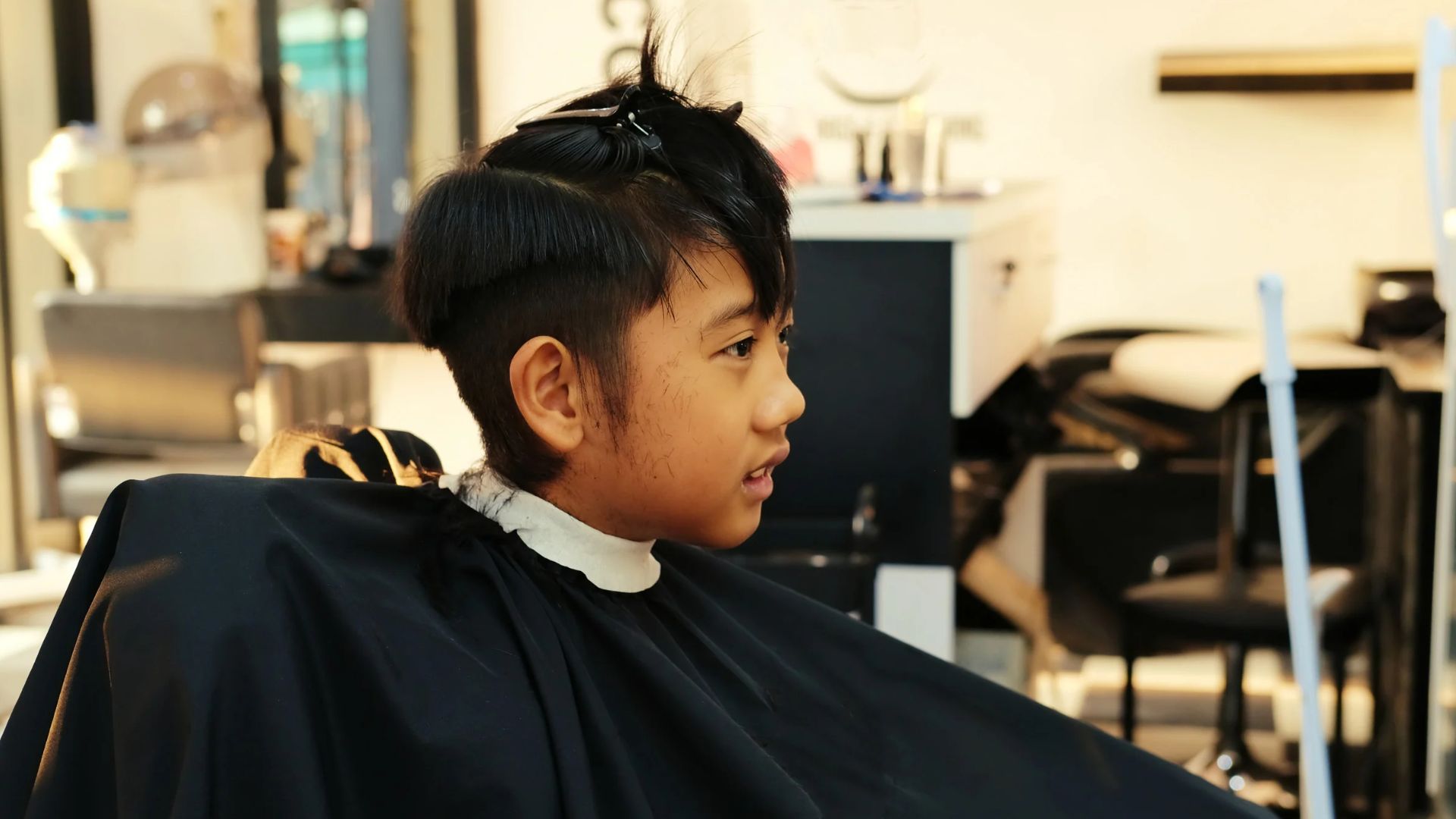
You can smell back-to-school season before you see it. Fresh notebooks in shopping bags by the door. New sneakers that still squeak on the tile. The talc on my counter going faster than usual, and the clippers barely cooling between clients.
The last week of August is the busiest week of my year. Every chair is full by 9 a.m. Dads lean against the wall holding a toddler in one arm and a phone in the other. Moms scroll through photos of soccer players and pop stars. Teenage boys slouch in the waiting chairs, pretending they don’t care, while sneaking looks at the cuts walking out the door.
And nearly every family sits down with the same request. “Something easy. Something he doesn’t have to fuss with.”
It sounds simple. It isn’t. After more than twenty years behind the chair, I can tell you that “easy” means something different for every kid who climbs into that leather seat.
What Parents and Students Actually Mean by “Easy”
When a parent asks for a low-maintenance cut, they usually mean three things at once:
- No battles in the morning. Nobody wants a fight over a comb at 7:15 a.m. with the bus rumbling down the street.
- Fewer trips to the shop. School calendars are packed with practices, recitals and homework. A cut that needs a visit every two weeks eats into that.
- It still looks decent at week five. Nobody wants a son who looks sharp on day one and shaggy by the time picture day rolls around.
Students, especially older ones, add a fourth: it has to look good. A thirteen-year-old will not wear a cut he thinks is embarrassing, no matter how easy it is. Trust me. I’ve watched the silent standoffs in the mirror.
Here’s the honest truth. No single cut wins on all four counts for every kid. A buzz is easy in the morning but grows out fast. A longer textured top grows out gracefully but may need a minute of styling. Picking well means knowing which kind of “easy” matters most in your house.
What You’ll Take Away From This Guide
By the end, you’ll know how to pick a school cut that fits your son, or yourself if you’re the one heading to class. We’ll walk through:
- What low maintenance actually means, broken into parts you can measure
- How hair type, age and activities change the right answer
- A shortlist of reliable styles, plus direct comparisons between close calls
- A five-minute morning routine a kid can run himself
- The common mistakes that turn easy cuts into headaches
- What it all costs, and where the real savings are
- A school-year checklist you can stick on the fridge
Before we talk styles, though, let’s get clear on what “low maintenance” really means, because most people only measure half of it.
What Low Maintenance Really Means
Morning Effort vs. Visit Frequency
Most families judge a cut by one thing: how long it takes to get ready in the morning. That matters. But it’s only one side of the coin.
The other side is how often the cut needs a professional touch to stay looking right. Some styles take zero minutes each morning and need the shop every two weeks. Others take two minutes each morning and can go six weeks between visits.
| Factor | Low Morning Effort Styles | Low Visit Frequency Styles |
| Examples | Buzz, very short crop, skin fade | Textured crop, short scissor cut, soft taper |
| Daily time | Under 1 minute | 1 to 3 minutes |
| Products needed | None | Sometimes one |
| Visits per school year | 15 to 20 | 7 to 10 |
| Looks good at week 5? | Often not | Usually yes |
| Best for | Kids who won’t touch a comb | Busy families who miss appointments |
Think of it like a car. One car gets great gas mileage but needs the shop every few months. Another burns a little more fuel but runs for a year without a hiccup. Neither is wrong. You just want to know which bill you’d rather pay.
Grow-Out Grace: The Forgotten Factor
Here’s the part almost nobody asks about: how gracefully does the cut age?
Some cuts lose their shape all at once. A sharp skin fade can look like a different cut by day ten, with fuzz creeping up the sides and the crisp line gone soft. Other cuts age like a good leather baseball glove. They break in, soften a bit, and still work fine.
For school, grow-out grace is often more important than anything else. Families get busy. Practices run late. A three-week appointment quietly becomes a six-week one. The best school cuts are the ones that still look intentional when life gets in the way.
I tell parents to imagine the cut on the worst week of the semester. Final exams, a stomach bug going around, a tournament on Saturday. Does it still look okay? If yes, you’ve got a winner.
The Four-Question Test
Before any back-to-school cut, I run through four quick questions with the family. You can do the same at your kitchen table.
- How much will he actually do in the morning? Be honest. Not how much he should do. How much he will do.
- How often can you realistically get to the shop? Every three weeks? Every six? Whenever there’s a free Saturday?
- What does his day look like? Sports, swimming, helmets, hats, long bus rides, a nap on the desk after lunch?
- What does he want? Even a six-year-old has opinions. A teenager has strong ones.
The answers almost always point to two or three good options. From there, it’s about fine-tuning to his hair type and head shape.
How School Cuts Got Simpler Over a Century
School cuts haven’t always been about ease. For much of the twentieth century, they were about obedience. A neat part, a stiff dab of tonic, and a mother licking her thumb to smooth down a cowlick on the school steps.
| Era | Typical School Look | What Drove It |
| 1920s to 1930s | Slick side part with tonic | Formal dress codes, Sunday-best culture |
| 1940s | Short crew cut | Wartime practicality, military influence |
| 1950s | Flattop, crew cut, short part | Clean-cut ideals, weekly shop visits |
| 1960s | Ivy League, early mop tops | Rock music, the first school hair battles |
| 1970s | Longer, shaggier layers | Loosened dress codes, relaxed style |
| 1980s | Feathered sides, early high-top fades | TV, music videos, athletes |
| 1990s | Bowl cuts, curtains, Caesar cuts | Boy bands, sitcom stars |
| 2000s | Spiky tops, faux hawks | Hair gel’s golden age |
| 2010s | Undercuts, skin fades | Social media, pro athletes |
| 2020s | Low tapers, textured crops, natural curls | Ease, comfort, embracing texture |
Notice the arc. Cuts started formal, went wild, swung back to sharp, and today they’re settling into something practical. The modern school cut is less about following rules and more about fitting real life.
With a clear definition of “easy” in hand, let’s look at the biology that makes some cuts easier than others.
The Science Behind Easy Hair

Half an Inch a Month, No Matter What
According to the American Academy of Dermatology, scalp hair grows about half an inch per month. That’s roughly an eighth of an inch every week.
Kids’ hair grows at a similar pace to adults’. It doesn’t matter whether he wears a buzz or a mop of curls. The follicles don’t know what style you asked for. They just keep pushing hair out, day after day, like a slow and steady conveyor belt.
That single number explains almost everything about maintenance. Every school cut starts aging the moment he leaves my chair. What changes is how much that aging shows.
Why the Shortest Cuts Change the Fastest
Here’s some quick kitchen-table math that surprises most parents.
| Starting Length | Growth After 3 Weeks | New Length | How Much It Changed |
| #1 buzz (1/8 inch) | About 3/8 inch | 1/2 inch | +300% |
| #3 buzz (3/8 inch) | About 3/8 inch | 3/4 inch | +100% |
| Short crop top (1 inch) | About 3/8 inch | 1 3/8 inches | +38% |
| Textured top (2 inches) | About 3/8 inch | 2 3/8 inches | +19% |
| Longer top (3 inches) | About 3/8 inch | 3 3/8 inches | +13% |
A #1 buzz quadruples in length in three weeks. A two-inch textured top barely looks different. That’s why the “easiest” cut in the morning is often the hardest to keep looking sharp.
It’s a bit like painting a fence. A tiny scuff on a white picket fence stands out a mile. The same scuff on a weathered barn door disappears. Short cuts are the white fence.
Cowlicks, Whorls and Growth Patterns
Every kid has at least one whorl, the spiral where hair changes direction, usually near the crown. Many also have a cowlick at the front hairline that stands up no matter how much water you slap on it.
These growth patterns matter a lot for low-maintenance choices. A cowlick at the front can make a short fringe stick straight up like a rooster’s comb. A double crown can turn a medium-length buzz into a swirl that won’t lie flat.
The trick is to work with the pattern, not against it. A cowlick at the front often looks best with a textured top pushed in the direction it already wants to go. A stubborn crown usually behaves better either very short or long enough to lie down with its own weight. The awkward zone is right in between.
Whenever a new kid sits in my chair, I comb his hair wet before I pick up the clippers. I’m reading the map. Where it swirls, where it parts on its own, where it stands up. That two-minute look tells me more than any photo his dad brings in.
Growth patterns are one part of the map. The hair itself is the other.
Start With the Hair on His Head
Straight and Fine Hair
Straight, fine hair is soft, slippery and lies flat. That sounds easy, and often it is. But fine hair has two quirks.
First, it shows every line. A choppy scissor cut or a harsh clipper line will be visible, especially on lighter hair. Second, it can look thin or limp when it’s medium length, particularly by the end of a long, sweaty school day.
For school, fine hair usually does best with a short textured crop or a soft taper with an inch or two on top. A little texture cut into the top helps it look fuller and hides the morning bedhead. A very short buzz can show a lot of scalp on fine hair, so a #3 or longer often looks better than a #1.
Thick and Wavy Hair
Thick hair grows out and outward. A cut that looks perfect on Saturday can look like a helmet by the following Friday.
The secret to easy thick hair is removing bulk, not just length. Your barber can thin the sides and texturize the top so the hair lies closer to the head. Without that, even a short cut can puff out like a well-fed pigeon.
Waves are a bonus. A short taper with a wavy top looks styled even when he’s done nothing but towel it dry. That’s about as low maintenance as it gets.
Curly and Coily Hair
Curly and coily hair has its own beauty and its own rules. Done right, it’s one of the easiest hair types to maintain for school.
Curly hair often looks best with tapered sides and some length on top, letting the curls do the styling. Spray it with water, add a little leave-in conditioner, scrunch, and he’s done.
Coily hair offers great options: a short, even cut with a clean line-up, a taper with a sponged or twisted top, or waves trained with a brush and durag. Many of these need very little morning time once the routine is set.
One important note. Very close cuts and sharp line-ups can irritate the skin on curly and coily hair. The American Academy of Dermatology notes that razor bumps are common in people with curly hair and recommends not cutting or shaving too close. For school, I often use a guard on the edges instead of going to bare skin, especially for younger kids with sensitive scalps.
Matching Hair Type to Style
| Hair Type | Easiest School Styles | Watch Out For | Grow-Out Grace |
| Straight and fine | Textured crop, soft taper, #3 or #4 buzz | Visible lines, scalp showing | Good |
| Straight and thick | Crew cut, short taper with debulked sides | Puffing at the sides | Fair to good |
| Wavy | Taper with wavy top, textured crop | Frizz in humidity | Very good |
| Curly | Taper with curly top, short curly crop | Dryness, frizz | Very good |
| Coily | Short even cut, taper with sponge or twist top, waves | Bumps from close edges | Good with regular line-ups |
Hair type tells you what’s possible. His daily schedule tells you what’s practical.
Match the Cut to the School Day
Sports, Sweat and Helmets
The National Federation of State High School Associations reported more than 8 million students playing high school sports in the 2023 to 2024 school year, a record. Add youth leagues, and that’s a whole lot of sweaty heads.
Sports change everything about maintenance. Sweat turns styled hair limp. Helmets crush tall tops flat. Long hair flops into eyes during a free throw.
| Activity | Best Low-Maintenance Choice | Why |
| Football, hockey, lacrosse | Buzz, crew cut, short taper | Helmets flatten everything taller |
| Soccer, basketball | Short textured crop, taper | Hair stays out of the eyes |
| Wrestling | Very short buzz or crew cut | Grip, headgear, skin checks |
| Baseball | Short sides, any top that fits under a cap | Cap hair is guaranteed |
| Swimming, diving | Short crop or buzz | Fast drying, less chlorine damage |
| Cross-country, track | Short taper or crop | Sweat dries fast |
| Band, theater, debate | More freedom, any tidy style | No helmet, but stage lights |
If your son plays a helmet sport, steer clear of anything that needs volume on top. It’s like ironing a dress shirt and then sitting on it. The helmet will undo the work every single day.
Hats, Hoods and Headphones
Kids live under stuff. Ball caps at recess. Hoods pulled up on the bus. Big headphones on the walk home.
All of it flattens hair and leaves dents. The best cuts for heavy hat wearers are short on the sides so nothing pokes out, and either very short or naturally textured on top so hat hair looks like a choice rather than an accident.
A textured crop handles a cap beautifully. Pull the cap off, run your fingers through it, and it springs back. A slicked side part, on the other hand, gets a permanent ring around it by lunchtime.
Swim Team and Chlorine
Swimmers are a special case. Chlorine strips natural oils, leaving hair dry, brittle and sometimes a little green if it’s light colored.
For swimmers, short is your friend. A short crop or buzz dries quickly, needs little conditioning and holds up to daily pool sessions. Have him rinse with fresh water before and after swimming, since wet hair absorbs less chlorine. A clarifying or swimmer’s shampoo once or twice a week helps remove buildup.
Curly-haired swimmers need extra moisture. A good leave-in conditioner after practice keeps curls from turning into straw.
Dress Codes and the CROWN Act
Before you settle on a style, check your school’s dress code. Most have relaxed a lot over the years, but some still have rules about designs, colors or length.
There’s also an important legal shift worth knowing about. The CROWN Act, first passed in California in 2019, protects against discrimination based on natural hair texture and protective styles like locs, braids, twists and Afros. It has since become law in roughly two dozen states. In those states, schools can’t punish a student for wearing his natural texture.
If your son wears his hair natural, know your rights. And if a school rule seems unfair, a calm conversation with the principal often goes further than you’d think.
The school day shapes the cut. So does the kid’s age, which changes faster than any parent is ready for.
Age Changes the Answer
Preschool and Kindergarten
At this age, low maintenance means zero maintenance. A four-year-old isn’t styling anything, and he’s going to get paint, applesauce and sandbox dirt in his hair by 10 a.m.
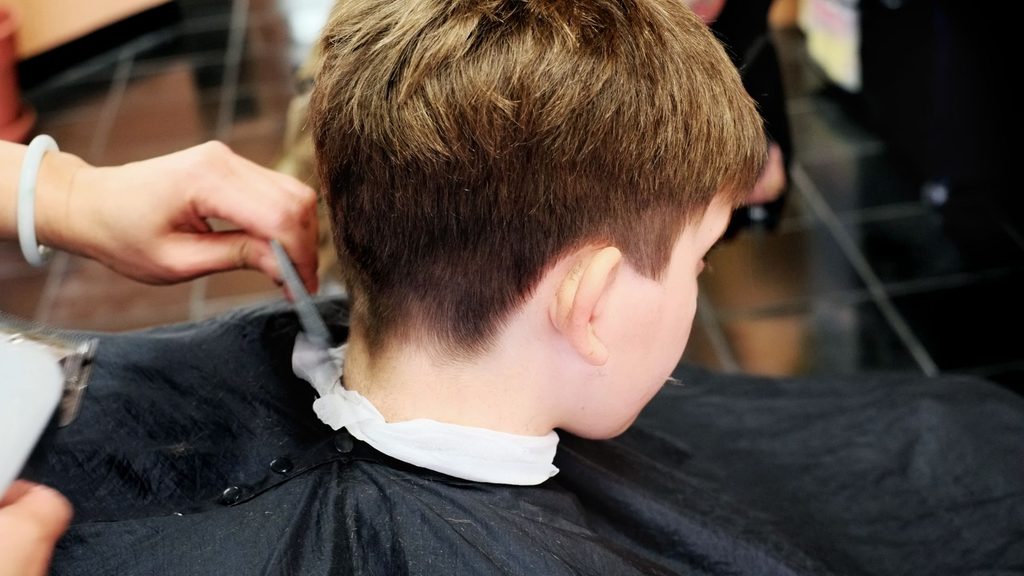
The best choices are short, soft cuts done mostly with scissors. A gentle taper on the sides, a little length on top, and nothing sharp enough to show grow-out. Many little ones are nervous about clippers, so scissors keep the visit calm.
Keep the front out of his eyes. A long fringe means he’ll be pushing it away all day and squinting at the whiteboard.
Elementary School
From first to fifth grade, kids get rougher on their hair and more opinionated about how it looks. Recess, gym class and after-school sports all come into play.
| Grade Range | Easy Styles | Visit Rhythm | Morning Time |
| Pre-K and K | Soft scissor cut, short crop | Every 6 to 8 weeks | None |
| Grades 1 to 3 | Crew cut, short taper, short buzz | Every 4 to 6 weeks | Under 1 minute |
| Grades 4 to 5 | Textured crop, taper with short top | Every 4 to 6 weeks | 1 to 2 minutes |
| Middle school | Textured crop, taper, curly top | Every 3 to 5 weeks | 2 to 3 minutes |
| High school | Wider range, student’s choice | Every 3 to 5 weeks | 2 to 5 minutes |
| College | Anything that fits his life | Every 4 to 8 weeks | Varies |
By third or fourth grade, many boys want a little style. A short textured crop is perfect here. It looks current, needs nothing but a towel and fingers, and survives a day of dodgeball.
Middle School
Middle school is when hair becomes social currency. Suddenly, how he looks matters a lot to him. Puberty also kicks in, bringing oilier scalps, faster-changing hair texture and sometimes the first stubborn waves or curls.
Low maintenance still matters, but now it has to look good too. A taper with a textured top is the workhorse of middle school. It’s flexible, it grows out gracefully and it looks like something an older kid would wear.
Oily scalps may need more frequent washing. Don’t be surprised if a boy who could go three days without shampoo now looks greasy by the next afternoon. That’s normal.
High School and College
High schoolers want ownership of their look, and they should have it. My job, and yours, is to point them toward choices that fit their actual mornings.
The CDC reports that about 7 in 10 high school students don’t get enough sleep on school nights. That tells you everything about teenage mornings. If a cut needs ten minutes of blow-drying, it won’t happen. A teenager will always choose eight more minutes of sleep.
College students have a different challenge: finding a new shop in a new town. When you search “haircut near me” from a dorm room, don’t just pick the closest pin on the map. Look at real photos of cuts on hair like yours. Walk in, watch for a few minutes and see if the place feels right. Bring a photo of your favorite cut from home, along with a few words about what you liked about it.
With age in mind, let’s look at the styles that consistently earn their place on the low-maintenance list.
The Low-Maintenance Shortlist
The Buzz Cut
The buzz cut is clipped to one even length all over, usually with a guard between #2 and #4.
It’s the champion of morning ease. Wake up, wash, done. No comb, no product, no bedhead. For young kids, athletes and boys who simply refuse to deal with their hair, it’s hard to beat.
The trade-off is grow-out. A short buzz loses its crisp look within two to three weeks and can turn fuzzy and uneven at the crown. It also shows every bump on the head and every flake on the scalp.
The Crew Cut
A crew cut is short on the sides and back with a bit more length on top, often an inch or so, getting slightly shorter toward the crown.
It’s the buzz cut’s more forgiving cousin. The extra length on top hides growth better, softens cowlicks and gives a little shape. Morning effort is still close to zero. Run a hand through it and go.
The crew cut has been a school staple since the 1940s for good reason. It’s like a pair of classic canvas sneakers. Never the flashiest choice in the room, never the wrong one.
The Short Taper With a Textured Top
This is the most popular school cut in my chair right now, and for good reason.
The sides and back taper gradually shorter toward the neck, while the top keeps one to three inches with texture cut in. That texture gives the hair a natural, piecey look that works whether it’s styled or not.
It grows out gracefully, handles caps and helmets reasonably well and looks current from kindergarten to college. If I had to name a single school cut that suits the most kids, this would be it.
The Short Side Part
The short side part is short on the sides with enough length on top to comb to one side. It’s the classic schoolboy look your grandfather probably wore on picture day.
It looks polished and works well for formal schools, uniforms and boys who like a neat appearance. It does take a little more effort: a comb, a part and sometimes a dab of light cream. For kids with a natural part, though, it falls into place on its own.
Natural Curls With a Tapered Frame
For curly and coily hair, letting the texture lead is often the easiest path. A taper or short sides frame the head, while the top grows into natural curls, coils, twists or sponge texture.
Morning work is minimal once the routine is set: water, a little leave-in conditioner or curl cream, and done. The texture does what a pomade does on straight hair, without the effort.
| Style | Morning Time | Visit Rhythm | Grow-Out Grace | Best For |
| Buzz cut | Under 1 minute | Every 2 to 4 weeks | Fair | Young kids, athletes, hot climates |
| Crew cut | Under 1 minute | Every 3 to 5 weeks | Good | Most ages, helmet sports |
| Taper with textured top | 1 to 2 minutes | Every 4 to 6 weeks | Very good | Almost everyone |
| Short side part | 2 to 3 minutes | Every 4 to 5 weeks | Good | Uniform schools, neat dressers |
| Natural curls, tapered | 1 to 3 minutes | Every 4 to 6 weeks | Very good | Curly and coily hair |
Five strong options. Now let’s settle the close calls families wrestle with most.
Head-to-Head: Choosing Between Close Calls
Buzz Cut vs. Crew Cut
These two get confused all the time, and the difference matters.
| Factor | Buzz Cut | Crew Cut |
| Length on top | Same as sides | About 1 inch, slightly longer |
| Morning effort | None | Almost none |
| Shows head shape | Completely | Softens it |
| Hides cowlicks | At very short lengths | Usually |
| Grow-out | Fuzzy by week 3 | Neat until week 4 or 5 |
| Home trim friendly | Very | Moderately |
If your son has a nicely shaped head and you’re happy to trim at home, the buzz is great. If he has a flat spot, a pointy crown or a cowlick, the crew cut is usually the smarter play.
Taper vs. Fade
A taper shortens gradually down the sides but keeps visible hair at the bottom. A fade takes that shortest point down to skin or nearly skin.
| Factor | Taper | Fade |
| Shortest point | Visible hair, often a #1 or #2 | Skin or near skin |
| Look | Soft, classic | Sharp, dramatic |
| Looks fresh for | 3 to 5 weeks | 1 to 2 weeks |
| Visit rhythm | Every 4 to 6 weeks | Every 2 to 3 weeks |
| Skin irritation risk | Low | Higher, especially on curly hair |
| Low-maintenance rating | High | Low |
A skin fade looks incredible on day one. By day ten, it looks like a different cut. If low maintenance is the goal, the taper wins clearly. I’ll happily give a teenager a fade before prom or a big game, but for everyday school life, a taper is the steadier pick.
Clippers vs. Scissors
| Factor | Mostly Clippers | Mostly Scissors |
| Speed in the chair | Fast | Slower |
| Best for | Short sides, buzzes, crew cuts | Longer tops, fine hair, little kids |
| Grow-out | Even, but shows quickly | Softer, more natural |
| Kid comfort | Some fear the noise and vibration | Quieter, calmer |
| Typical price | Often lower | Often higher |
Most good school cuts use both: clippers on the sides, scissors on top. But if your son is clipper-shy or has fine hair, a scissor-heavy cut can feel and look gentler.
Short vs. Medium Length
| Factor | Short (under 1 inch on top) | Medium (2 to 4 inches on top) |
| Morning effort | Almost none | Some, but often just fingers |
| Bedhead risk | Low | Higher |
| Grow-out | Shows quickly | Graceful |
| Visits per year | More | Fewer |
| Helmet friendly | Very | Less so |
| Style flexibility | Limited | High |
Short is easier in the morning. Medium is easier on the calendar. If you know you’ll miss appointments, medium is often the wiser choice, especially with a textured cut that looks fine when messy.
Once you’ve picked the style, the next question is what he’ll actually do with it every morning.
The Five-Minute School Morning
A Routine He Can Run Himself
The best low-maintenance cut comes with a routine simple enough for a kid to own. Here’s the one I teach families:
- Wet or dampen the hair. A quick splash or a spray bottle for mornings without a shower.
- Towel dry. Rough it up, then pat curls gently.
- Fingers, not a comb, for most textured styles. Push the top in the direction it wants to go.
- Add product only if needed. A pea-sized amount, warmed in the palms.
- Quick mirror check. Front and both sides. Done.
That’s under three minutes for most cuts. For a buzz or crew cut, steps one and five are all you need.
I often show kids this routine right in the chair, before they leave. A boy who learns it from his barber tends to take it more seriously than one who hears it from Mom at 7:20 a.m.
Product vs. No Product
| Factor | No Product | One Light Product |
| Styles it suits | Buzz, crew cut, natural waves | Textured crop, side part, curly top |
| Morning time | Under 1 minute | 1 to 3 minutes |
| Hold through the day | Natural, shifts with activity | Holds shape through recess |
| Cost | Free | $10 to $25 every few months |
| Risk | Flat or messy look | Greasy if overused |
For most young kids, no product is the right answer. For middle schoolers and older, one light product is plenty. A matte clay works for straight and wavy hair. A curl cream or leave-in conditioner works for curly and coily hair.
The mistake I see most is too much. A teenager discovers pomade and uses a fistful, and by second period his hair looks like it’s been dipped in motor oil. Teach him the pea-sized rule early.
Washing Schedules by Hair Type
Not every kid needs a daily shampoo. Washing too often can strip natural oils, especially on curly hair.
| Hair Type | Shampoo Frequency | Conditioner | Notes |
| Straight and fine | Daily or every other day | Light, optional | Gets oily faster |
| Thick and wavy | Every 2 to 3 days | Helpful on top | Rinse with water in between |
| Curly | 1 to 2 times a week | Every wash, plus leave-in | Co-washing helps |
| Coily | Once a week or less | Every wash, plus leave-in | Moisture is everything |
| Active athletes | After heavy sweat | Match to hair type | Rinse daily, shampoo as needed |
| Swimmers | After every pool day | Always | Clarifying shampoo weekly |
Puberty changes the math. Once oil production ramps up, a boy may need to wash more often than he did at nine. Watch for flat, shiny roots by the afternoon. That’s the signal.
Ingredients Worth Knowing
You don’t need a chemistry degree to pick good products. But a few ingredients are worth recognizing on the label.
| Ingredient | What It Does | Good For |
| Zinc pyrithione | Calms flaking | Dandruff in older kids and teens |
| Aloe vera | Soothes and cools | Irritation after a close cut |
| Glycerin | Draws in moisture | Curly and coily hair |
| Shea butter | Seals in moisture | Dry, coily hair |
| Kaolin or bentonite clay | Matte texture, light hold | Textured crops on straight hair |
| Tea tree oil (diluted) | Mild soothing | Itchy scalps |
| Heavy fragrance | Scent only | Avoid for sensitive skin |
For young kids, simpler is better. A gentle, fragrance-free shampoo works for most. Save the medicated stuff for actual scalp problems.
Which brings us to the scalp itself, the part of school maintenance most parents never think about.
Scalp, Skin and School Health
The Truth About Head Lice
Every parent dreads the note from the school nurse. It happens more than you’d think. According to the CDC, an estimated 6 to 12 million head lice infestations occur each year in the United States among children ages 3 to 11.
Here’s what many parents don’t know. The CDC notes that head lice have little to do with personal hygiene or cleanliness. Lice spread mainly through direct head-to-head contact, the kind that happens during sleepovers, sports and huddled reading groups.
Short hair won’t prevent lice, but it does make checking and treating much easier. A short crop or buzz lets you see the scalp quickly and comb through without a fight. If your son tends to bring things home, shorter hair during the school year can save a lot of evening frustration.
Also worth knowing: the American Academy of Pediatrics advises that healthy children shouldn’t be kept out of school because of head lice. Treat it, comb it out, and send him back.
Bumps, Itch and Irritation
Close cuts can irritate young skin. Small red bumps along the neckline, itchy patches above the ears and dry, flaky scalps all show up in the chair.
A few causes come up again and again:
- Cutting too close to the skin, especially on curly or coily hair
- Dull or dirty clippers, which pull hair instead of cutting it cleanly
- Harsh shampoos, which dry out a scalp suddenly exposed by a short cut
- Sweat and helmets trapping moisture against the skin
Dandruff is common too. A 2010 review in the International Journal of Trichology estimated that dandruff affects roughly half of adults at some point, and it often first appears in the teenage years. A zinc pyrithione shampoo used a couple of times a week usually helps. If bumps or flakes stick around for weeks, a pediatrician or dermatologist can take a look.
Sun on Young Scalps
Short school cuts expose skin that’s usually covered. Recess, field days, outdoor practices and summer camps all add up.
The American Academy of Dermatology recommends protecting the scalp with a hat or applying sunscreen to exposed skin, including areas where hair is very short. Kids with buzz cuts and light skin burn quickly, and a peeling scalp is miserable for a week.
A ball cap is the simplest fix. If he won’t wear one, a sunscreen stick swiped along the part or crown takes ten seconds and doesn’t leave hair greasy.
Physical comfort matters. So does emotional comfort, especially for kids who find the shop itself hard.
Nervous First-Timers and Sensory-Sensitive Kids
Why the Big Chair Feels So Big
To an adult, the shop is a calm place. Warm towels, soft music, the hum of conversation. To a nervous kid, it can be a lot. Buzzing clippers near his ears. A stranger touching his head. Itchy hair on his neck. A cape that feels like it’s choking him.
Some kids are more sensitive than others. Research cited by the STAR Institute for Sensory Processing suggests that somewhere between 1 in 20 and 1 in 6 children experience sensory processing challenges. The CDC’s 2025 report estimates that about 1 in 31 children in the U.S. are identified with autism spectrum disorder, and many of them find the shop especially overwhelming.
For these kids, low maintenance has a double meaning. It’s not just about the morning routine. It’s about fewer, calmer visits and cuts that don’t require much clipper work near the ears.
Preparing at Home
A little preparation at home can turn a tough visit into an easy one.
- Talk about it ahead of time. Tell him what will happen, step by step.
- Show photos or videos of the shop or the cut he’ll get.
- Practice at home. Let him hold a quiet electric toothbrush near his ear to get used to the vibration.
- Bring comfort items. A favorite toy, headphones or a tablet with a show.
- Schedule wisely. A quiet weekday morning beats a packed Saturday afternoon.
- Plan a reward. Ice cream after the cut has fixed more nervous kids than any technique I know.
Tell your barber what to expect when you book. “He doesn’t like the clippers near his ears” or “he needs breaks” is exactly the kind of thing we want to know.
Finding the Right Shop
Not every shop is set up for nervous or sensory-sensitive kids. The best Kid-Friendly Barbers tend to share a few traits: patience, a willingness to go slow, quieter clippers or scissors-only options, and no pressure to finish in fifteen minutes.
| Factor | Busy Walk-In Shop | Appointment-Based, Kid-Focused Shop |
| Wait time | Unpredictable | Scheduled |
| Noise level | Often high | Usually calmer |
| Time per cut | Fast | More flexible |
| Patience with fear | Varies | Usually high |
| Accommodations | Limited | Breaks, scissors-only, quiet times |
| Best for | Confident kids, quick touch-ups | Nervous or sensitive kids |
Visit once before the real appointment if you can. Let him sit in the chair, spin around, and meet the person who’ll cut his hair. A familiar face makes the second visit far easier than the first.
Even with the right shop and the right style, families still stumble. Here are the most common missteps I see.
Mistakes Parents and Students Make
Cutting Too Short in August
This is the number one back-to-school mistake. A parent wants the cut to “last,” so they ask for it extra short in early August. Then school starts, and by picture day in late September, it’s grown into an awkward, fuzzy in-between stage.
| Factor | Very Short Cut in Early August | Normal-Length Cut 5 to 7 Days Before School |
| First-day look | Already growing out | Fresh but settled |
| Picture day | Fuzzy and uneven | Still decent, touch-up optional |
| Scalp comfort | Exposed to late-summer sun | Better protected |
| Kid’s reaction | Often unhappy | Usually happier |
| Total visits | Often one extra anyway | As planned |
Short doesn’t mean long-lasting. As we saw, short cuts actually show growth faster. A normal-length cut timed right almost always beats an extra-short one cut early.
Picking a Trend That Needs Weekly Visits
Every year, there’s a hot new style. Some of them are fantastic. Others need a visit every ten days to look right.
Skin fades, sharp designs, crisp line-ups and complex shapes look great in photos. They also fall apart fast. If your son wants one, that’s fine. Just go in knowing it’ll need more visits, or plan a softer version for everyday school life and a sharper one for special occasions.
It’s a bit like buying white sneakers for a kid who plays in the mud. They look amazing for about a day.
Kitchen Trims vs. the Shop
Lots of families trim at home, especially between visits. That’s fine. But some cuts handle it better than others.
| Factor | Home Trim | Shop Visit |
| Cost | Low after buying tools | $20 to $40 per visit |
| Best for | Buzz cuts, crew cut touch-ups | Tapers, textured tops, curly cuts |
| Neckline quality | Often uneven | Clean and even |
| Risk | Slipped guards, bald spots, crooked lines | Low |
| Time | 15 to 30 minutes plus cleanup | 20 to 40 minutes |
| Kid’s experience | Familiar, sometimes stressful | A little outing, a sense of growing up |
A good compromise: buzz or trim at home between visits, and leave the shape, blend and neckline to the pro every five or six weeks. The most common kitchen disaster I fix? A guard that pops off mid-pass and leaves a bald stripe. If that happens, don’t panic. Come in, and we’ll blend it.
Ignoring the Kid’s Opinion
| Factor | Parent Chooses Everything | Kid Has a Say |
| Morning cooperation | Often low | Usually high |
| Confidence at school | Can drop | Usually higher |
| Maintenance follow-through | Reluctant | More willing |
| Risk of a bold choice | Low | Moderate |
| Life lesson | Following rules | Making choices and owning them |
A kid who hates his cut will not maintain it. He’ll fight the comb, refuse the product and wear a hat to hide it. A kid who chose his cut, within reasonable limits, tends to take care of it.
My advice to parents: give him two or three good options and let him pick. You control the menu. He picks the meal. Everybody wins.
Mistakes cost time and frustration. Let’s talk about what the right choices cost in dollars.
Cost, Value and the School-Year Budget
What a School Cut Costs Per Visit
Back-to-school spending adds up fast. The National Retail Federation’s 2025 back-to-school survey put average spending at about $858 per household with K-12 kids. Clothes, shoes, supplies and electronics take most of that. A cut is a small slice, but it’s the one in every school photo.
Prices vary widely by region and shop, but here’s a general range.
| Service | Typical Price Range | Typical Time |
| Kids’ buzz cut | $15 to $25 | 10 to 15 minutes |
| Kids’ standard cut | $20 to $35 | 15 to 30 minutes |
| Teen or adult cut | $25 to $45 | 25 to 40 minutes |
| Skin fade | $30 to $50 | 30 to 45 minutes |
| Curly or textured cut | $30 to $55 | 30 to 50 minutes |
| Line-up or neck cleanup | $10 to $20 | 5 to 15 minutes |
The Annual Math
The real question isn’t the price of one visit. It’s the cost across a school year.
| Style | Visits Per School Year | Avg Price | School-Year Cost |
| Skin fade, every 2 weeks | 20 | $35 | $700 |
| Buzz at the shop, every 3 weeks | 13 | $20 | $260 |
| Buzz at home, shop cleanup every 6 weeks | 7 | $20 | $140 plus tools |
| Crew cut, every 4 weeks | 10 | $25 | $250 |
| Taper with textured top, every 5 weeks | 8 | $30 | $240 |
| Natural curls with taper, every 5 weeks | 8 | $35 | $280 |
Here’s the surprise. A taper with a textured top can cost less over a school year than a buzz kept sharp at the shop, because it needs fewer visits. The clear budget winner is the home buzz paired with occasional professional cleanups, as long as you’re comfortable with clippers.
The skin fade, meanwhile, costs nearly three times as much as the taper. That’s worth knowing before you agree to it in September.
Tools, Products and Gifts
If you trim at home, a few tools pay for themselves within a couple of months.
- A quality clipper with a full guard set: $40 to $120
- A small detail trimmer for edges: $30 to $60
- Clipper oil and a cleaning brush: under $10
- A hand mirror: $10 to $20
Products for older kids are modest: one shampoo, one conditioner if needed, and one styling product. Budget $30 to $60 for the school year.
Looking for a gift? A clipper kit for a college-bound son heading to a town where he doesn’t know a soul. A prepaid set of cuts for a teen’s first year of high school. A father-and-son appointment before the first day of school. These aren’t flashy presents, but they’re the ones kids remember when they’re grown.
Numbers help you plan. Stories help you see what’s possible.
Stories From the Chair
The Goalie With the Cowlick
Twelve-year-old Eli played hockey. His mom brought him in frustrated. “Every morning it’s a war with this thing,” she said, pointing at a cowlick at the front of his head that stood up like a radio antenna.
They’d been doing a short crop with a fringe, which was exactly the wrong length. Too short to lie down, too long to disappear. And it spent half the day crushed under a goalie helmet.
We went to a crew cut, short and textured on top, angled so the hair moved in the same direction as the cowlick. The next visit, his mom laughed. “He hasn’t touched a comb in a month.” Eli just shrugged. “It does what it wants. I let it.”
That’s the best kind of low maintenance. Working with the hair instead of against it.
The Boy Who Hated Clippers
Owen was seven, autistic and terrified of the buzzing. His dad had tried three shops, and each visit ended in tears.
We booked him for a quiet Tuesday morning when the shop was empty. No clippers, just scissors. I let him hold the comb and the spray bottle. I narrated every step: “Now I’m going to cut a little above your ear. It might tickle.” We took two breaks. He watched a cartoon on his dad’s phone the whole time.
It took forty minutes for a cut that usually takes fifteen. When we were done, he touched his hair, looked in the mirror and said, “Okay.” Coming from Owen, his dad told me, that was a rave review. He’s been back every six weeks since. Same day, same time, same scissors.
The Freshman Who Grew His Curls
Andre had worn a short, even cut since he was little. His mom kept it close because it was simple. The week before his freshman year of high school, he sat down and said, “I want to grow it out. I want my curls.”
His mom raised an eyebrow. I asked Andre if he knew what curls take: moisture, a little leave-in, a wash day once a week. He’d watched videos. He’d already bought a spray bottle.
We gave him a taper on the sides with the top left to grow, shaping it every five weeks as it came in. By winter break, he had a head of soft, defined curls. His morning routine took two minutes. His mom admitted it was actually easier than the old cut, because now she didn’t have to book him every three weeks.
Father and Son, Same Saturday
Every August, a dad named Victor brings his son Mateo in for back-to-school cuts. Victor sits first. Mateo, now eleven, watches every move from the waiting chair.
This year Mateo asked for “the same as Dad, but with more on top.” So I gave him a taper with a textured top, a slightly younger version of his father’s classic cut. When I spun the chair, they stood side by side at the mirror, running their hands over their heads the exact same way.
“We look like a team,” Mateo said. Victor didn’t say much. He just put his hand on his son’s shoulder and squeezed. Low maintenance, high meaning.
Stories like these show what works. Trends show where things are heading.
Trends and Insights From Behind the Chair
Low Tapers and Textured Crops Lead the Way
After a decade where skin fades ruled every school hallway, I’m seeing a clear shift. Low tapers and textured crops are now the most requested school cuts in my chair.
Part of it is style. Softer shapes look more natural and less severe. But a big part is practical. Parents are tired of booking every two weeks, and kids are tired of the itchy, irritated necks that come with frequent skin-close work. The low taper offers a clean look with real breathing room between visits.
Natural Texture Is Winning
More boys are embracing their natural hair: curls, coils, waves and cowlicks included. Instead of fighting texture with heavy gels and daily blow-drying, families are choosing cuts that let it show.
The CROWN Act has played a role, giving students in many states legal protection for natural styles. So has social media, where kids see athletes, musicians and creators proudly wearing their texture.
For maintenance, this is good news. Texture-friendly cuts usually need less daily styling and grow out more gracefully than cuts that fight the hair’s natural shape.
Families Booking Together
Back-to-school appointments have turned into family events. Fathers and sons book side by side. Brothers come in together. Some families book the same Saturday every August, like a tradition.
The shop has always been a gathering place, but these group visits bring something special. A boy who watches his dad get cut learns how men take care of themselves, not from a lecture but from the chair right next to him. That kind of lesson lasts a lot longer than any cut.
With trends covered, here are the questions parents and students ask me most.
Frequently Asked Questions
What is the most low-maintenance cut for school?
For pure morning ease, a buzz cut or crew cut is hardest to beat. Both need almost no styling. For fewer visits and better grow-out, a short taper with a textured top usually wins. It takes a minute or two each morning but still looks good five or six weeks later. The best choice depends on whether your family values a faster morning or fewer trips to the shop.
How far before the first day of school should my son get his cut?
Aim for five to seven days before school starts. That gives the cut time to settle, softens any harsh lines and avoids the “freshly scalped” look on the first day. For very short fades, cut two or three days before. Book early, because the last week of summer is the busiest of the year in most shops.
How often should a school-age boy get his hair cut?
Most school cuts look best with a visit every four to six weeks. Very short styles like buzzes and fades may need a trim every two to three weeks to stay sharp. Longer textured cuts and natural curls can often stretch to six weeks or more. Watch the neckline and the hair around the ears. When those look fuzzy, it’s time.
Is a buzz cut a good choice for school?
It can be excellent, especially for young kids, athletes and boys who won’t style their hair. A buzz needs no product and dries in seconds. The downside is that it grows out fast and shows every bump and flake on the scalp. Starting with a #3 or #4 guard gives a cleaner look and better scalp coverage than going very short.
Does short hair prevent head lice?
Not really. The CDC notes that lice spread mainly through direct head-to-head contact and have little to do with hair length or cleanliness. Short hair does make lice easier to spot and treat, which can save a lot of time and frustration if your child brings them home.
What’s the easiest school cut for curly or coily hair?
A taper or short sides with natural curls, coils or sponge texture on top is usually easiest. Once the moisture routine is set, styling takes a minute or two with water and a leave-in conditioner. Avoid cutting the edges too close, since that can cause razor bumps and irritation on sensitive scalps.
Should my child use hair products for school?
Young kids usually don’t need any. Older kids with textured crops or side parts may benefit from one light product, like a matte clay for straight hair or a curl cream for curly hair. Teach the pea-sized rule. Too much product looks greasy, attracts dirt and can irritate the scalp.
How do I help a nervous child get through a cut?
Prepare at home by talking through each step, showing photos and practicing with a quiet buzzing toothbrush. Book a quiet weekday morning, bring comfort items or a tablet, and let the barber know ahead of time about any fears. Many shops offer scissors-only cuts, breaks and longer appointment slots for nervous or sensory-sensitive kids.
With the common questions answered, let’s put everything into a plan you can use all year.
Your School-Year Plan and a Final Word
The School-Year Checklist
| Step | Timing | What to Do |
| 1. Run the four-question test | Early August | Morning effort, visit rhythm, activities, his opinion |
| 2. Pick two or three options | Early August | Match to hair type and schedule |
| 3. Book early | 2 to 3 weeks before school | Late-summer slots fill fast |
| 4. Back-to-school cut | 5 to 7 days before day one | Fresh but settled |
| 5. Teach the routine | Same visit | Wet, towel, fingers, pea-sized product |
| 6. Picture-day touch-up | 2 to 4 days before | Only if the cut has grown out |
| 7. Set a visit rhythm | Ongoing | Every 4 to 6 weeks for most cuts |
| 8. Check the scalp | Monthly | Flakes, bumps, sunburn, lice |
| 9. Mid-year check-in | Winter break | Is the cut still working? Adjust if not |
Tape it inside a kitchen cabinet or set phone reminders. A little planning in August saves a lot of scrambling in October.
How to Talk to Your Barber
The best cuts come from good conversations. Instead of just naming a style, describe your son’s life.
“He plays football. He won’t use product. We can come in every five weeks. And he has a cowlick at the front.”
That’s far more useful than “give him a fade.” It tells your barber exactly what kind of easy you need. Bring a photo if you have one, but bring context too. What does he like about the photo? What drives you both crazy about his current cut?
For older students, let them do the talking. A teenager who explains what he wants to his barber is learning a skill he’ll use his whole life.
And here’s the simplest habit of all: book the next visit before you leave the chair.
A Final Word From the Chair
At the end of every back-to-school cut, I brush the last bits from a boy’s neck, dust a little talc across his nape and unsnap the cape. Then I spin the chair toward the mirror. That moment never gets old. Some kids grin. Some run a hand over their heads, checking. Some sit up a little straighter, like they’ve just grown an inch. So how do you choose a low-maintenance cut for school? You start by being honest about mornings and calendars. You work with his hair type instead of against it. You match the cut to his day, his age and his activities. You avoid the August too-short trap and the trendy cut that needs a visit every ten days. And you let him have a say. Do that, and you’ll find a cut that’s easy in the ways that matter most to your family. Hair grows about half an inch a month, so if you don’t get it perfect this time, there’s always the next visit. The leather chair will be warm, the clippers will be humming, and we’ll figure it out together.