

Sit in enough barber chairs over enough years and you start to notice a pattern. The guy who walks in asking for the same style he had in college, now thinning on top and greying at the temples, usually leaves looking a little lighter on his feet once someone finally tells him the truth. Your hair is not static. It changes decade by decade, shaped by hormones, follicle health, lifestyle, and even your evolving sense of who you are. The cut that made you feel unstoppable at twenty-two can work against you at forty-five. This guide walks through exactly how grooming needs shift across every life stage, hair type, and daily routine, so you can stop fighting your hair and start working with it.
Key Takeaways
- Hair changes are biological, not just cosmetic. Hormones, follicle miniaturization, and scalp health shift your texture and density throughout life, and your style should shift with them.
- Hair type overrides almost every other factor. Straight, wavy, curly, and coily hair each respond differently to the same cut, which is why copying a photo rarely works perfectly for everyone.
- Lifestyle dictates maintenance more than vanity does. Athletes, new fathers, creatives, and corporate professionals all need fundamentally different grooming schedules.
- Clear communication with your barber prevents most regret. Vague requests, not bad barbers, are the leading cause of a disappointing cut.
- The right cut gets smarter, not shorter, with age. Owning grey, thinning, or a changed hairline with intention beats clinging to an old look.
The Haircut You Had at 20 Is Not the One You Need at 40
Why age changes more than just your hairline
Most men assume the only thing aging does to their hair is remove it. In reality, age reshapes texture, density, growth pattern, and even the way light reflects off individual strands. A head of hair that was thick and glossy at twenty can turn wiry, dry, or patchy by forty, independent of whether you’re losing any hair at all. Your hairline, crown, and temples age at different speeds, which is why a cut that looked balanced in your twenties can look lopsided fifteen years later.
How your priorities shift from expression to practicality
In your twenties, a cut is often a statement. By your thirties and forties, it tends to become a tool. You still want to look good, but you also want something that survives a 6 a.m. gym session, a long commute, and back-to-back meetings without a touch-up. That shift from expression to practicality is the single biggest driver of changing taste as men get older.
What barbers notice as clients age through the decades
Behind the chair, the pattern is obvious. Clients in their twenties ask for trend-driven cuts and bring reference photos of celebrities. Clients in their thirties ask what will hold up best through the week. Clients in their forties and fifties start asking a different question entirely: “What makes me look like I still have it together?” That question, more than any trend, defines grooming after midlife.
The Biology Behind Changing Hair
How hormones drive hair growth, texture, and density
Hair growth is heavily regulated by androgens, particularly dihydrotestosterone (DHT), which binds to receptors in the hair follicle and can gradually shrink it over time in genetically susceptible men, a process called miniaturization. According to the American Academy of Dermatology, androgenetic alopecia affects up to 50 percent of men by age 50. This single hormonal pathway explains why identical twins with different stress or health profiles can age very differently on top.
What happens to follicles as you age
Each follicle has a finite number of growth cycles. With every cycle, the anagen (growth) phase can shorten slightly while the telogen (resting) phase lengthens, producing finer, shorter, and less pigmented strands. This is why hair often becomes thinner in diameter, not just fewer in number, as men move through their forties and fifties.
Dermatology research on scalp health and hair thinning
A healthy scalp is the foundation for everything else. Research published in the International Journal of Trichology links chronic scalp inflammation and clogged follicles to accelerated thinning. Men who neglect scalp care in their twenties often find they’re paying for it by their forties, when follicle reserves are already declining.
Kids and Early Teens — The First Real Haircuts
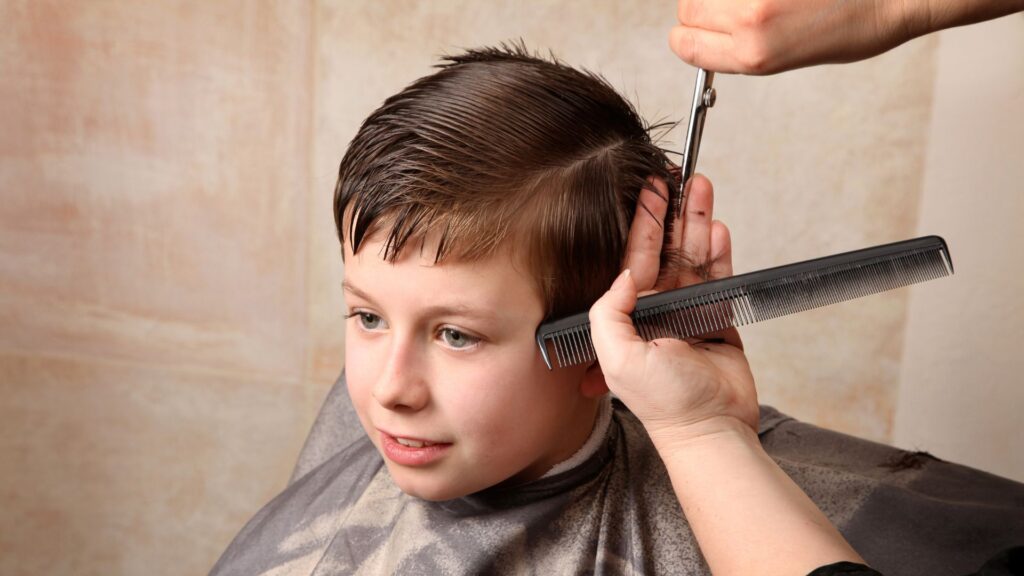
Toddler and child haircuts — what works and what doesn’t
For toddlers, the goal is simple: short, low-maintenance, and tangle-resistant. Think tidy crops and simple trims that a parent can maintain between visits without a fight at bath time.
The tween years and the first style preferences
Somewhere around age nine or ten, kids start forming real opinions about their hair. This is the first moment a child connects hair with identity rather than hygiene. Letting them have a small say, a bit of texture on top, a slightly longer fringe, builds confidence without overwhelming a barber’s chair with demands.
Making barbershop visits a positive ritual early on
A good first few years at the barbershop set the tone for a lifetime of grooming habits. Kids who have positive, low-stress visits early on are far more likely to become easy, loyal adult clients later.
Teenagers — Identity, Trends, and Learning to Own a Style
How teens use hair to signal identity
Teenagers use hair the way earlier generations used music or clothing, as a badge of identity. A new style often coincides with a new friend group, a new sport, or simply a desire to stand out.
Popular styles for straight, wavy, and curly teen hair
Straight-haired teens often gravitate toward clean fades with textured tops. Wavy-haired teens can wear slightly longer, tousled styles that show natural movement. Curly-haired teens increasingly favor cuts that preserve curl pattern instead of fighting it, a welcome shift from decades of over-straightening.
Fade vs. Taper — helping teens understand the difference before their first real fade
This is usually the first technical decision a teenager faces. A Fade vs. Taper comparison is one of the most searched grooming questions among young clients, and for good reason.
| Feature | Fade | Taper |
| Blend intensity | Gradual to very short or skin | Gradual, never down to skin |
| Visual contrast | High, dramatic | Subtle, understated |
| Maintenance frequency | Every 2 to 3 weeks | Every 3 to 5 weeks |
| Best for | Bold, trend-forward looks | Classic, professional looks |
| Grow-out forgiveness | Low | High |
Choose a fade if you want sharp definition and don’t mind frequent visits. Choose a taper if you want something cleaner that grows out gracefully.
Talking to your teenager about realistic maintenance
The honest conversation worth having with a teen is about upkeep, not style. A dramatic fade looks incredible on day one and rough by week three without regular visits.
Your 20s — Experimentation, Expression, and Finding Your Look
Why your 20s are the best time to experiment
Hair is typically at peak density and resilience in your twenties, which makes it the ideal decade to try bold color, aggressive fades, or longer textured styles without much consequence.
Matching haircuts to early career environments
A finance internship and a creative agency job call for very different grooming choices. Reading the room, literally the office floor, matters more in your twenties than at any other career stage.
High-maintenance styles — worth it in your 20s, and how to sustain them
Styles like disconnected undercuts or heavily textured quiffs demand product and frequent trims, but your twenties are when you have the time, follicle density, and flexibility to pull them off.
Haircut mistakes men most often make in their 20s
The most common mistake is chasing a style because it looks good on someone else’s head shape, hair type, or hairline, rather than adapting it to your own.
Your 30s — Confidence, Balance, and Smarter Choices
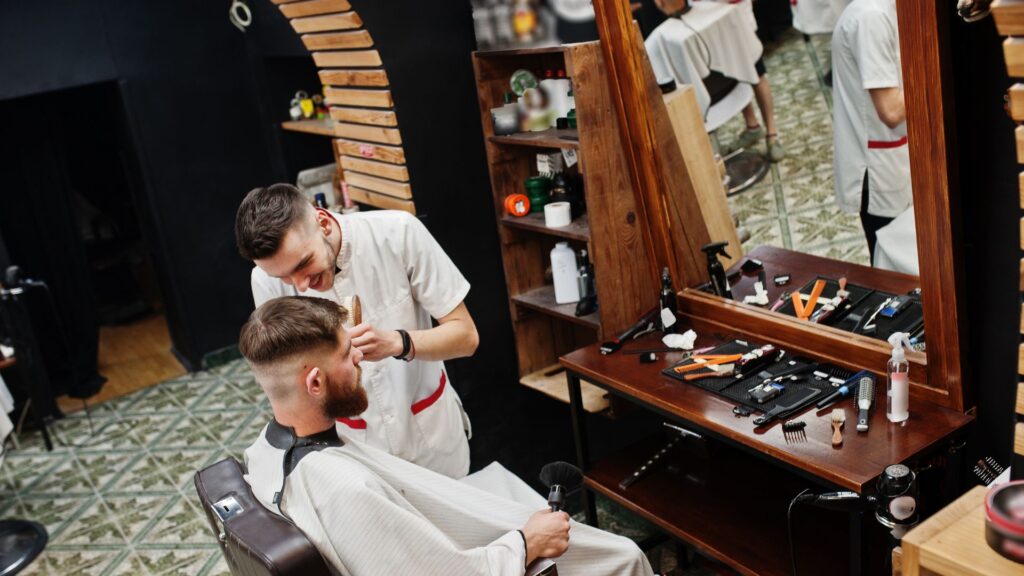
How lifestyle demands change your grooming priorities
Careers, relationships, and often children arrive in force during this decade. Grooming has to fit around a busier life, not dominate it.
Balancing personal style with professional expectations
Thirty-somethings tend to favor styles that read as polished rather than flashy, a side part or textured crop that works equally well in the boardroom and on a Saturday night out.
Adapting cuts when hair starts to change texture or thin
Early thinning, often starting at the crown or temples, becomes noticeable for many men in their thirties. A good barber will adjust the cut’s structure, not just trim shorter, to disguise early changes.
Why consistency with one barber pays off in your 30s
A barber who has tracked your hair for years will notice subtle shifts long before you do, and can adjust your cut gradually instead of reacting late.
Your 40s and 50s — Owning the Silver, Thinning, and the Look That Fits Your Life
What most men get wrong about haircuts after 40
The biggest mistake is holding onto length or volume that hair can no longer support. More length does not disguise thinning, it usually highlights it.
Best cuts for thinning hair and maturing hairlines
Shorter, textured crops with a defined perimeter tend to look denser than longer styles. Crew cuts and tight crops create the illusion of thickness by reducing the visible contrast between hair and scalp.
Embracing grey — styling and product considerations
Grey hair tends to be coarser and drier than pigmented hair. Matte, hydrating products outperform high-shine formulas, which can make grey look flat or greasy rather than distinguished.
The case for shorter, cleaner, and more intentional styles
A tighter, well-maintained cut consistently reads as more confident than an aging version of a younger style. Clean lines age better than nostalgia.
Hair Type and Why It Overrides Almost Every Other Factor
Straight hair — strengths, limitations, and ideal cuts
Straight hair holds crisp lines well but can look flat without textured layering. Cuts with graduated layers on top add dimension without sacrificing sharpness.
Wavy hair — the most versatile texture and how to use it
Wavy hair sits between straight and curly, offering natural movement that works with both structured and relaxed cuts. It’s often considered the most forgiving texture to style.
Curly hair — cuts that celebrate natural movement
Curly hair should be cut dry whenever possible, since curls behave differently wet versus dry. A cut designed around curl pattern, rather than forced straight, produces far more consistent results day to day.
Coily hair — precision, pattern awareness, and the right barber
Coily hair requires a barber experienced with tight curl patterns, since uneven cutting can create visible density gaps. Precision and pattern awareness matter more here than with any other texture.
Fine and thinning hair — styles that create the illusion of density
Shorter lengths, blunt perimeters, and avoiding heavy product build-up all help fine hair appear fuller than it is.
| Hair Type | Best Cut Style | Key Styling Tip |
| Straight | Textured crop | Add layers for volume |
| Wavy | Medium length, loose | Enhance with sea salt spray |
| Curly | Curl-pattern cut, dry | Diffuse dry, avoid brushing |
| Coily | Shape-based, precision | Moisturize daily |
| Fine/Thinning | Short, blunt perimeter | Avoid heavy pomades |
Face Shape Through the Decades — It Doesn’t Stay the Same
How weight, aging, and bone structure change your face shape
Facial fat distribution shifts with age, often softening a jawline that was once sharply defined. This is a normal part of aging, not a flaw, but it does change which cuts flatter you most.
Matching cuts to face shape at every life stage
Rounder faces generally benefit from height on top and shorter sides, while longer faces benefit from more width and less vertical volume.
Why a style that suited you at 25 may not at 45
A cut chosen for a twenty-five-year-old jawline can look disproportionate on a forty-five-year-old face with softer contours. Revisiting your cut every few years, not just when hair changes but when your face does too, keeps your look current.
Lifestyle Is the Factor Nobody Talks About Enough
Active and athletic lifestyles — cuts that hold up under sweat and helmets
Short, low-maintenance cuts that dry quickly and resist helmet or cap compression work best for athletes and cyclists.
Office and corporate environments — reading the room with your haircut
Conservative industries still reward clean, classic cuts. A sharp side part or crop reads as competent and put-together without trying too hard.
Creative industries — where more expression is expected and welcomed
Agencies, design studios, and media companies tend to welcome bolder choices, longer lengths, color, or unconventional fades included.
Fatherhood and family life — low-maintenance cuts for busy dads
New fathers consistently gravitate toward wash-and-go cuts that need minimal styling time, because mornings suddenly belong to someone smaller than them.
Travel and irregular schedules — forgiving styles that grow out well
Frequent travelers benefit from cuts with soft, graduated edges rather than sharp lines, since grow-out looks intentional rather than unkempt.
Products at Every Age and Hair Stage
Products for younger men — texture and hold without damage
Lightweight clays and texturizing sprays give younger hair movement without the buildup that heavier pomades cause over time.
Products for men in their 30s and 40s — shine, matte, and scalp health
As hair starts to change, scalp-focused shampoos and lighter matte pastes help maintain density without weighing hair down.
Products for grey, coarse, or thinning hair in later decades
Hydrating, sulfate-free formulas protect grey hair’s naturally drier structure, while volumizing mousses add lift without stiffness.
Ingredients to look for and avoid at each life stage
Look for argan oil, biotin, and panthenol for scalp and strand health. Avoid heavy silicones and high alcohol content in styling products, especially on thinning or coarse hair, since they can cause buildup and dryness.
| Life Stage | Recommended Product Type | Avoid |
| Teens/20s | Lightweight clay, texture spray | Heavy pomade buildup |
| 30s/40s | Matte paste, scalp shampoo | High-alcohol sprays |
| 50s+ | Hydrating mousse, grey-specific shampoo | Harsh sulfates |
Haircut Frequency — How Often Should You Really Go?

Frequency by style type and how maintenance needs shift with age
Short, sharp fades generally need attention every two to three weeks, while looser, longer styles can stretch to five or six weeks.
The cost of under-maintaining vs. over-visiting
Letting a precise cut grow out too long undoes its structure entirely, while visiting unnecessarily often simply adds cost without benefit.
Building a realistic grooming schedule around your life
Match your chosen style’s maintenance demands to your actual calendar, not your aspirational one. A four-week commitment is sustainable for most working adults.
Common Haircut Mistakes Men Make at Every Age
Holding onto a style from your younger years too long
Nostalgia is not a styling strategy. A cut that defined you at twenty-five can look dated and unintentional at fifty.
Ignoring the effect of hair type changes on an existing style
Hair can become coarser, thinner, or more unruly with age, and a style that once worked effortlessly may need real adjustment to keep working.
Asking for a style that fights your natural growth pattern
Cowlicks, whorls, and natural partings don’t disappear because you want a different style. Working with growth patterns produces far better results than fighting them.
Vague communication — the number one cause of haircut regret
“Just a trim” means something different to every barber. Specific language about length, texture, and finish prevents the vast majority of disappointing results.
Talking to Your Barber at Every Stage of Life
What to say when your hair is changing and you’re not sure what to ask for
Describe what’s frustrating you, not just what you want added. “It’s thinning on top and I don’t know how to style it” gives a barber far more to work with than a vague style request.
Bringing photos, using vocabulary, and being honest about maintenance habits
Reference photos help, but pair them with honesty about how much daily styling time you’re willing to invest.
Finding a new barber when you move or your old one retires
Start with a simple, low-risk cut on the first visit to gauge skill and communication before committing to anything more ambitious.
Using a haircut near me search the smart way
A quick haircut near me search works best when paired with filtering by reviews that specifically mention your hair type or desired style, not just overall star rating.
Pricing, Value, and What Changes as You Get Older
Why the same haircut costs more at different life stages
More complex cuts for thinning or textured grey hair often take longer and require more skill, which is typically reflected in price.
When to invest in a higher-tier barber and when to save
Invest in an experienced barber when your hair is changing or thinning, since mistakes are harder to correct. Save on simple, low-maintenance cuts during stable hair years.
Membership packages, tipping culture, and building long-term value
Monthly membership packages at many barbershops reduce per-visit cost for men who commit to regular maintenance, while a consistent 15 to 20 percent tip builds the kind of relationship that pays off with better, more attentive service over time.
Frequently Asked Questions
How often should men get their hair cut as they age?
Most men should visit every three to five weeks, though shorter, more structured styles common in the twenties often require two to three week visits, while looser styles favored later in life can stretch slightly longer.
Does hair texture really change with age?
Yes. Hormonal shifts and follicle miniaturization commonly make hair finer, drier, or more unruly over time, which is why a styling routine from your twenties may stop working in your forties.
What’s the best haircut for a receding hairline?
Shorter cuts with textured tops and tighter sides tend to minimize the visual contrast at the hairline, making thinning less noticeable than longer styles do.
Should I cut curly hair wet or dry?
Dry cutting is generally recommended for curly and coily hair, since curl pattern and bounce only become visible once hair is dry.
How do I know if I need a fade or a taper?
Choose a fade for bold, high-contrast styling that needs frequent upkeep, and a taper for a subtler, more classic look that grows out more gracefully.
Is it normal for my face shape to change over time?
Yes. Weight changes and natural aging shift fat distribution in the face, which is why a cut chosen for your face shape in your twenties may not flatter you the same way decades later.
What products actually help with thinning hair?
Lightweight volumizing mousses and scalp-focused shampoos support the appearance of density far better than heavy pomades, which can weigh down already-fine strands.
How do I find a good barber in a new city?
Use a haircut near me search filtered by reviews that mention your specific hair type or style goals, and start with a simple cut to evaluate skill before requesting anything complex.
Why does the same haircut cost more as I get older?
Cuts for thinning, coarse, or grey hair often require more technical skill and time to execute well, which is typically reflected in the price compared to simpler, younger-hair cuts.
Conclusion
Reassess your style every few years, not just when you notice thinning. Match products to your current hair condition rather than what worked a decade ago. Communicate specifics with your barber instead of vague requests. Choose maintenance schedules that fit your actual life, not an idealized version of it. Every barber has watched a client fight the same losing battle: clinging to a younger version of themselves instead of stepping confidently into the one staring back in the mirror. Hair that changes isn’t a loss. It’s simply a new starting point. The men who age best, at least from behind the chair, are the ones willing to change their style as often as their hair changes on them.