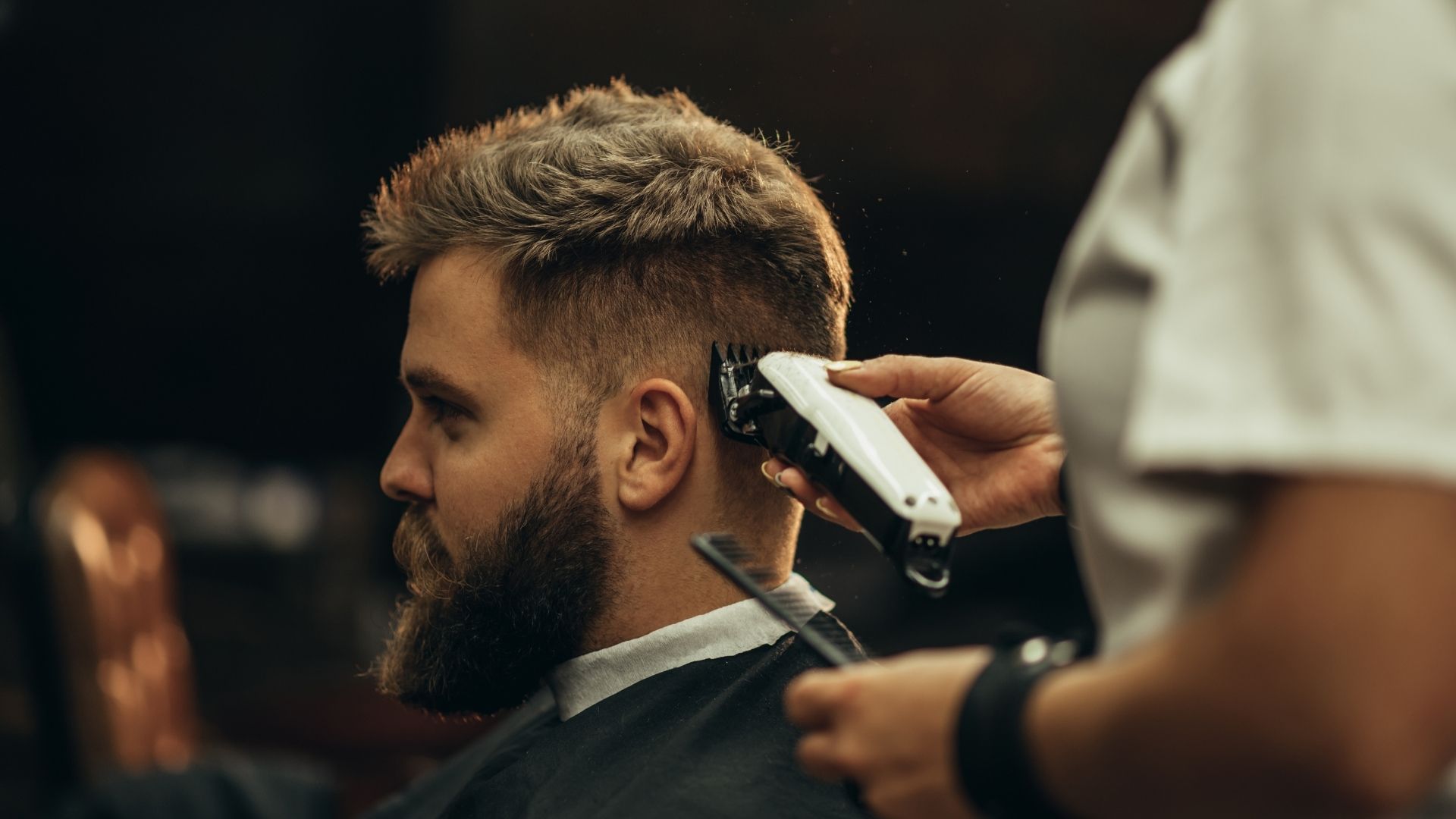
Sit down in the chair, feel the cape snap around your neck, and you’re faced with a question that’s older than the modern barbershop itself: scissors or clippers? The answer isn’t as simple as picking a favorite tool. It depends on your hair, your lifestyle, and honestly, what kind of guy you are. A scissor cut gives you soft, blended texture that flatters natural movement. A clipper cut gives you sharp lines, tight fades, and a look that holds up no matter how much you sweat through it. This guide breaks down exactly how each technique works, where each one shines, and how to walk into any shop and ask for precisely what you want.
Key Takeaways
- Scissor cuts are ideal for longer, textured styles that need natural movement and blending, while clipper cuts excel at short, sharp, low-maintenance looks like fades and crops.
- Clipper cuts generally last longer between visits because the guard settings create a uniform length that grows out more gracefully.
- Scissor cuts tend to take more time in the chair and can cost slightly more due to the skill and precision required.
- Your hair texture, density, and growth pattern matter more than personal preference alone when choosing between the two.
- Most modern barbershops blend both tools in a single haircut, using clippers for structure and scissors for finishing detail.
What’s the Real Difference Between Scissor Cuts and Clipper Cuts?
A scissor cut relies on hand-held shears to remove length gradually, working with the natural fall of your hair to create soft, blended results. A clipper cut uses an electric or battery-powered clipper, often fitted with a guard, to remove hair to a uniform, consistent length quickly.
The core distinction comes down to control versus speed. Scissors give a barber fine control over texture, weight, and movement, snipping small sections at precise angles. Clippers move fast and deliver consistency, especially over large areas like the back and sides of the head.
Why This Distinction Matters for Your Haircut
Think about the last time you got a haircut that just looked “off.” Chances are, the wrong tool was used for your hair goal. If you wanted a soft, tousled look but the barber leaned heavily on clippers, you probably walked out looking choppier than intended. If you wanted a crisp, sharp fade but scissors did most of the work, the lines likely lacked definition.
Understanding this difference helps you communicate better in the chair. You’re not just picking a “style.” You’re choosing a technique that shapes how your hair will look, feel, and behave for weeks afterward.
Scissor Cut vs. Clipper Cut: A Quick Snapshot
| Feature | Scissor Cut | Clipper Cut |
| Precision | High, detail-oriented | High, but more uniform |
| Speed | Slower | Faster |
| Texture | Soft, blended | Crisp, defined |
| Best for | Longer styles, natural texture | Short styles, fades, tight lines |
| Maintenance | Moderate | Low to moderate |
| Skill required | Very high | High |
Can You Combine Both Techniques in One Haircut?
Yes, and most experienced barbers do exactly that. A typical modern cut might start with clippers to establish the fade or general shape, then finish with scissors to blend the top and add texture. This hybrid approach gives you the best of both worlds: the speed and structure of clippers with the finesse and softness of scissor work.
This blended method has become the standard in most shops because it solves the biggest weakness of each tool. Clippers alone can look too uniform and stiff on top. Scissors alone can take forever on the sides and back. Together, they create a finished look that’s sharp where it needs to be and soft where it counts.
A Brief History: How These Two Techniques Shaped Men’s Grooming
Barbering has always evolved alongside its tools. Understanding where scissors and clippers came from gives you a little more appreciation for the craft happening in that leather chair.
When Were Scissors First Used for Haircutting?
Hair-cutting shears date back thousands of years, with early bronze versions found in ancient civilizations across Egypt and Rome. For most of human history, scissors and razors were the only tools available for grooming. Every haircut, no matter how simple, required patience and a steady hand.
This long history explains why scissor work is still considered the more “traditional” and artisanal side of barbering. It’s a technique passed down through generations of tradesmen, refined over centuries rather than decades.
When Did Clippers Enter the Barbershop?
Mechanical hair clippers emerged in the late 1800s, with hand-cranked versions patented in France and later refined in the United States. Electric clippers followed in the early 20th century, revolutionizing how quickly a barber could complete a haircut. What once took thirty minutes with scissors alone could now be done in a fraction of the time.
This shift didn’t kill scissor work. Instead, it changed the barbershop into a place where speed and precision could coexist. Clippers became the workhorse for structure, while scissors remained the tool for detail and finesse.
How Barbershop Culture Evolved Around These Tools
The buzz of a clipper became as much a part of barbershop identity as the smell of talc or the sight of a straight razor catching light. Walk into any classic shop today and you’ll hear that same hum, layered under conversation, radio chatter, and the occasional laugh. Scissors, by contrast, bring a quieter rhythm: the soft snip-snip of blades meeting hair, punctuated by a barber stepping back to check the line.
Both sounds tell a story about craftsmanship. One is about speed and consistency. The other is about patience and artistry. A good barber knows when to lean into each.
How Does a Scissor Cut Actually Work?
A scissor cut starts with sectioning. Your barber divides your hair into workable panels, usually starting at the crown and working down toward the nape and sides. Each section gets cut using a comb-and-scissor technique, where the comb lifts the hair to a specific angle before the shears trim it to length.

The Step-by-Step Process Behind a Scissor Cut
- Consultation and sectioning – Your barber assesses your hair’s natural growth pattern and divides it into sections using clips.
- Point cutting or blunt cutting – Depending on the desired texture, the barber either cuts straight across (blunt) or at an angle into the ends (point cutting) to soften the finish.
- Cross-checking – The barber cuts the same section from a different angle to check for consistency and catch any missed pieces.
- Texturizing – Thinning shears or point-cutting techniques remove bulk without shortening overall length, creating natural movement.
- Final blending – The barber blends transitions between sections so there are no harsh lines where lengths meet.
What Makes a Scissor Cut Feel Different on Your Head?
Because scissors cut hair at an angle rather than straight across a guard, the ends taper naturally. This creates a softer finish that catches light differently than a clipper cut. Run your fingers through a well-done scissor cut and you’ll notice the layers feel feathered rather than blunt, which is exactly the texture that makes styles like textured crops and classic side parts look effortless.
Scissor Cut vs. Clipper Cut: Which Requires More Barber Skill?
Scissor cutting is widely considered the harder skill to master. It requires a steady hand, a strong understanding of hair growth patterns, and years of repetition to develop the muscle memory for consistent sectioning. Clipper work, while still highly skilled, benefits from guard attachments that create built-in consistency, reducing some margin for error.
This doesn’t mean clipper work is easy. Freehand clipper fades, for example, demand incredible precision since there’s no guard to rely on for blending. But traditional scissor-only cuts remain the benchmark many barbers use to judge true craftsmanship.
How Does a Clipper Cut Actually Work?
A clipper cut relies on interchangeable guards, numbered by the length of hair they leave behind. A guard size of 1 leaves roughly an eighth of an inch, while a guard size of 8 leaves around an inch. Your barber selects guards based on the style you want, then works methodically across your head in consistent passes.
The Step-by-Step Process Behind a Clipper Cut
- Guard selection – The barber chooses the appropriate guard size for your desired length, often using multiple guards for a graduated fade.
- Bulk removal – Clippers move against the grain of hair growth first to remove the bulk of length quickly.
- Fade blending – Using shorter guards near the hairline and gradually longer guards moving up, the barber creates a seamless gradient.
- Detailing – A trimmer, a smaller cousin of the clipper, sharpens the hairline, cleans up the neckline, and defines edges around the ears.
- Finishing touches – Some barbers switch to scissors at this stage to blend the top section with the sides for a more natural transition.
Why Clippers Create Such Reliable Consistency
Because clippers cut hair to a fixed length determined by the guard, they remove much of the guesswork involved in matching lengths across a large area. This is part of why clipper cuts are the go-to choice for military-style buzz cuts, crew cuts, and tight fades. Consistency isn’t just about looks. It also means the cut grows out more evenly over the following weeks.
Scissor Cut vs. Clipper Cut: Speed in the Chair
A clipper cut on short hair can be completed in fifteen to twenty minutes. A detailed scissor cut on longer hair often takes thirty to forty-five minutes, sometimes longer if texturizing and blending are involved. If you’re short on time, clippers are almost always the faster route.
Scissor Cut vs. Clipper Cut: Precision and Texture Compared
Precision means different things depending on the tool. Clippers deliver precision through consistency: every strand within a guarded section comes out the same length. Scissors deliver precision through control: a skilled barber can taper a single strand differently from the one next to it to create movement.
Which Tool Creates Sharper Lines?
Clippers, especially when paired with a trimmer for edge work, create the sharpest, most defined lines. This is why fades, hard parts, and crisp hairline work almost always involve clippers rather than scissors. A trimmer can trace a hairline with surgical precision that scissors simply can’t replicate.
Which Tool Creates Softer, More Natural Texture?
Scissors win here without much debate. Because they cut at variable angles and lengths, scissors create the layered, blended texture that looks natural rather than uniform. This is why longer hairstyles that rely on movement, like textured quiffs or tousled crops, are almost always finished with shears.
A Side-by-Side Look at Texture Outcomes
| Style Goal | Better Tool | Why |
| Sharp fade | Clippers | Uniform guard lengths create clean gradients |
| Soft, layered top | Scissors | Angled cuts create natural movement |
| Buzz cut | Clippers | Fast, even, low maintenance |
| Textured crop | Scissors (with clipper fade) | Combines short sides with soft top texture |
| Crisp hairline | Clippers/trimmer | Sharpest possible line definition |
| Classic side part | Scissors | Requires graduated length for smooth combing |
Which Cut Lasts Longer Between Barbershop Visits?
This is one of the most practical questions men ask, especially if you’re trying to stretch out the time (and money) between appointments.
Why Clipper Cuts Often Last Longer
Because clipper cuts are typically shorter overall, they take longer to visibly “grow out” into an unkempt look. A guard-based cut grows evenly since every hair started at roughly the same length. This means a clipper cut might still look intentional three to four weeks after your visit, especially with simple styles like crew cuts or buzz cuts.
Why Scissor Cuts Can Require More Frequent Trims
Scissor cuts, especially those involving longer layers or fringe, tend to show growth faster in specific areas. Fringe grows into your eyes. Layers around the ears start to curl or flip out. The style itself often depends on those precise lengths staying intact, so even a small amount of growth can throw off the shape.
Scissor Cut vs. Clipper Cut: Growth-Out Comparison
| Cut Type | Weeks Before Noticeable Growth | Style Forgiveness |
| Buzz cut (clipper) | 3-4 weeks | High |
| Crew cut (clipper) | 3-4 weeks | High |
| Fade with textured top (hybrid) | 2-3 weeks | Moderate |
| Classic scissor cut with layers | 2-3 weeks | Moderate |
| Long textured crop (scissor) | 1-2 weeks | Low |
Does Hair Type Affect How Fast a Cut Grows Out?
Absolutely. Thicker, coarser hair tends to hide growth better since new length blends into existing volume. Fine, straight hair shows growth faster because there’s less natural texture to disguise the change in length. If you have fine hair and want to stretch your visits, a clipper-based style will likely serve you better than a delicate scissor cut.
Scissor Cut vs. Clipper Cut: Cost and Time at the Barbershop
Money matters, and so does your schedule. Understanding the general cost and time differences helps you plan your grooming routine realistically.
Why Scissor Cuts Sometimes Cost More
Because scissor cuts require more time, more skill, and often more product for finishing, many shops charge a premium for scissor-only services compared to a straightforward clipper cut. A detailed scissor cut with texturizing might run higher than a basic buzz cut simply due to the labor involved.
Why Clipper Cuts Are Often the Budget-Friendly Option
Clipper cuts, particularly simple guard cuts without intricate fading, tend to be priced lower since they take less time and require less specialized detailing. This is part of why buzz cuts remain a popular, affordable choice for men who want a clean look without a big spend.
Typical Price and Time Ranges
| Service Type | Typical Time | Typical Relative Cost |
| Basic clipper buzz cut | 15-20 minutes | Lower |
| Clipper fade with trimmer detailing | 25-35 minutes | Moderate |
| Scissor cut, simple layers | 30-40 minutes | Moderate |
| Scissor cut with texturizing and styling | 40-60 minutes | Higher |
| Full hybrid cut (clipper + scissor) | 35-50 minutes | Moderate to higher |
If your goal is to walk in, sit down, and walk out fast, clippers are your friend. If you want a customized, sculpted look, expect to spend a little more time and a little more money in that chair.
Which Hair Types and Textures Suit Each Method Best?
Not all hair behaves the same way under scissors or clippers. Your natural texture plays a massive role in which technique will give you the best results.

How Does Straight Hair Respond to Each Cut?
Straight hair shows every line and layer clearly, which makes precision even more important. Clippers work beautifully on straight hair for clean fades since there’s no curl pattern to disrupt the gradient. Scissors also work well but require careful blending since straight hair can reveal choppy layering more easily than textured hair.
How Does Wavy or Curly Hair Respond to Each Cut?
Curly and wavy hair has natural volume that can hide small inconsistencies, giving scissors more room to create texture without looking uneven. Clippers still work well for fades on curly hair, but many barbers recommend cutting curly hair dry rather than wet, since curls shrink up and behave differently once they dry.
How Does Coily or Very Textured Hair Respond to Each Cut?
Coily hair often benefits from a combination approach. Clippers handle the shape and fade beautifully, while scissors can be used sparingly to shape the top without disrupting the natural curl pattern. Cutting coily hair too short with clippers alone can sometimes flatten the natural texture that gives the style its character.
Scissor Cut vs. Clipper Cut: Hair Type Recommendations
| Hair Type | Recommended Primary Tool | Notes |
| Straight, fine | Clippers | Shows every clipper line clearly; great for crisp fades |
| Straight, thick | Either | Handles both techniques well |
| Wavy | Scissors (with clipper sides) | Waves add natural texture that pairs well with layering |
| Curly | Scissors, cut dry | Curls shrink when dry, changing the final shape |
| Coily | Hybrid, clipper-dominant | Preserves natural volume and pattern |
Scissor Cut vs. Clipper Cut for Popular Modern Hairstyles
Certain hairstyles are practically defined by which tool creates them. Knowing this helps you set realistic expectations before you sit down in the chair.
The Fade: Why Clippers Are Non-Negotiable
A fade, whether low, mid, or high, depends entirely on gradual, seamless blending between guard lengths. This is a job for clippers, full stop. Scissors simply cannot replicate the tight, graduated blend that defines a proper fade.
The Textured Crop: Why Scissors Do the Heavy Lifting
The textured crop, one of the most requested styles in recent years, relies on scissors to create the choppy, piecey texture on top while clippers handle a fade or taper on the sides. This is a perfect example of the hybrid approach in action.
The Pompadour: A Scissor-Driven Classic
A traditional pompadour depends on longer length up top with graduated layers that support height and volume when styled. Scissors do most of the shaping work here, though many modern versions pair the top with a clipper fade on the sides for contrast.
The Buzz Cut: Clippers From Start to Finish
There’s no ambiguity here. A buzz cut is a clipper-only style, defined by uniform short length across the entire head using a single guard size.
The Slick Back: Scissors for Length, Clippers for Cleanup
A slick back requires enough length on top to comb backward, which means scissors handle the majority of the cutting. Clippers typically clean up the sides and back to keep the overall look sharp and intentional.
Scissor Cut vs. Clipper Cut by Hairstyle
| Hairstyle | Primary Tool | Secondary Tool |
| Fade | Clippers | Trimmer for detailing |
| Textured crop | Scissors | Clippers for sides |
| Pompadour | Scissors | Clippers for fade |
| Buzz cut | Clippers | None needed |
| Slick back | Scissors | Clippers for cleanup |
| Crew cut | Clippers | Scissors for light texturizing |
What Tools Do Barbers Use for Each Technique?
The tools themselves matter just as much as the technique. A good barber’s kit is built around precision instruments that each serve a specific purpose.
The Essential Scissor Toolkit
A professional barber typically carries at least two types of shears: straight-edge cutting shears for blunt cuts and clean lines, and thinning shears with notched blades for removing bulk without shortening length. High-quality shears are often crafted from Japanese steel, prized for holding a sharp edge longer than standard stainless steel.
The Essential Clipper Toolkit
A barber’s clipper kit usually includes a full-size clipper for bulk work, a smaller trimmer for detailing and edge work, and a range of guard attachments from size 0 to size 8. Many barbers also keep a straight razor on hand for finishing hairlines with exceptional sharpness.
Why Blade Quality Makes a Noticeable Difference
Dull blades, whether on scissors or clippers, drag and pull hair rather than cutting cleanly. This is why professional barbers maintain their tools obsessively, oiling clippers regularly and having shears professionally sharpened. A cut from well-maintained tools feels smoother and looks cleaner than one from neglected equipment.
Scissor Cut vs. Clipper Cut: Maintenance and Haircare Products at Home
Your haircut doesn’t end when you leave the shop. What you do at home determines how well that cut holds its shape and how healthy your hair looks between visits.
Home Care for Scissor Cuts
Scissor cuts, especially those with texture and layers, benefit from lightweight styling products that enhance natural movement rather than weighing hair down. A matte paste or light pomade helps maintain texture without making longer styles look greasy or flat.
Home Care for Clipper Cuts
Short clipper cuts require less daily styling but still benefit from proper care. A light pomade or styling cream can add a subtle sheen and hold to the top section, while regular moisturizing prevents scalp dryness that’s more noticeable with shorter hair.
Choosing the Right Haircare Products for Your Cut
Quality Haircare Products make a real difference in how long your cut looks fresh, regardless of which technique your barber used. Look for shampoos that won’t strip natural oils, lightweight conditioners that won’t weigh down shorter styles, and styling products matched to your hair’s texture and your desired finish.
Daily Maintenance Comparison
| Task | Scissor Cut Needs | Clipper Cut Needs |
| Daily styling time | Moderate to high | Low |
| Product usage | Pomade, paste, texturizer | Light cream or pomade |
| Washing frequency | Every 1-2 days | Every 2-3 days |
| Trim frequency | Every 3-4 weeks | Every 2-3 weeks |
Choosing the Right Cut for Your Son or as a Gift
Plenty of grooming decisions aren’t just about you. Fathers booking appointments for sons and anyone buying a grooming gift face a slightly different set of considerations.
What to Consider When Booking for Your Son
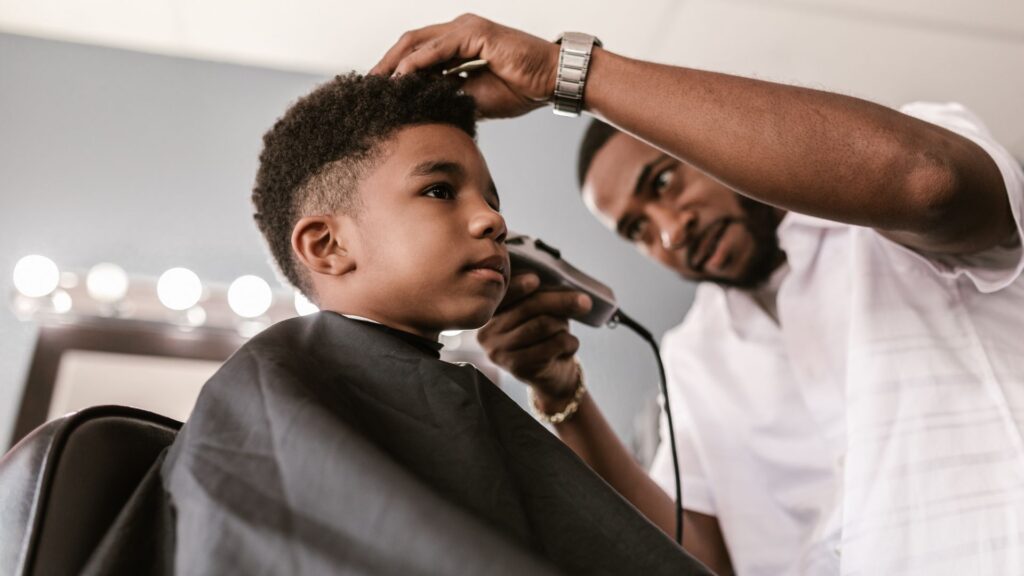
Kids tend to move around, get antsy, and sometimes flat-out refuse to sit still. Clipper cuts are usually faster and more forgiving in this scenario, reducing the time your son needs to sit patiently in the chair. Simple guard cuts also grow out more gracefully, which means fewer emergency trims between school photos and family events.
Gift Certificates and What They Should Include
If you’re buying a grooming session as a gift, consider a package that includes both a haircut and a hot towel shave or beard trim. This gives the recipient a fuller experience rather than a basic trim, and it signals that you put real thought into the gift rather than grabbing something last minute.
Age-Based Recommendations
| Age Group | Recommended Approach | Reasoning |
| Toddlers (2-5) | Simple clipper cut | Faster, less sitting time required |
| Kids (6-12) | Clipper cut with light scissor detailing | Balances speed with a more finished look |
| Teens (13-18) | Hybrid cut based on style preference | Old enough for detailed requests |
| Adult gift recipients | Full-service package | Elevates the experience |
Common Mistakes Men Make When Choosing Between the Two
Even with the best intentions, plenty of guys walk into the barbershop and make choices that don’t quite match what they actually want.
Mistake One: Assuming Shorter Always Means Lower Maintenance
Very short clipper cuts still require regular trims to maintain their sharp appearance, sometimes every two weeks. Assuming a buzz cut means “set it and forget it” often leads to disappointment when the style starts looking scraggly at the edges.
Mistake Two: Requesting a Style That Doesn’t Match Hair Texture
Bringing in a photo of a hairstyle without considering your own hair’s natural texture is one of the most common setups for disappointment. A style that looks effortless on straight, thick hair might behave completely differently on fine or curly hair.
Mistake Three: Skipping Regular Trims Between Visits
Whether you go scissor or clipper, skipping trims lets your style grow past its intended shape. Fades lose their crispness. Layered cuts lose their structure. Regular maintenance visits, even quick ones, keep either style looking intentional.
Mistake Four: Not Communicating Clearly With Your Barber
Vague requests like “just clean it up” leave too much room for interpretation. Specific communication, including guard numbers, reference photos, and honest feedback about past cuts you’ve liked or disliked, leads to far better results.
How to Talk to Your Barber About What You Want
Clear communication is the single biggest factor in walking out happy with your cut, regardless of which technique gets used.
Bring Reference Photos, But Explain the Context
A photo helps, but context helps more. Explain what you liked about that photo specifically: the length on top, the fade height, the texture. This gives your barber a clearer target than the photo alone.
Be Honest About Your Daily Routine
If you’re not willing to spend ten minutes styling your hair every morning, say so. A skilled barber can recommend a cut that looks great with minimal daily effort rather than setting you up for a style that requires more maintenance than you’re willing to give.
Ask Questions During the Cut
Don’t be afraid to ask what guard size is being used, or to request a mirror check partway through. Good barbers welcome this kind of engagement since it helps them fine-tune the result to your preferences.
Finding a Barber Who Understands Your Hair
If you’ve moved to a new area or haven’t found your go-to shop yet, searching barber near me is often the fastest way to find local options with reviews from other clients. Look for shops with a strong reputation for the specific technique you prefer, whether that’s detailed scissor work or precise clipper fades.
Frequently Asked Questions
Is a scissor cut healthier for your hair than a clipper cut?
Neither technique is inherently healthier, since both simply cut hair to a desired length. What matters more is blade sharpness. Dull scissors or clippers can cause split ends or hair breakage regardless of which tool is used, so the sharpness and maintenance of the equipment matter more than the technique itself.
Can you get a fade with scissors only?
Technically it’s possible for a highly skilled barber to create a rough approximation of a fade using scissors alone, but it’s extremely difficult to achieve the seamless, graduated blend that clippers produce with guard attachments. Nearly all professional fades rely on clippers for this reason.
Why do some barbers cut curly hair dry instead of wet?
Curly hair shrinks significantly once it dries, sometimes by a noticeable percentage of its wet length. Cutting curly hair dry allows the barber to see exactly how the curls will fall and behave, resulting in a more accurate final shape than cutting it wet and guessing at shrinkage.
How often should I get a haircut if I have a fade?
Fades typically need refreshing every two to three weeks to maintain their crisp appearance, since new growth quickly softens the sharp lines between guard lengths. Longer, less structured styles can often stretch to three or four weeks between visits.
Is it more expensive to ask for a scissor cut instead of a clipper cut?
In many shops, yes. Scissor cuts generally take more time and require more specialized skill, which often translates to a higher price point compared to a basic clipper cut. Always check with your specific shop, since pricing structures vary widely.
What should I do if I don’t like how my haircut turned out?
Speak up while you’re still in the chair whenever possible, since small adjustments are much easier to make on the spot. If you notice issues after leaving, most reputable shops will offer a touch-up appointment to correct the concern at no additional charge.
Can I switch between scissor cuts and clipper cuts without growing my hair out first?
In most cases, yes, especially with a skilled barber who can adapt existing length to a new style. Dramatic changes, like going from a long scissor cut to a very short clipper cut, are usually easier than the reverse, since clippers can remove length quickly, but scissors can’t add length back once it’s cut.
Do I need different Haircare Products depending on which cut I get?
Yes, to some extent. Shorter clipper cuts generally need lighter products focused on scalp health and subtle shine, while longer scissor cuts often benefit from products that enhance texture and manage movement throughout the day.
Conclusion
There’s no universal winner between scissor cuts and clipper cuts because they solve different problems. If you want short, sharp, low-maintenance styling with crisp lines, clippers are your tool. If you want longer, textured, naturally flowing hair with soft movement, scissors take the lead. Most men actually benefit from a combination of both, using clippers for structure and scissors for finishing detail.
The real key isn’t picking a side. It’s understanding your hair, being honest about your lifestyle, and communicating clearly with whoever’s holding the tools. Walk in prepared, ask good questions, and trust the process. That’s how you leave the chair looking sharp every single time.