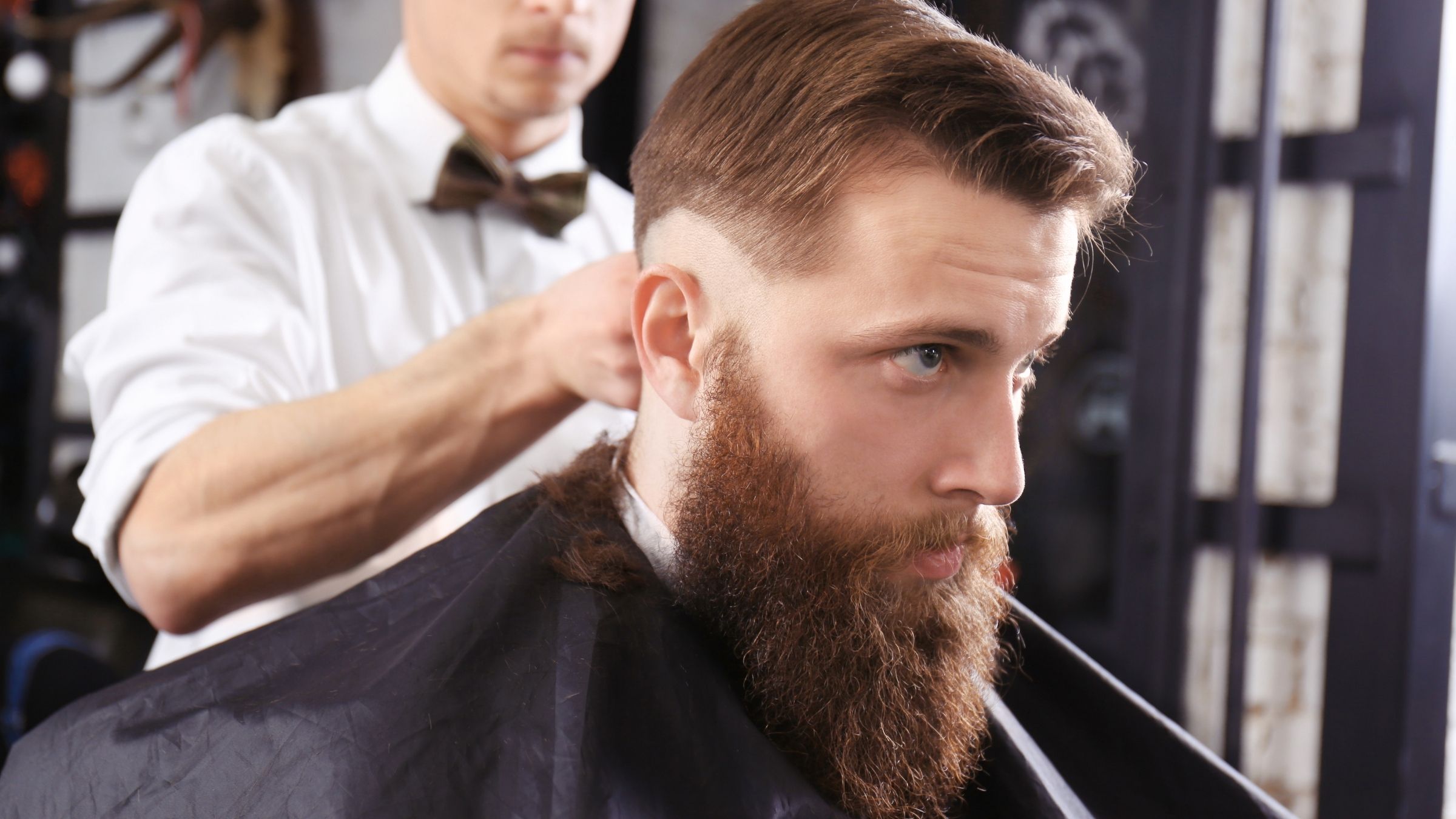
A haircut is the fastest, cheapest, and most effective style upgrade a man can make. It changes how you look in the mirror, how strangers read your face in the first three seconds of meeting you, and how confident you feel walking into a room. Yet most men treat their haircut as an afterthought, showing up to their appointment with no plan, no vocabulary, and no real understanding of what actually works for their hair, their face, and their life. This guide fixes that. It walks through the full picture, from the history of barbering to the mechanics of a fade, from matching a cut to your face shape to knowing exactly what to say in the chair so you never leave disappointed again.
Key Takeaways
- Your hair texture, density, growth pattern, and face shape matter more than any trend. The right cut works with your natural hair, not against it.
- The fade and the taper are the backbone of nearly every modern men’s haircut. Understanding the difference between low, mid, high, and skin fades will change how you communicate with your barber.
- Talking to your barber using specific vocabulary (guard numbers, fade height, texture requests) dramatically reduces the chance of a bad haircut.
- A great haircut is a system, not a single event. It includes the right products, the right maintenance schedule, and the right at-home styling technique.
- Price isn’t everything, but consistency, skill, and communication with your barber almost always are.
Why Your Haircut Is the Most Important Style Decision You Make
Clothes change with the seasons. Your haircut is with you every single day, in every meeting, every photo, and every mirror check before a date. It’s the one style decision you cannot take off at the end of the day, which is exactly why it deserves more thought than most men give it.
The psychology behind a great haircut
Psychologists have long studied what’s called the “halo effect,” the tendency for people to assume that someone who looks put-together in one area (like grooming routines) is also competent, trustworthy, and successful in other areas. A sharp haircut doesn’t just change your appearance, it changes the assumptions people make about you before you’ve said a single word. Men who feel good about their haircut also report standing straighter, making more eye contact, and speaking with more confidence. That’s not vanity. That’s basic human psychology at work.
How a haircut shapes first impressions
Research on first impressions consistently shows that people form judgments about a stranger’s competence, trustworthiness, and status within the first few seconds of seeing their face, and hair frames that judgment. A clean, well-maintained cut signals discipline and attention to detail. A grown-out, shapeless cut signals the opposite, even if the man wearing it is sharp as a tack. Whether that’s fair or not is beside the point. It’s how human perception works, and it’s worth using to your advantage.
The barbershop experience vs. a quick trim
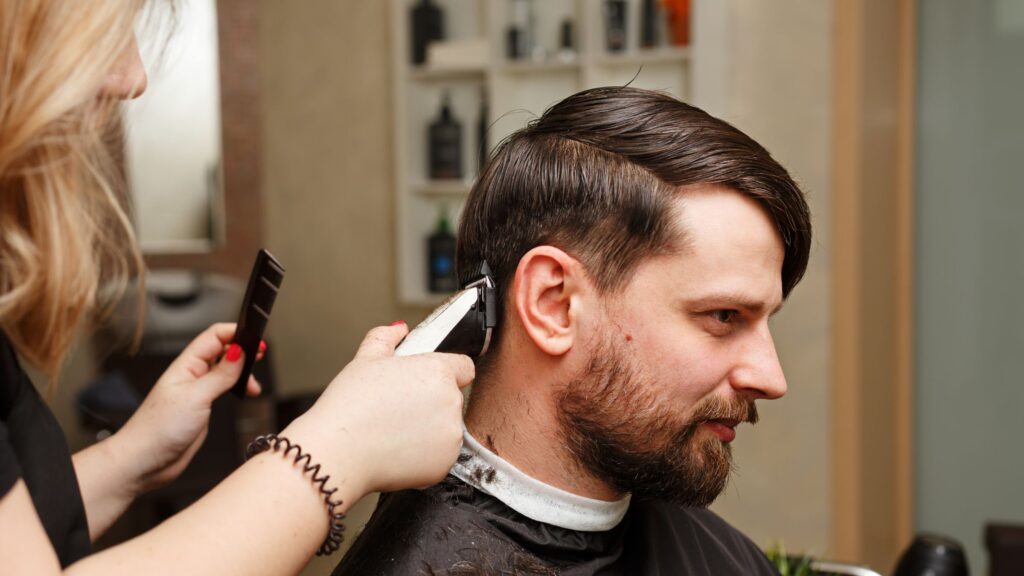
There’s a real difference between someone who cuts your hair and someone who crafts it. A rushed trim at a walk-in chain might get the length down, but it rarely accounts for your growth pattern, your cowlicks, or how your hair will look two weeks from now as it grows out. A proper barbershop experience, the hot towel, the straight razor cleanup, the conversation, the attention to detail around the ears and neckline, produces a cut that holds its shape and looks intentional rather than accidental. The extra fifteen minutes in the chair is where the real value lives.
Understanding Your Hair Before You Choose a Cut
You can’t pick the right haircut until you understand what you’re actually working with. Hair type, density, growth pattern, and scalp condition all determine which cuts will look sharp and which will fight you every single day.
Hair texture, density, and growth patterns explained
Texture refers to the shape of the individual hair strand, whether it’s straight, wavy, curly, or coily. Density refers to how many hairs you have per square inch of scalp, which is different from thickness (the width of each individual strand). A man can have fine hair that’s extremely dense, or coarse hair that’s relatively sparse. Growth pattern describes the direction hair naturally grows, including cowlicks (a whorl of hair that grows in a circular pattern) and widow’s peaks. A skilled barber examines all three before ever picking up the clippers, because a cut that ignores your natural growth pattern will never lay right, no matter how good the technique.
| Hair Trait | What It Means | Why It Matters for Your Cut |
| Fine texture | Thin individual strands | Struggles to hold volume; benefits from shorter layers and texture |
| Coarse texture | Thick individual strands | Holds shape well; can carry longer, structured cuts |
| High density | Many strands per square inch | Can look bulky if not thinned; great for textured crops |
| Low density | Fewer strands per square inch | Shorter cuts create the illusion of fullness |
| Cowlick | Circular growth whorl | Needs cut adjustments so hair doesn’t stick up |
| Widow’s peak | V-shaped hairline point | Affects how a fringe or side part will fall |
Face shape and how it drives the right cut
Your face shape determines which proportions of length, volume, and taper will flatter you. A round face benefits from added height on top to elongate it, while a long face benefits from shorter length on top and more width at the sides. We’ll break this down in full detail later in the guide, but it’s worth stating early: the same haircut will not look the same on two different face shapes, no matter how good the barber is.
Scalp health and how it affects your style options
A healthy scalp is the foundation for healthy hair. Dryness, excess oil, dandruff, and conditions like psoriasis or folder inflammation can all affect how hair grows and how a cut sits. Men with dry, flaky scalps often notice their fades look patchy because irritation disrupts even hair growth. Regular scalp exfoliation, the right shampoo, and addressing any underlying dermatological issues will make any haircut look better and last longer.
Hair type by ethnicity and what that means for your barber
Hair type varies significantly across ethnic backgrounds, and a skilled barber adjusts technique accordingly. Coily and tightly curled hair, common among many Black men, requires different clipper tension, blade angles, and cutting techniques than straight or wavy hair. Asian hair tends to be straight and coarse with a round cross-section, which affects how it holds a part or a fade line. Finding a barber who has specific experience with your hair type isn’t a preference, it’s a requirement for a cut that actually turns out right.
A Brief History of Men’s Haircuts (So You Know Where Modern Comes From)
Every trend on the internet today has roots somewhere in barbering history. Understanding where these cuts came from adds context to why they work and why they keep coming back.
Barbering from ancient Egypt to the 20th century
Barbering is one of the oldest professions in recorded history. Ancient Egyptians used copper razors as early as 3000 BCE, and short, groomed hair was a marker of status and cleanliness in a hot climate. Greek and Roman men used barbershops as social gathering spots, not unlike today. Throughout the Middle Ages and into the 19th century, barbers often performed basic medical procedures alongside haircuts, which is where the red and white barber pole tradition originates, symbolizing blood and bandages.
Post-war cuts and the rise of the barbershop golden age
The mid-20th century, particularly the 1940s through 1960s, is often called the golden age of barbering. Military-influenced cuts like the crew cut and the flat top dominated after World War II, reflecting a cultural emphasis on discipline and neatness. Barbershops became fixtures of American masculinity, offering shaves, cuts, and conversation as a weekly ritual for millions of men.
How the 1990s and 2000s changed men’s grooming forever
The 1990s introduced a looser, more textured approach to men’s hair, influenced heavily by pop culture and sports figures. The 2000s brought spiked, gel-heavy styles and the early days of the modern fade gaining mainstream traction outside of barbershops that specialized in Black hair, where the fade had already been refined for decades.
The modern revival and what it means today
Today’s cuts blend classic barbering technique with modern texture and precision. The current era is defined by skin fades, textured crops, and a renewed appreciation for craftsmanship, driven in large part by social media making barbering visible and aspirational again. Men are more educated about their options than at any point in history, which is exactly why a guide like this one matters.
The Classic Cuts Every Man Should Know
Trends come and go, but a handful of cuts have remained relevant for decades because they simply work.
The crew cut, timeless, clean, and always right
The crew cut features short sides and a slightly longer top, usually cut straight across with minimal styling required. It’s low maintenance, works with almost any hair texture, and reads as clean and professional in any setting from the office to the gym.
The side part, boardroom to bar, no questions asked
The classic side part features a defined line where the hair is combed to one side, typically paired with shorter sides. It’s the most versatile “dress up” haircut available and remains a staple in corporate and formal settings.
The taper, the foundation of almost every modern men’s haircut
A taper gradually shortens the hair from the top down to the neckline and around the ears, without necessarily reaching skin. It’s subtler than a fade and forms the base technique underneath most classic and modern cuts alike.
The Ivy League cut and its enduring appeal
Sometimes called the Harvard clip, the Ivy League cut is a slightly longer, more textured version of the crew cut, with enough length on top to add a bit of styling flexibility while keeping the sides short and neat. It’s the cut of choice for men who want polish without rigidity.
Modern Cuts That Are Defining the Era Right Now
If the classics are the foundation, these are the cuts dominating barbershop chairs today.
The fade, low, mid, high, and everything in between
The fade blends hair smoothly from longer at the top to shorter (often down to skin) at the sides and back, with no visible line of demarcation. It’s the most requested cut of the last decade because it pairs with virtually any length or style on top.
The undercut and its many variations
The undercut features a stark, deliberate contrast between very short or shaved sides and noticeably longer hair on top, often left long enough to slick back or style with texture. Unlike a fade, the transition is sharp rather than gradual.
The textured crop, why it works on almost everyone
The textured crop involves short to medium length hair on top, cut with heavy texturizing to create a piecey, matte finish, usually paired with a fade or taper on the sides. It suits nearly every face shape and hair type because the texture itself creates visual balance.
The disconnected pompadour and modern quiff
The disconnected pompadour pairs a dramatically shaved or shortened side with a voluminous, swept-back top, creating intentional contrast. The modern quiff is a shorter, less structured cousin, offering volume at the front without the full pompadour commitment.
The buzz cut comeback and what it says about you
The buzz cut, hair cut to a uniform short length all over using clippers with no attachment or a low guard, has surged back into popularity. It signals confidence and low maintenance, and it works particularly well on men with strong jawlines or those managing early hair thinning.
Classic vs. Modern: Quick Comparison
| Classic Cut | Modern Equivalent | Key Difference |
| Crew cut | Textured crop | Modern version adds heavy texture for a piecey finish |
| Side part | Disconnected pompadour | Modern version uses sharp contrast instead of blended sides |
| Taper | Skin fade | Fade goes all the way to skin; taper stays subtler |
| Flat top | Buzz cut | Buzz cut skips the flat styling for uniform shortness |
Cuts for Every Hair Type, Straight, Wavy, Curly, and Coily
The best haircut is the one that works with your natural texture, not against it.
Getting the most out of straight hair
Straight hair holds crisp lines exceptionally well, making it ideal for side parts, sharp fades, and precise fringe cuts. The tradeoff is that straight hair can look flat without texturizing, so most barbers will add point-cutting or texturizing shears to create movement on top.
Wavy hair cuts that work with your natural movement
Wavy hair has natural texture that can be enhanced rather than fought. Textured crops, quiffs, and medium-length cuts with a bit of length on top let waves show through, giving the cut a lived-in, effortless look.
Curly hair cuts, shape, volume, and shrinkage explained
Curly hair should always be cut dry or with attention to how it shrinks once dry, since curls can appear significantly shorter than they measure when wet. Curly cuts benefit from shape-focused techniques that manage volume at the sides while allowing curls to have room to move on top.
Coily and natural hair cuts for Black men, the fade, the shape-up, the Afro, and more
Coily hair supports some of the sharpest, most graphic cuts available, including skin fades with hard part lines, shape-ups (a precise edge-up around the hairline using a straight razor or trimmer), and the Afro, which requires specific round-brush and pick techniques to maintain shape and volume. A barber experienced with coily hair understands how to angle clippers to avoid bumps and irritation while still delivering crisp lines.
Face Shape Matching, Finding the Cut That Fits You Like a Glove
The right haircut should complement your bone structure, not compete with it.
Oval, round, square, oblong, heart, and diamond face shapes explained
- Oval: Balanced proportions, considered the most versatile face shape.
- Round: Similar width and length, soft angles, no strong jawline definition.
- Square: Strong, angular jawline with a wide forehead.
- Oblong: Longer than it is wide, with a straight cheek line.
- Heart: Wider forehead narrowing to a pointed chin.
- Diamond: Narrow forehead and jawline with wide cheekbones.
What cuts flatter each face shape and why
| Face Shape | Recommended Cuts | Why It Works |
| Oval | Almost anything, including buzz cuts, fades, and pompadours | Balanced proportions suit most styles |
| Round | Textured crop, faux hawk, cuts with height on top | Added vertical height elongates the face |
| Square | Side part, undercut, longer textured styles | Softens strong jaw angles with movement |
| Oblong | Crew cut, fringe, cuts with width at the sides | Shorter top and width at sides reduce length |
| Heart | Side-swept fringe, textured crop with volume at temples | Balances a narrow chin with visual width up top |
| Diamond | Textured fringe, cuts with volume at the forehead | Softens angular cheekbones |
The most common face shape mistakes men make at the barbershop
The biggest mistake is walking in and requesting a cut purely because it looked good on someone else, without accounting for how different the bone structure underneath might be. A round-faced man requesting a buzz cut he saw on a square-jawed celebrity will get a technically identical haircut with a completely different result.
How to Talk to Your Barber Like You Actually Know What You Want
Clear communication is the single biggest factor separating a great haircut from a disappointing one.
The vocabulary every man needs to walk in with confidence
Learn the guard number system (a 1 guard leaves hair at about 1/8 inch, a 2 guard about 1/4 inch, and so on up to 8), along with terms like “taper,” “fade,” “line up,” “texturize,” and “point cut.” Walking in with this vocabulary signals to your barber that you understand what you’re asking for.
How to describe length, fade level, and texture clearly
Instead of saying “short on the sides,” specify “1 guard on the sides blending into a 3 on top” or “skin fade up to the temple.” The more specific the numbers and terms, the less room there is for misinterpretation.
Bringing reference photos, what works and what doesn’t
Reference photos work best when the person in the photo has a similar hair type and face shape to yours. A photo is a starting point for conversation, not a guaranteed outcome, and a good barber will tell you honestly if a particular reference won’t translate well to your hair.
Building a long-term relationship with your barber
A barber who cuts your hair regularly learns your growth pattern, your cowlicks, and your preferences over time, which consistently produces better results than bouncing between different barbers every visit.
The Art of the Fade, A Deep Dive Into the Most Requested Cut of the Decade
The fade has become the default haircut for millions of men, and for good reason. It’s clean, versatile, and pairs with nearly any style on top.
What makes a fade technically difficult (and worth paying for)
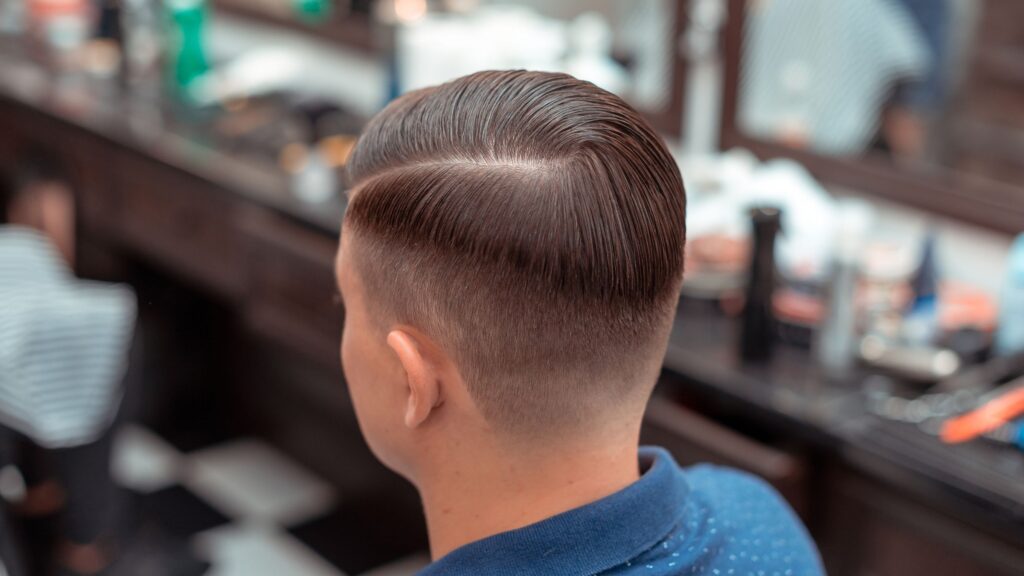
A quality fade requires seamless blending between multiple clipper guard lengths with zero visible lines. This demands steady hands, precise clipper-over-comb technique, and years of practice, which is why a well-executed fade often costs more than a basic trim.
Low fade vs. mid fade vs. high fade vs. skin fade, the full breakdown
| Fade Type | Where It Starts | Best For |
| Low fade | Just above the ears | Conservative, professional settings |
| Mid fade | Between the ear and temple | Balanced, versatile look |
| High fade | Near the temple, higher up the head | Bold, modern statement |
| Skin fade | Fades all the way down to bare skin | Sharp, high-contrast finish |
The bald fade, the drop fade, and the temple fade, what sets them apart
The bald fade is another term for a skin fade that fully exposes the scalp at its shortest point. The drop fade curves downward behind the ear rather than staying level, following the natural curve of the head. The temple fade isolates the fading effect specifically around the temple area, often paired with longer hair everywhere else.
Maintaining a fade between appointments
Fades grow out faster than other cuts because the sharp contrast becomes obvious within two to three weeks. Regular touch-ups every two to three weeks are standard for keeping a fade looking crisp.
Men’s Haircut Styling, Products, Tools, and Techniques That Actually Work
The best haircut in the world falls flat without the right styling routine behind it.
Pomades, clays, creams, waxes, and gels, what each one does
| Product | Hold Level | Finish | Best For |
| Pomade (oil-based) | Medium | High shine | Slick-backs, side parts |
| Pomade (water-based) | Medium-high | Low to medium shine | Versatile, easy to restyle |
| Clay | High | Matte | Textured crops, natural movement |
| Cream | Low | Natural, soft | Fine hair, subtle definition |
| Wax | Medium-high | Semi-matte | Piecey texture, separation |
| Gel | High | Glossy or matte (varies) | Precise, structured styles |
The right brush, comb, and blow dryer technique for your cut
A boar-bristle brush distributes natural oils and helps train hair in a specific direction, while wide-tooth combs work best on curly or coily hair to prevent breakage. Blow-drying with a round brush while directing airflow at the roots adds volume before product application.
Morning routines that keep your cut looking fresh all day
A simple routine, damp hair, small amount of product worked through fingertips first, then styled with a comb or brush, takes less than three minutes and keeps a cut looking intentional rather than slept-on.
Common styling mistakes that ruin a great haircut
Using too much product, applying product to fully dry hair instead of slightly damp hair, and skipping heat protection during blow-drying are the most common mistakes that undo an otherwise excellent cut.
Haircut Costs, Frequency, and What You’re Really Paying For
Understanding pricing helps you know when you’re getting genuine value.
The real cost of a great haircut, breaking down the pricing
| Service Level | Typical Price Range | What’s Included |
| Budget/chain | $15 to $25 | Basic cut, minimal consultation |
| Mid-range barbershop near me search result | $25 to $45 | Consultation, cut, basic styling |
| Premium barbershop | $45 to $80+ | Consultation, hot towel, straight razor lineup, styling |
How often should you actually get a haircut?
Most men benefit from a haircut every three to four weeks, though fades and shorter styles often need touch-ups every two to three weeks to maintain sharp lines.
Tipping your barber, the etiquette, the math, and the meaning
A standard tip runs between fifteen and twenty-five percent of the total service cost, with higher tips reserved for exceptional service or a particularly complex cut. Consistent tipping also tends to earn better treatment and more attention on future visits.
Budget cuts vs. premium barbershops, is it worth the difference?
Comparison: Budget Cut vs. Premium Cut
| Factor | Budget Cut | Premium Cut |
| Time spent | 10 to 15 minutes | 30 to 45 minutes |
| Consultation | Minimal or none | Thorough, face shape and lifestyle discussed |
| Finishing details | Basic | Straight razor edge-up, hot towel, styling |
| Consistency | Varies by staff member | High, especially with a regular barber |
For a simple maintenance trim, a budget cut can be perfectly serviceable. For anything involving a fade, a major style change, or a special occasion, the extra investment in a premium experience consistently pays off.
Cuts for Every Age, Career, and Lifestyle
The right haircut changes as your life does.
The best haircuts for young men (teens and early 20s)
Bold, trend-forward cuts like high fades, disconnected undercuts, and textured crops work well for younger men who have the flexibility to experiment and restyle frequently.
Haircuts for professional men in their 30s and 40s
Side parts, low tapers, and classic crew cuts strike the balance between polished and current, working well across corporate environments without looking dated.
Haircuts for men dealing with thinning hair or receding hairlines
Shorter overall lengths, buzz cuts, and crops with added texture on top minimize the visual contrast between thinning areas and fuller areas, while a skilled barber can also strategically place a fade to draw attention away from a receding hairline.
Dad cuts, dad bods, and why looking sharp still matters
A “dad cut” gets a bad reputation for being lazy, but a well-executed classic cut, crew cut, taper, or clean side part, paired with regular maintenance, looks sharp at any life stage and takes minimal daily effort.
Trends, Fads, and What’s Actually Worth Trying
Not every trend deserves a spot in your regular rotation.
How to spot a trend worth committing to vs. one you’ll regret
A trend worth trying usually works with your existing hair type and face shape and doesn’t require extreme daily maintenance. A trend to skip is one that only looks good on the specific influencer wearing it in the video.
The cuts dominating right now (and why they work)
Skin fades paired with textured crops remain the most requested combination because they’re versatile, low maintenance between trims, and flattering across most face shapes.
Retro cuts making a real comeback
The mullet, the mid-2000s spiky look, and the classic flat top have all seen renewed interest, often reinterpreted with modern texturizing techniques rather than copied exactly from their original eras.
The cuts that have quietly died, and should stay gone
Frosted tips, the extreme comb-over, and overly gelled spikes from the early 2000s have largely disappeared from barbershop requests, and for good reason.
Common Haircut Mistakes and How to Fix Them
Even with the best intentions, haircuts sometimes go wrong.
When a barber gets it wrong, your options and rights
Most reputable shops will offer a free fix-up if you’re unhappy with a cut, as long as you speak up promptly and specifically about what’s wrong. Being clear and calm, rather than confrontational, gets the best results.
At-home haircut disasters and damage control
If a DIY cut goes wrong, resist the urge to keep trimming to “fix” it. Book an appointment with a professional as soon as possible. In most cases, a skilled barber can even out uneven sections without requiring a drastic length cut.
Transition mistakes, growing out a cut the right way
Growing out a haircut requires patience and regular trims to keep the shape intact during the awkward in-between stages, rather than avoiding the barbershop entirely and hoping for the best.
The biggest mistakes men make when choosing a new cut
Copying a celebrity’s exact cut without considering hair type or face shape, changing styles too drastically right before a big event, and failing to communicate lifestyle needs (like gym frequency or humid climates) to the barber are the most common missteps.
Building Your Personal Haircut Checklist Before Your Next Appointment
A little preparation goes a long way toward a better result.
What to assess before you book
Consider your current hair length, how much time you’re willing to spend styling daily, and any upcoming events that might influence timing.
What to bring, what to say, and what to avoid
Bring one or two clear reference photos, use specific guard numbers and fade terminology, and avoid vague requests like “just clean it up” if you actually want a noticeable change.
The post-cut routine that makes your haircut last longer
Wait at least twenty-four hours before washing to let the cut settle, use light styling products rather than heavy ones daily, and book your next appointment before you leave the chair to stay on a consistent schedule.
Frequently Asked Questions About Men’s Haircuts
How do I know what haircut suits my face shape?
Identify your face shape by comparing width and length of your forehead, cheekbones, and jawline, then match it against the recommendations in the face shape table above. A quick consultation with your barber, who assesses face shape professionally every day, is the most reliable method.
What is the difference between a taper and a fade?
A taper gradually shortens hair without necessarily reaching skin, while a fade creates a more dramatic blend that often goes all the way down to bare skin at its shortest point.
How often should a man get a haircut?
Most men should get a haircut every three to four weeks, though shorter styles like fades often require touch-ups every two to three weeks to stay sharp.
How do I tell my barber I don’t like my haircut?
Speak up calmly and specifically before leaving the chair whenever possible, pointing to the exact area that concerns you. Most reputable shops will make adjustments on the spot or offer a complimentary fix-up visit.
What’s the best haircut for thinning hair?
Shorter overall lengths, buzz cuts, and textured crops minimize the visual contrast between thinning and fuller areas, while strategic fades can draw attention away from a receding hairline.
How do I maintain my haircut between appointments?
Use light styling products daily, avoid overwashing (which can dry out both hair and scalp), and schedule touch-up trims every two to three weeks for fades or sharp cuts.
Is it worth paying more for a premium barbershop?
For fades, major style changes, and special occasions, yes. The extra time, consultation, and finishing detail typically produce a noticeably better and longer-lasting result.
What products should I use to style my haircut at home?
Match the product to your desired finish: clay or wax for matte texture, pomade for shine and hold, and cream for a soft, natural look on finer hair.
Conclusion
Your haircut is a quiet, constant signal to the world and to yourself. It’s there in every mirror you pass and every photo taken of you, shaping how you feel before you’ve even opened your mouth. A regular visit to the barbershop offers something beyond the haircut itself: a ritual of maintenance, conversation, and a reset that few other routines provide. The hum of clippers, the smell of talc, the hot towel against your neck, these small sensory details are part of why the experience has endured for thousands of years. Understanding your hair type, your face shape, and the vocabulary to communicate clearly with your barber puts you in control of your own look instead of leaving it to chance. The next time you sit in that leather chair, you’ll know exactly what to ask for, and exactly why it works.