
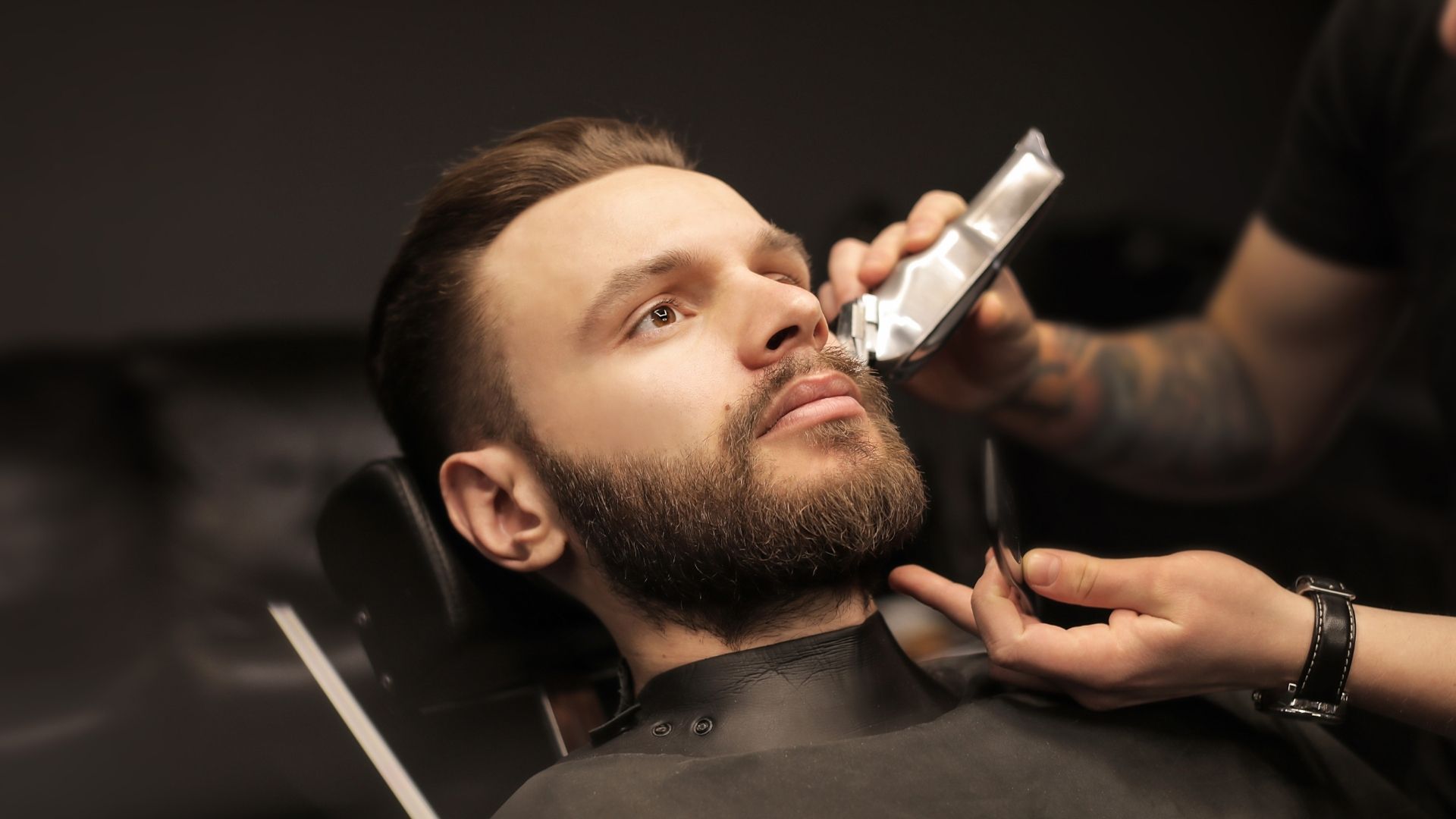
Meta title Why Beards Look Patchy After Trimming (And How Barbers Fix It) – Das’it Barbershop
Meta description Patchy beard after a trim? Learn why it happens, what barbers actually do to fix it, and the real steps to grow a fuller, sharper beard.
You stepped away from the mirror feeling good. Clean lines, even length, a beard that finally looked intentional. Then you caught the light from a different angle and there it was: a bald patch on your cheek, a thin stretch near your jaw, a gap that wasn’t there five minutes ago. Welcome to one of the most common frustrations a man faces with facial hair, and one that sends plenty of guys straight into a barber’s chair looking for answers.
This isn’t a rare problem. It’s not a sign you’re doing something wrong, either. Patchy beards after a trim happen to men in their twenties and men in their fifties, to guys with thick scalp hair and guys who’ve never needed a comb in their life. The difference between a man who’s stuck with a patchy beard for years and one who fixes it in a matter of weeks almost always comes down to understanding what’s actually happening under the skin, and knowing which trimming habits make the problem worse instead of better.
This guide walks through the full picture: the biology driving your beard growth, the trimming mistakes that expose patches instead of hiding them, the techniques barbers use to fix the problem in the chair, and the longer-term strategies, from skincare to diet to styling, that build a fuller beard over time. By the end, you’ll know exactly what to ask for next time you sit down in a barber’s chair, and what you can start doing today.
Why Patchy Beards After Trimming Are More Common Than You Think
The moment every man dreads in the mirror
Every barber has seen it. A guy sits down for a routine trim, relaxed, chatting about the weekend. Then the cape comes off and he leans toward the mirror, turning his head slowly, searching for something that wasn’t visible under three weeks of growth. His jaw tightens. “Has it always looked like that?”
The honest answer is usually yes. Trimming doesn’t create patches. It reveals them. Longer hair curls over itself and fills in visual gaps the way longer grass hides bare spots on a lawn. Cut that hair shorter and the terrain underneath gets exposed, sometimes for the first time in months.
What “patchy” actually means and why it matters
Patchiness isn’t one single thing. It can mean sparse density in certain zones, like the cheeks or under the lip. It can mean uneven length, where some areas grow faster and longer than others. It can mean inconsistent texture, with wiry patches next to soft, fine ones. Each of these looks similar from across the room but requires a different fix up close, which is exactly why a generic trim often makes the issue look worse rather than better.
How widespread the problem really is
According to a 2021 survey by the British Association of Dermatologists, roughly half of men who attempt to grow a full beard report areas of noticeably thinner or absent growth, particularly along the cheeks. Barbershops see this daily. It’s one of the top reasons men book a consultation rather than a standard walk-in trim, and it’s the single most common question asked at the chair: “Why does my beard look like this, and can you fix it?”
The short answer is yes, in most cases. But fixing it starts with understanding what’s growing under your skin in the first place, which is where the biology comes in.
The Biology Behind Your Beard: What’s Actually Growing Under Your Skin
How beard hair follicles work differently from scalp hair
Beard hair and scalp hair come from the same genetic blueprint but behave like distant cousins. Scalp follicles are more numerous and tend to grow in a consistent, long growth cycle. Beard follicles are fewer in number per square centimeter, and each one is individually controlled by hormone receptors that determine how thick, how fast, and how long that specific hair will grow. That’s why one patch of your jaw might sprout coarse, dark hair while a patch two inches away barely produces fuzz. It’s not inconsistency on your part. It’s biology operating follicle by follicle.
The role of testosterone and DHT in beard density
Beard growth is driven primarily by dihydrotestosterone, known as DHT, a derivative of testosterone. Research published in the Journal of Clinical and Aesthetic Dermatology found that facial hair follicles have a higher sensitivity to DHT than many other body hair follicles, which explains why some men with completely average testosterone levels grow full, dense beards while others with similar hormone levels stay patchy. Sensitivity of the follicle, not just the amount of hormone circulating, determines the outcome. This is also why topical treatments that influence follicle response, which we’ll cover later, can make a measurable difference for some men and almost none for others.
Why genetics is the biggest variable in the room
If a man’s father and grandfather had patchy cheek growth, there’s a strong chance he will too. Genetics determines follicle density, hormone sensitivity, and growth cycle length, and none of these are things a trimmer, a balm, or a barber’s technique can override entirely. This matters because it sets realistic expectations before any sculpting or styling work begins. A skilled barber isn’t fighting your genetics. A skilled barber is working with them, using angles, length, and shape to present the beard you actually have in its best possible form.
That’s the heart of what separates a frustrating trim from a flattering one, and it starts with understanding how the tools themselves interact with your growth pattern.
How Trimming Technique Creates the Illusion of Patchiness
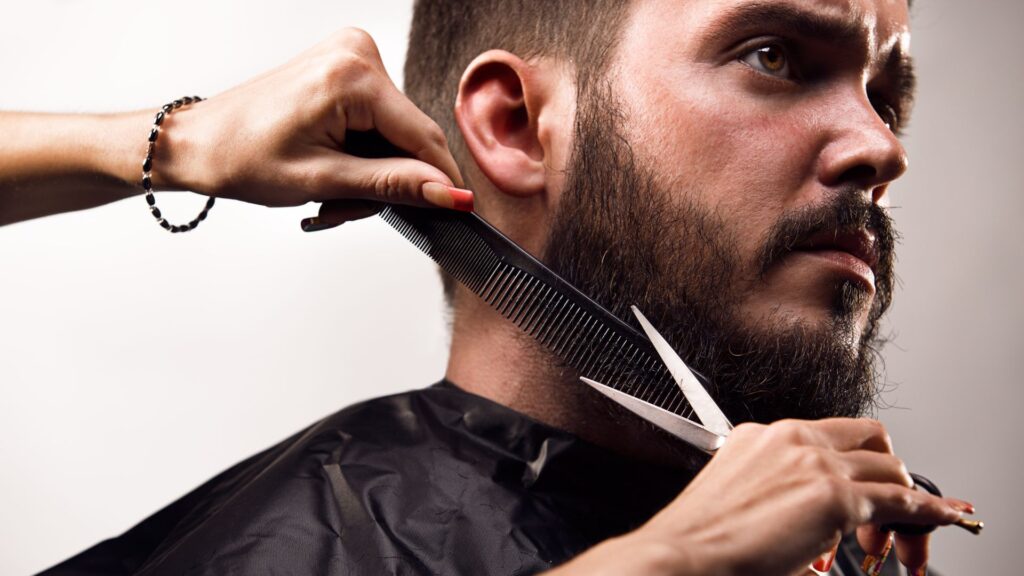
The angle problem: how clippers expose uneven growth
Clippers cut hair at a flat, uniform length relative to the guard being used. That sounds simple, but beard hair doesn’t grow at a uniform angle. Some hairs shoot straight out from the skin, others grow at a slant, and a few curl back toward the face entirely. When a clipper passes over this uneven terrain at a single flat angle, it cuts the straight-growing hairs shorter relative to the skin than the slanted ones, creating visual valleys where there’s actually hair, just hair lying closer to the surface. This is one of the most overlooked reasons patches appear worse right after a trim than they did the week before.
Going too short too fast and what it reveals
Men often make the jump from a longer guard to a dramatically shorter one, especially after a few months of letting things grow out shaggy. The problem is that shorter lengths are far less forgiving. At half an inch, thin spots blend into the surrounding fuller hair. At an eighth of an inch, those same thin spots become stark, visible gaps. A good rule many barbers follow: drop guard length gradually, no more than one size at a time, so you can monitor how each length reveals (or hides) your natural density before committing further.
Grain direction and why cutting against it backfires
Just like scalp hair has a natural part or swirl, beard hair grows in distinct directional patterns, often referred to as the grain. Cutting against the grain, moving the clipper or razor opposite to the direction hair naturally lies, lifts the hair away from the skin before cutting it, resulting in a shorter, choppier cut than intended. Cutting with the grain produces a softer, more even result but can leave hair slightly longer in places. Most patchiness complaints after a DIY trim trace back to cutting against the grain in exactly the zones where density is already thin, amplifying the problem instead of masking it.
This single mistake, more than any other, explains why a trim at home often looks dramatically different from the same length cut by a trained professional. But it’s far from the only trimming habit working against you.
The Most Common Trimming Mistakes That Make Patches Worse
Using the wrong guard length for your beard density
A dense beard can handle a shorter guard without revealing much skin underneath. A beard with naturally lower density needs more length to maintain visual coverage, because there’s simply less hair per square inch doing the work of hiding the skin. Many men use the same guard length across their entire face without adjusting for the fact that cheek density is almost always lower than chin and mustache density. The result is a beard that looks full at the chin and sparse at the cheeks, the classic patchy silhouette.
Trimming dry versus trimming damp
Dry hair tends to stand away from the skin, especially if it’s coarse or coiled, which can cause clippers to cut it shorter than intended. Damp hair lies closer to the skin and offers a more predictable, even cut, but too much moisture can clump hair together and hide true length. Most barbers trim beards when they’re clean and completely dry, using a comb to lift and separate sections for consistent results, reserving damp trimming mainly for scissor work on longer beards.
Uneven hand pressure and rushing the job
Pressing a clipper too hard into the skin on one pass and lighter on the next produces inconsistent length even with the same guard attached. This sounds minor, but across a full beard, those small inconsistencies stack up into visible unevenness, particularly along curved areas like the jawline and under the chin where pressure naturally varies as the hand moves. Rushing compounds the issue, since consistent pressure requires a slow, deliberate pace that a five-minute bathroom trim rarely allows for.
Neglecting the neckline and cheek line balance
A precise neckline and cheek line do more to create the illusion of fullness than almost any other single trimming decision. A cheek line set too high exposes more bare skin than necessary. A neckline set too low makes the beard look shapeless and unintentional. Barbers spend a disproportionate amount of time on these two lines because they frame the entire beard, and a well-placed line can make a moderately patchy beard look deliberate and clean, while a poorly placed one makes even a dense beard look messy.
Understanding these mistakes is useful, but the real foundation for fixing a patchy beard starts even earlier, before the trimmer ever touches your face.
Understanding Your Beard Growth Pattern Before You Ever Pick Up a Trimmer
Mapping your beard’s natural growth zones
Every man’s beard has its own internal map. Picture four general regions: the mustache, the chin and soul patch area, the jawline, and the cheeks. The mustache and chin typically carry the highest density for most men, since these areas have the highest concentration of DHT-sensitive follicles. The jawline is usually moderate, and the cheeks are the most variable region by far, ranging from fully dense to almost entirely bare depending on genetics.
Spend a week without trimming and really study your face in natural daylight. Note where hair grows thick and fast, where it grows thin and slow, and where it doesn’t grow at all. This map becomes the single most useful tool for deciding how to trim, style, and talk to your barber about your specific beard.
Identifying your strong zones versus your weak zones
Strong zones can handle shorter lengths and sharper shaping without revealing skin. Weak zones need extra length, strategic blending, or styling choices that redirect attention elsewhere. A man with strong chin growth but weak cheek growth benefits from a beard shape that emphasizes volume at the chin, like a slightly rounded or boxed design, while keeping cheek length a touch longer and softer at the edges rather than lined sharply, which would only draw the eye to the thinner area.
Why the same trim looks different on different men
Two men can ask for an identical guard length and walk out with completely different results, simply because their underlying growth maps are different. This is why copying a photo from Instagram often leads to disappointment. The haircut, or in this case the beard cut, has to be adapted to the canvas it’s being applied to. A trained barber does this adaptation instinctively, which brings us to what actually happens during that sixty-second visual assessment before the clippers even come out.
What Barbers See That You Don’t: The Professional Diagnostic Eye
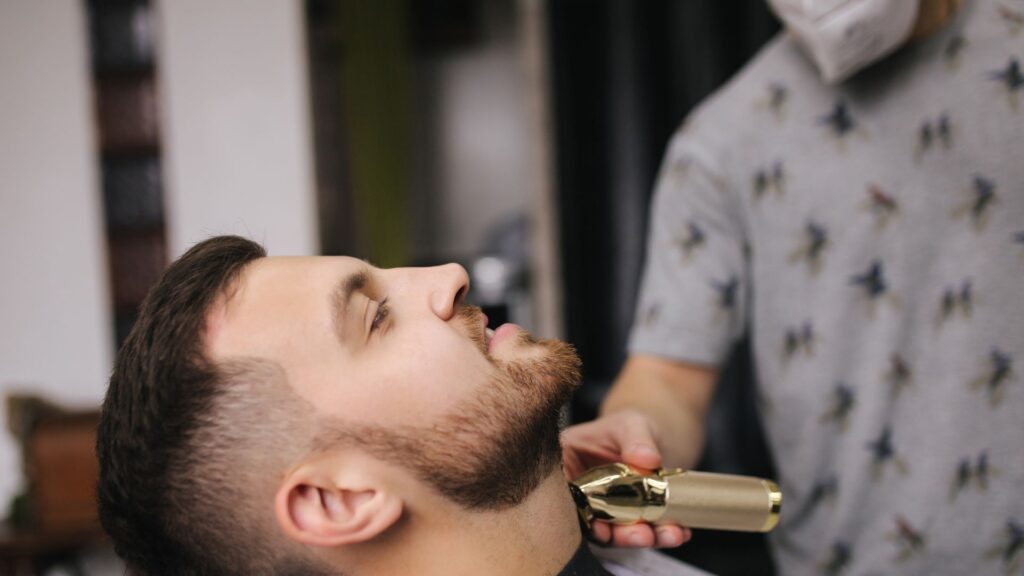
How a trained barber reads a beard in 60 seconds
Before a single clipper pass, an experienced barber is already running through a mental checklist: density by zone, growth direction, current length, skin tone and texture, jawline shape, and how the client’s hair lies when he turns his head left, right, and down. This assessment, done almost unconsciously after years of practice, determines everything from guard selection to the angle of the first pass. It’s the difference between cutting a beard and sculpting one.
The tools barbers use to assess density and shape
Beyond trained eyesight, many barbers use a simple comb-and-light technique, combing the beard against the grain under direct light to spot thin areas that would otherwise stay hidden when the hair lies flat. Some use adjustable mirrors to show clients their profile and three-quarter angles, angles most men never examine on their own but that reveal patchiness far more clearly than a straight-on bathroom mirror ever does.
What your beard is telling a professional that you’re missing
A barber isn’t just looking at what’s there. They’re reading what the beard is likely to do over the next two to four weeks based on growth rate and pattern, essentially forecasting the shape before it fully forms. This forward-looking approach is why a good barber will sometimes trim a beard slightly asymmetrically on purpose, anticipating that one side grows faster and will even out naturally within a week or two.
This diagnostic skill is the foundation of everything a barber does next, and it leads directly into the specific techniques used to minimize and disguise patchy areas.
The Barber’s Playbook: Techniques That Disguise and Fix Patchy Beards
Using length and weight to fill visual gaps
The single most effective tool against patchiness is length. Longer hair has more weight, which causes it to curl, overlap, and lie across neighboring hairs, visually filling gaps that would be stark at a shorter length. Barbers often recommend keeping problem zones, especially cheeks, at least a quarter inch longer than the rest of the beard specifically to leverage this overlap effect.
Strategic fading and blending around sparse areas
Fading isn’t just a haircut trend borrowed for beards. Applied correctly, a gradual fade from shorter to longer length around a sparse patch softens the transition between skin and hair, making the eye glide past the thin area rather than snagging on a hard visual edge. This is one of the most requested professional techniques precisely because it works on nearly every beard type, regardless of the underlying density.
Shape design that works with your growth, not against it
Rather than forcing a symmetrical, textbook beard shape onto an asymmetrical growth pattern, skilled barbers design shapes around the client’s actual map. A slightly fuller mustache can balance thinner cheek coverage. A squared-off chin can draw focus away from a less defined jawline. This is tailored design work, closer to a custom suit than an off-the-rack purchase, and it’s a major reason why a professional consultation outperforms a DIY trim for genuinely patchy beards.
The razor shave perimeter trick for cleaner definition
One technique barbers rely on heavily is a razor shave along the perimeter, the neckline, cheek line, and sometimes the mustache edge, while leaving the body of the beard untouched by the razor. A razor produces a cleaner, sharper edge than clippers alone, and that crisp boundary creates the illusion of intentional design rather than uneven growth. It’s a small detail, but it’s often the difference between a beard that looks “finished” and one that looks like it’s still growing out.
| Technique | Best for | What it does |
| Length retention | Sparse cheeks | Uses overlap to hide skin |
| Fading | Patchy transition zones | Softens hard edges around thin spots |
| Shape redesign | Asymmetrical growth | Balances visual weight across the face |
| Razor perimeter | Overall definition | Creates a clean, intentional frame |
These in-chair techniques solve a lot, but they’re not the only path forward. Sometimes the real fix isn’t trimming smarter. It’s trimming less.
Hair Growth and Shape: Growing Through the Patch Instead of Trimming Around It
Why letting it grow is sometimes the only real fix
For moderate patchiness, length is often the simplest and most effective solution available. Beard hair that’s allowed to grow past the one-inch mark starts to curl and weave across itself naturally, which can visually close gaps that no amount of clever trimming would hide at a shorter length. This is frequently the first recommendation barbers give to men chasing a cleaner cheek line before their density has had a chance to catch up.
The four-week rule barbers swear by
Most barbers advise clients with patchy areas to avoid trimming those specific zones for a minimum of four weeks, even while maintaining the neckline and other areas as usual. Four weeks tends to be the point where enough length has accumulated for overlap to take effect without the beard looking unkempt elsewhere. Going shorter than that resets the clock and often leads men straight back into the same frustrating cycle.
How beard shape changes as length increases
As length increases, Hair Growth and Shape become directly linked, since longer hair settles into new patterns under its own weight that simply don’t exist at shorter lengths. A beard that looks patchy at a quarter inch can look intentionally textured and full at an inch and a half, not because new hair appeared, but because the existing hair had room to do its job. This is the single biggest mindset shift barbers try to instill in frustrated clients: sometimes the solution isn’t more trimming. It’s patience.
Growing through a patch takes discipline, and that discipline is often supported (or undermined) by the products a man reaches for along the way.
Products That Actually Help Versus Products That Are Just Marketing
Beard oils, balms, and serums broken down
Beard oil softens hair and moisturizes the skin underneath, reducing itchiness during the growth phase and making hair appear shinier and fuller. Balm adds light hold and styling control, useful for training hair to lie in a desired direction. Serums vary widely, some are essentially oil with marketing language attached, while others contain active ingredients intended to support follicle health. None of these products will grow new hair where follicles don’t exist, but they genuinely improve the appearance and manageability of the hair you already have.
Minoxidil for beard growth: what the research actually says
Minoxidil, originally developed as a blood pressure medication, is FDA-approved for scalp hair loss and used off-label by many men for beard growth. A study published in the journal Skin Appendage Disorders found that topical minoxidil produced noticeable improvement in beard density for a meaningful portion of participants after sixteen weeks of consistent use, though results varied significantly between individuals and growth often reversed once use stopped. Choose minoxidil if your patchiness stems from slow or thin growth rather than genuinely absent follicles, since it stimulates existing follicles rather than creating new ones.
Ingredient comparison table: what works and what doesn’t
| Product type | Common ingredients | Backed by evidence | What it realistically does |
| Beard oil | Jojoba, argan oil | Moderate | Softens hair, moisturizes skin |
| Beard balm | Beeswax, shea butter | Moderate | Adds hold and manageability |
| Minoxidil | Minoxidil 5% | Strong | May stimulate existing follicles |
| Biotin supplements | Biotin | Weak (unless deficient) | Minimal effect without a true deficiency |
| “Beard growth” vitamins | Mixed vitamins | Weak | Mostly marketing unless addressing a deficiency |
Products can support the process, but they work best alongside something far less glamorous and far more foundational: healthy skin.
Skin Health Underneath the Beard: The Foundation Nobody Talks About
How dry skin and follicle buildup slow growth
Dead skin cells, excess oil, and product residue can accumulate around hair follicles, partially blocking new growth and contributing to irritation that leads men to trim shorter out of discomfort, ironically making patches more visible. Dry, flaking skin underneath a beard is also one of the most common reasons for persistent itchiness, which tempts men to shave the whole thing off rather than push through the awkward growing phase.
Exfoliation, moisturizing, and beard wash routines
A gentle exfoliation once or twice a week removes buildup without stripping the skin’s natural oils. A dedicated beard wash, rather than regular shampoo or bar soap, cleans without over-drying, since over-drying triggers the skin to overcompensate with excess oil production. Following with a light, non-comedogenic moisturizer keeps the skin underneath healthy enough to support consistent follicle function.
The connection between skin health and beard density
Healthy skin provides a stable environment for follicles to complete their growth cycle without interruption. Chronic irritation or inflammation can actually shorten the active growth phase of individual hairs, leading to overall thinner-looking coverage over time. This is a slow, cumulative effect, which is exactly why it goes unnoticed by most men until a barber points it out during a consultation.
Skin care handles what’s happening right at the surface, but some of the biggest influences on beard growth are happening much deeper, in the body’s internal systems.
Diet, Sleep, and Stress: The Internal Factors Barbers Can’t Fix for You
Nutrients that support beard growth (with data)
Hair follicles are metabolically active tissue, meaning they require a steady supply of specific nutrients to function properly. Zinc, biotin, vitamin D, and protein all play documented roles in healthy hair growth cycles. A deficiency in any of these, zinc in particular, has been linked in clinical research to hair thinning and slower regrowth. A barber can shape what’s there, but no technique compensates for a body that isn’t getting what it needs to grow hair efficiently in the first place.
How stress hormones interfere with follicle cycles
Chronic stress elevates cortisol, which research has associated with pushing hair follicles prematurely into the resting phase of their growth cycle. This doesn’t cause patches overnight, but sustained stress over months can gradually thin areas that were previously filling in nicely, which is why some men notice their beard density fluctuating during particularly demanding periods at work or at home.
Sleep quality and its direct link to hair health
Sleep is when the body carries out the majority of its cellular repair and regeneration work, including processes relevant to hair follicle health. Poor, inconsistent sleep disrupts these repair cycles, and over time this can show up as slower, patchier growth that no beard oil or trimming technique will fully correct. Fixing a patchy beard sometimes starts with fixing a sleep schedule, as unglamorous as that sounds.
Internal factors take longer to influence than a haircut does, which is exactly why styling choices matter so much in the meantime.
Beard Styles That Work Best for Patchy Growth Patterns
Style comparison table by patch location
| Patch location | Recommended style | Why it works |
| Cheeks | Short boxed beard | Keeps cheek length minimal, draws focus to the jawline |
| Jawline | Fuller chin beard with faded sides | Shifts visual weight toward denser chin growth |
| Mustache gap | Full beard with heavier chin | Balances the face away from the mustache area |
| Patchy chin | Extended goatee | Concentrates style around existing density, avoiding the gap |
| Uneven overall | Textured stubble | Short length minimizes the visibility of unevenness |
The short beard advantage for patchy growers
Choose a shorter, well-defined beard if your patchiness is mild to moderate and you want a clean, professional look without waiting months for length to accumulate. Shorter styles rely on sharp lines and consistent texture rather than volume, which plays to the strengths of a beard that’s dense but uneven rather than genuinely sparse.
Designer stubble versus full beard: which hides patches better
Designer stubble works best for men with fairly even, if thin, overall density, since short length minimizes contrast between thick and thin zones. Choose a full beard instead if your patches are concentrated in specific zones that can be compensated for with length and shape elsewhere, since a full beard gives a barber more material to work with for strategic blending. Men with isolated, severe bald patches, rather than general thinness, often get better results from the fuller approach, since length provides more coverage to work around a defined gap.
Styling can disguise a lot, but it’s worth pausing here to address the cases where patchiness isn’t really about trimming, growth, or styling at all.
When Patchiness Is a Sign of Something Medical
Alopecia barbae and what it looks like
Alopecia barbae is an autoimmune condition that causes sudden, well-defined circular patches of hair loss in the beard area, distinct from the gradual, genetic thinning most patchy beards represent. Unlike typical patchiness, these patches tend to appear quickly, sometimes within days, and have sharply defined, perfectly smooth borders rather than a gradual thinning-out pattern.
Hormonal imbalances and thyroid conditions
Thyroid disorders, both an underactive and overactive thyroid, can affect hair growth cycles throughout the body, including facial hair. Men experiencing sudden, unexplained beard thinning alongside other symptoms like fatigue, weight changes, or mood shifts should consider that the beard issue might be a visible symptom of a broader hormonal imbalance rather than an isolated cosmetic concern.
When to see a dermatologist instead of a barber
Choose a dermatologist visit over a barber consultation if patches appeared suddenly, have perfectly smooth, bald borders, are accompanied by itching, redness, or scaling, or if you’ve noticed other unexplained changes in your hair or overall health. A barber is excellent at working with the beard you have, but a dermatologist is the right professional if something underneath the skin needs medical attention first.
For most men, though, the issue is far more ordinary, and the fix comes down to a simple cost and effort decision: handle it yourself or bring in a professional.
The Real Cost of Getting Your Beard Fixed Professionally
What a beard sculpting session actually includes
A dedicated beard sculpting appointment typically includes a consultation to map growth patterns, a customized trim designed around density zones, precision line work along the neckline and cheek line, and often a hot towel treatment or razor finish along the perimeter. This is a notably more involved process than a quick maintenance trim, which is reflected in both the time spent in the chair and the price charged.
Pricing breakdown by service type
| Service | Typical price range | Time required |
| Standard beard trim | $20 to $35 | 15 to 20 minutes |
| Beard sculpting consultation | $45 to $75 | 30 to 45 minutes |
| Razor line perimeter add-on | $10 to $20 | 10 to 15 minutes |
| Full beard + haircut combo | $55 to $90 | 45 to 60 minutes |
DIY versus professional: an honest cost comparison
Choose DIY maintenance if your beard is already well-shaped and you’re simply maintaining length between professional visits, since a quality trimmer pays for itself within a few uses. Choose a professional sculpting session if you’re dealing with genuine patchiness, an unfamiliar growth pattern, or you’ve tried DIY fixes without success, since the upfront cost is usually far less than the time and frustration spent on repeated at-home attempts that make the problem worse before it gets better.
With the costs and options laid out, it’s worth answering the specific questions men most often bring into the chair.
Common Questions Men Ask Their Barber About Patchy Beards
Will my patchy beard ever fill in completely?
For most men, density improves somewhat with age as hormone sensitivity in facial follicles tends to increase into the late twenties and early thirties, but genetics sets a ceiling that styling and length can work around, not erase entirely.
Does shaving make your beard grow back thicker?
No. Shaving cuts hair at the surface and has no effect on follicle density or the hair’s actual growth rate; this is one of the most persistent myths in grooming.
How long should I wait before trimming a patchy area again?
Most barbers recommend at least four weeks of uninterrupted growth in sparse zones before trimming, giving length enough time to create natural overlap and coverage.
Can minoxidil really fix a patchy beard?
It can improve density for some men after consistent use over several months, though results vary significantly and any gains typically reverse once treatment stops.
Is it worth paying for a professional beard sculpting session?
If you’ve struggled with DIY trims or have a genuinely uneven growth pattern, a one-time professional consultation often saves months of frustration and repeated bad trims.
What beard length best hides patchy cheeks?
Generally, anything over an inch provides enough length for overlap to begin visually closing gaps, though your barber can confirm the right length for your specific density.
Should I talk to a dermatologist before trying beard growth products?
If your patchiness appeared suddenly or has unusually smooth, defined edges, yes; otherwise, most over-the-counter products are safe to try without a prior consultation.
Can diet actually change how my beard grows?
Correcting a genuine nutritional deficiency, especially in zinc, biotin, or vitamin D, can improve growth, though diet changes won’t affect men who aren’t deficient to begin with.
Your Action Plan: What to Do Starting Today
The week-by-week beard recovery checklist
In week one, stop trimming your weakest zones entirely and start a gentle exfoliation and beard wash routine. By week two, introduce a quality beard oil to manage itchiness and improve the appearance of existing hair. Around week four, assess your growth map again and decide whether length is sufficient to visit a barber for a sculpting consultation, or whether another few weeks of patience is warranted.
How to talk to your barber about your patch problem
Be specific. Instead of saying “fix my patchy beard,” point out exactly which zones concern you and ask directly about length retention, fading, and shape options suited to your growth pattern. A good barber will welcome this conversation, since it gives them the information needed to design around your face rather than applying a generic template.
Setting realistic expectations by beard type
If your patchiness is genetic and consistent, expect management rather than elimination, since styling and length can disguise gaps but won’t create new follicles. If your patchiness is tied to a temporary factor like stress, poor sleep, or a nutritional gap, expect gradual improvement over several months once that underlying factor is addressed.
Conclusion
The hardest stretch of growing through a patchy phase is usually weeks two through four, right when the beard looks its most awkward and the temptation to shave it all off is strongest. Most men who give up do so right before the overlap effect would have started working in their favor. A barber who understands your specific growth map, combined with a few extra weeks of patience, solves the vast majority of patchy beard complaints without any dramatic intervention. The fix is rarely as complicated as it feels standing in front of the mirror at week two. A beard doesn’t need to be perfectly uniform to look sharp and deliberate. Some of the best-looking beards in any barbershop belong to men who once swore theirs would never fill in. Give it the length it needs, the care it deserves, and the right pair of hands behind the clippers, and a patchy beard stops being a problem to hide and starts being a beard worth showing off.