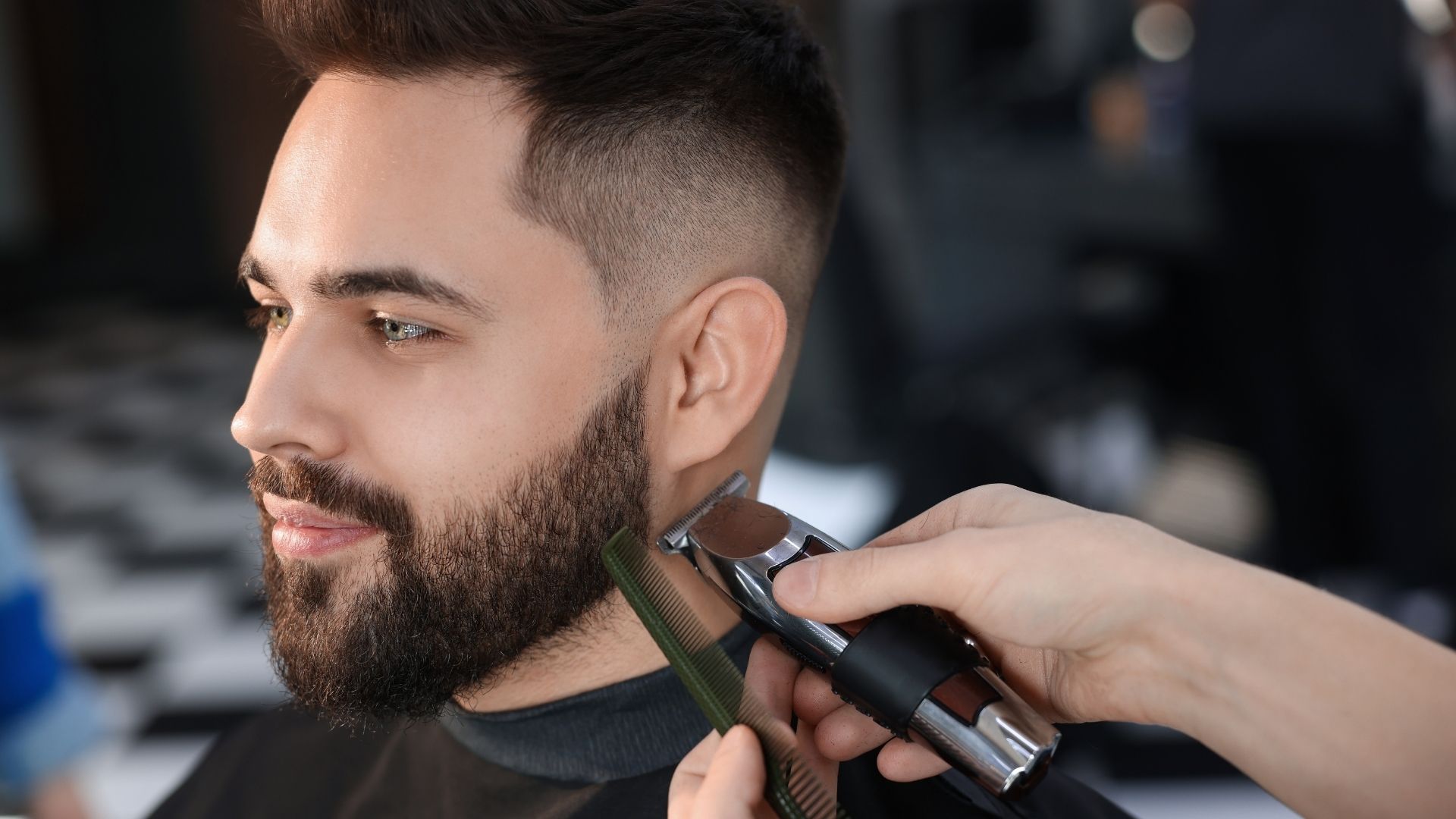
You just dropped forty bucks and twenty minutes of your Saturday into a cut that looked flawless under those warm shop lights. Then you walked outside, caught your reflection in a car window, and froze. The fade looked choppy. The line looked crooked. Your hair looked a shade off from what you just saw in the mirror. What happened in those ten steps between the chair and the sidewalk? Nothing happened to your hair. Everything happened to the light. This guide breaks down the real science behind why barbershop lighting and sunlight tell two different stories about the same haircut, what your barber already knows about this trick of the eye, and how you can walk out the door confident your cut looks sharp everywhere, not just under the shop’s bulbs.
Key Takeaways
- Light has a color temperature measured in Kelvin, and barbershops are often lit warmer than daylight, which can hide flaws and boost shine.
- Sunlight is full-spectrum and unforgiving, so it reveals texture, unevenness, and color variation that artificial light smooths over.
- Hair type, color, and the products you use all interact differently with warm shop lighting versus natural daylight.
- A good barber checks their work under multiple light sources, and you should ask them to do the same before you leave the chair.
- Knowing what to look for, and when, can prevent the classic “it looked great in the shop” regret.
The Moment You Step Outside and Everything Changes
That sinking feeling at the car mirror
You know the feeling. You check yourself in the shop mirror one last time, nod in approval, and head for the door. Then you catch your reflection in a window or a car mirror, and something feels off. The fade that looked crisp a minute ago now looks patchy. This isn’t your imagination playing tricks on you. It’s physics.
Why the barbershop chair feels like a magic throne
A good barbershop is built to make you look your best, and lighting is a huge part of that design. Warm bulbs, strategically placed mirrors, and years of trial and error go into creating a setting where every cut looks clean and every client leaves happy. That’s not a trick meant to deceive you. It’s craftsmanship, but it does mean the full picture only comes into view once you step into daylight.
The promise of this guide
By the end of this article, you’ll understand exactly why your haircut can look different depending on where you’re standing, what your barber already accounts for, and what you can do to make sure your cut holds up anywhere, from the gym parking lot to your cousin’s wedding.
Light Is Not Just Light: The Science Behind What You’re Seeing
What color temperature actually means
Light isn’t neutral. Every light source has a color temperature, measured in degrees Kelvin, that determines whether it looks warm and golden or cool and blue. Warmer light sources sit lower on the Kelvin scale and cast an amber glow, while cooler sources sit higher and cast a cleaner, bluer tone. That single variable changes how your hair color, your skin tone, and even your fade lines appear to the eye.
How the human eye adapts to different lighting environments
Your eyes constantly adjust to the dominant light source in a room, a phenomenon called chromatic adaptation. Under warm shop lighting, your brain compensates and “corrects” for the amber cast, so a cut can look balanced and polished. Step into daylight, which your eyes don’t need to correct for in the same way, and the same haircut suddenly reveals detail your brain was smoothing over moments before.
Why artificial light flatters and natural light tells the truth
Artificial light, especially warm incandescent or filtered LED bulbs, tends to soften shadows and minimize contrast. Sunlight, by comparison, is a full-spectrum light source that exposes every ridge, uneven line, and inconsistency in tone. That’s why natural light is often called the harshest judge of any haircut, hair color, or skin imperfection.
The Kelvin scale and what it means for your haircut
| Light Source | Approximate Kelvin Temperature | Visual Effect on Hair |
| Candlelight | 1,800K | Very warm, amber, hides detail |
| Standard incandescent bulb | 2,700K | Warm, flattering, softens contrast |
| Warm white LED (common in barbershops) | 3,000K | Warm, boosts shine, hides minor flaws |
| Cool white LED (common in offices) | 4,000K | Neutral, slightly clinical |
| Overcast daylight | 6,500K | Neutral to cool, true color rendering |
| Direct midday sun | 5,500K–6,000K | Bright, high contrast, reveals every detail |
Inside the Barbershop: How Lighting Is Designed to Work for You
The history of barbershop lighting design
Traditional barbershops have long favored warm lighting, a holdover from the era of incandescent bulbs when warm tones were the default and shops wanted their chairs to feel inviting rather than clinical. Over time, this warm aesthetic became part of the barbershop identity itself, tied to comfort, ritual, and trust.
Warm vs. cool lighting and how shops choose
| Factor | Warm Lighting | Cool Lighting |
| Ambiance | Cozy, traditional, relaxed | Clinical, modern, clean |
| Skin tone rendering | Flattering, minimizes redness | Neutral, can emphasize blemishes |
| Hair detail visibility | Softened, forgiving | Sharper, more revealing |
| Best suited for | Classic barbershops, fades, scissor cuts | Modern salons, color work, precision cuts |
How mirrors, angles, and light placement affect perception
The placement of mirrors and light fixtures in a barbershop isn’t accidental. Light positioned above and slightly in front of the mirror reduces harsh shadows under the chin and around the ears, areas where fades and necklines live or die. Angled mirrors also allow barbers to show clients their cut from multiple perspectives without ever stepping outside.
What a well-lit barbershop actually looks like
A well-lit shop typically combines a warm ambient light with brighter, more neutral task lighting directly over the chair. This combination lets the barber see true detail up close while keeping the overall room comfortable and inviting for the client.
The Hair Itself: How Different Hair Types React to Light
Straight hair vs. curly hair under light
| Hair Type | Behavior Under Warm Light | Behavior Under Sunlight |
| Straight hair | Reflects light evenly, appears glossy | Shows every strand line and flyaway |
| Curly hair | Light scatters across curls, appears fuller | Texture and definition become more pronounced |
| Wavy hair | Blends the two effects, looks soft | Shows more movement and dimension |
Dark hair vs. light hair and color perception
Dark hair absorbs more light overall, which is why it can look almost uniformly black under warm shop lighting but reveal brown, red, or even subtle gray undertones in full sun. Light or blonde hair does the opposite: it can look golden and warm indoors but appear more ashy or textured outdoors, especially if it’s been color treated.
Coarse, fine, and medium hair textures and shine
| Texture | Shine Under Warm Light | Shine Under Sunlight |
| Coarse | Moderate, can look dull without product | Flattens shine, texture dominates |
| Medium | Balanced natural shine | Shine holds up reasonably well |
| Fine | Can look overly shiny or flat | Shows scalp more easily, less forgiving |
How hair products change your hair’s relationship with light
Products sit on top of your hair and directly affect how light bounces off it. A heavy pomade might look glossy and intentional under warm bulbs but turn greasy and overdone in direct sun. This is one of the most overlooked reasons a cut can feel like two different haircuts depending on where you are.
Color, Fades, and the Lighting Trap

Why your fade looks cleaner in the shop than outside
Fades rely on a gradual transition between skin and hair length, and that gradient is exactly the kind of subtle detail that warm, soft lighting tends to blur together. Sunlight’s higher contrast can expose small inconsistencies in the blend that were invisible moments earlier in the chair.
Hair color treatments and how light exposes them
Dye jobs, highlights, and gray coverage are especially sensitive to lighting shifts. A color that looks rich and even indoors can look brassy, patchy, or mismatched in natural light because sunlight reveals the full range of a pigment’s undertones.
The gray hair problem and fluorescent truth
Fluorescent and warm incandescent lighting can mute gray hair, making it blend into surrounding darker strands. Step outside, and that same gray can suddenly look far more prominent, which is why many men are surprised by how much gray they actually have once they leave the shop.
Skin tone, contrast, and the full picture
Your skin tone interacts with your hair color and the ambient light to create the overall impression of your look. Warm light tends to reduce contrast between skin and hair, while sunlight increases it, which is part of why a fresh fade and crisp hairline can look more dramatic outdoors.
What Your Barber Sees That You Don’t
Trained eyes and professional lighting calibration
Experienced barbers learn to account for their shop’s specific lighting over years behind the chair. They know their warm bulbs tend to flatter a blend, so they compensate by cutting slightly tighter or sharper than they would under neutral light.
How a master barber mentally adjusts for lighting conditions
A seasoned barber is constantly cross-referencing what they see in the shop mirror against what they know the cut will look like once you step outside. This mental adjustment comes from repetition, not guesswork, and it’s part of what separates a reliable barbershop from a shop that just happens to own clippers.
Tools barbers use to check their work under different angles
Many barbers use handheld mirrors to show clients the back and sides from multiple angles, often under the brightest light available in the shop. Some will even walk a client toward the front window or doorway for a quick natural light check before finishing up.
The conversation you should be having with your barber
Ask your barber directly: “Can we check this near the window?” A good barber will welcome the request, because it shows you care about how the cut performs in the real world, not just under the shop’s forgiving bulbs.
Sunlight as the Ultimate Critic: Preparing for Real-World Conditions
Why sunlight is the harshest judge of a haircut
Sunlight is a full-spectrum light source with high contrast and minimal filtering, which means it shows texture, tone, and symmetry with total honesty. There’s no warm bulb smoothing things over once you’re standing under an open sky.
Direct sun vs. overcast light vs. shade
| Condition | Contrast Level | What It Reveals |
| Direct midday sun | Very high | Every uneven line, inconsistent fade, flyaway strand |
| Overcast daylight | Moderate | True color and texture without harsh shadows |
| Shade | Low to moderate | Softer detail, closer to how your eyes naturally see |
Seasonal light differences and how they change your look
Winter light tends to sit lower in the sky and cast longer, softer shadows, while summer sun is more direct and higher in intensity. A cut that looks sharp in December sunlight might read differently under the harsher glare of a July afternoon.
Timing your Haircut Before an Event for the best result
If you’re planning a Haircut Before an Event, give yourself at least two to three days of buffer. This allows minor inconsistencies to settle, your skin to recover from any razor work around the hairline, and gives you a chance to see the cut in real daylight before the big day arrives.
The Mirror Doesn’t Lie, But It Doesn’t Tell the Whole Truth Either
Flat mirrors vs. angled mirrors and perception distortion
| Mirror Type | Common Location | Effect on Perception |
| Flat, large wall mirror | Most barbershops | Accurate reflection, but affected by room lighting |
| Angled handheld mirror | Used to check back/sides | Can distort proportions slightly depending on angle |
| Car side mirror | Everyday life | Convex curve exaggerates size, can mislead |
| Bathroom mirror | Home | Often poorly lit, skews color accuracy |
Why you look different in different mirrors
Every mirror is only as accurate as the light hitting it. A convex car mirror combined with harsh midday sun can make a cut look more extreme than it actually is, while a dim bathroom mirror at home might hide the same flaw entirely.
How to evaluate your own haircut at home
Use a mirror positioned near a window during daylight hours, ideally with the light coming from in front of you rather than behind. This mimics the kind of true-color, high-contrast conditions you’ll encounter in the real world.
What to look for in good vs. bad lighting when checking your cut
A vs. B: Good Lighting vs. Bad Lighting for Self-Checks
Good lighting (natural, indirect daylight) reveals accurate color, true fade blending, and honest symmetry. Bad lighting (dim bulbs, mixed color temperatures, or backlighting) hides flaws temporarily but sets you up for a surprise later. Choose daylight near a window if precision matters, and save the bathroom mirror check for a general once-over only.
Skin Tone, Scalp Health, and What Light Reveals
How light affects the appearance of your scalp
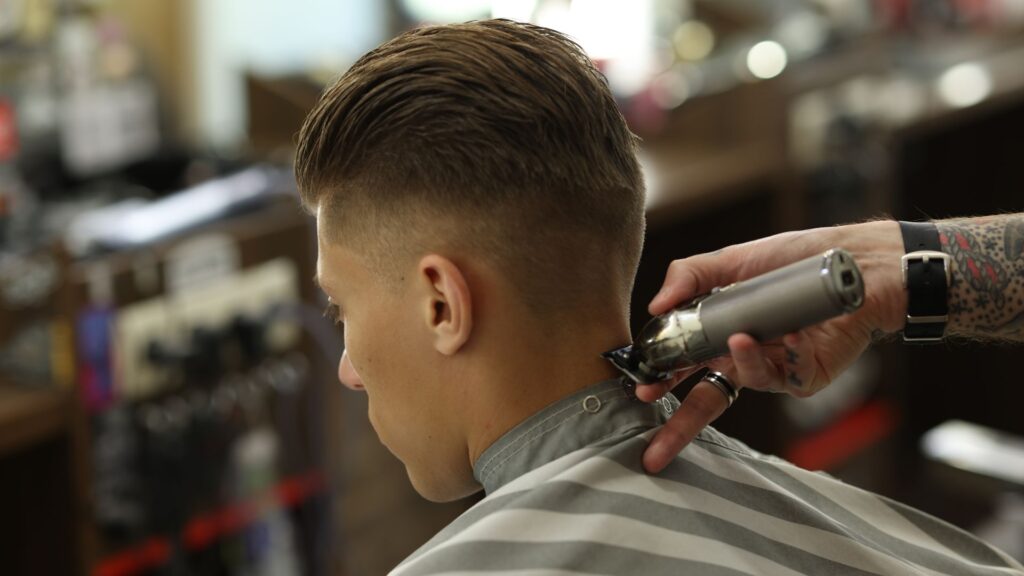
Warm lighting tends to minimize the visibility of redness, dryness, or minor irritation on the scalp, while sunlight exposes these conditions more clearly. This is especially relevant for low fades and buzz cuts where scalp visibility is part of the look.
Skin tone contrast and how it shifts under different lights
Your skin tone can appear warmer and more even indoors, then shift to reveal more natural undertone and texture outdoors. This affects how sharp a hairline or fade appears against your skin.
Scalp conditions that only show up in sunlight
Conditions like mild dandruff, sunburn, or razor bumps are often far more visible in direct sunlight than under a shop’s warm bulbs. A barber may not catch these during the cut simply because the lighting isn’t working against them the way sunlight will.
What barbers notice about skin health under bright light
Attentive barbers often shift a client toward brighter task lighting specifically to check scalp and skin condition before finishing a cut, particularly for very short styles where the scalp is exposed.
Product, Shine, and the Lighting Equation
How pomades, clays, and waxes interact with light
| Product Type | Finish | Behavior in Warm Light | Behavior in Sunlight |
| Oil-based pomade | High shine | Looks glossy and polished | Can look greasy or overdone |
| Water-based pomade | Medium shine | Balanced, natural look | Holds up reasonably well |
| Clay | Matte | Looks textured and natural | Minimal change, stays matte |
| Wax | Low to medium shine | Subtle sheen | Can look slightly dull |
| Powder/texture spray | Matte | Looks clean and dry | Performs consistently |
Matte vs. shine products and which works in which environment
A vs. B: Matte Products vs. Shine Products
Matte products, like clay and powder, perform consistently in both warm shop lighting and harsh sunlight because they don’t rely on light reflection to look good. Shine products, like oil-based pomade, can look fantastic indoors but risk appearing greasy outdoors where sunlight amplifies reflection. Choose matte if you’ll be outside most of the day, and save shine products for evening or indoor occasions.
How to choose the right product based on your day’s lighting conditions
If your day is mostly spent outdoors, lean toward matte or low-shine products. If you’re headed to an evening event under warm indoor lighting, a touch more shine can look polished and intentional.
Comparison table of product types and their light behavior
| Scenario | Recommended Product Type | Reason |
| Outdoor daytime event | Matte clay or powder | Resists greasy look under sunlight |
| Indoor evening event | Light pomade or wax | Shine reads as polished under warm light |
| All-day wear, mixed lighting | Water-based pomade | Balanced performance across conditions |
| Humid or sunny climate | Matte, lightweight formula | Prevents melting or excess shine |
The “Barbershop Near Me” Question: Does Shop Quality Affect How Your Cut Looks Outside?
How shop lighting quality signals overall shop quality
A shop that invests in proper lighting, both warm ambient and brighter task lighting, is often a shop that pays attention to detail across the board, from sanitation to consistency of cuts.
What to look for in a barbershop’s lighting setup before you sit down
Look for a mix of warm overhead lighting and brighter, more neutral lighting directly above the chair. Shops with only dim, single-source lighting may be hiding more than they’re revealing.
Red flags in poorly lit shops
A shop lit entirely by harsh fluorescent tubes, or one so dim you can barely see the back of your own head in the mirror, may be a sign that quality control during the cut is harder to maintain.
How to evaluate a barbershop near me based on environment
When searching for a barbershop near me, pay attention not just to reviews and pricing but to photos of the shop’s interior. A well-lit, well-designed space often reflects a barber who takes the craft seriously.
Historical and Cultural Context: Light, Barbershops, and Identity
How barbershop lighting evolved from the 1800s to today
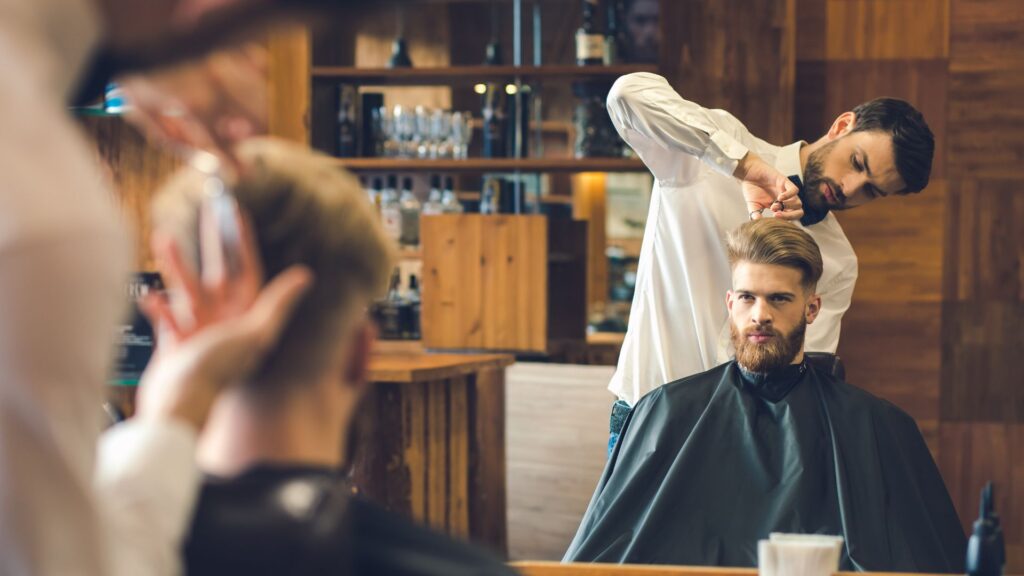
Early barbershops relied on gas lamps and later incandescent bulbs, both of which cast a warm glow that became associated with the comfort and ritual of the shop experience. As lighting technology advanced, shops largely kept that warm aesthetic because it had become part of the identity of the space itself.
The cultural significance of looking sharp under any light
For generations, a fresh haircut has carried meaning beyond grooming. It’s tied to confidence, self-respect, and how a man presents himself to the world, which is exactly why it matters that the cut holds up outside the shop and not just inside it.
How different communities have shaped barbershop aesthetics
Barbershops have long served as community gathering spaces across many cultures, and the warmth of the lighting often mirrors the warmth of the social environment inside, a space built on trust, conversation, and craft.
Common Mistakes Men Make Because of Lighting Illusions
Approving a cut in the chair that looks wrong outside
The most common mistake is giving a final nod of approval without ever checking the cut in natural light. It takes thirty seconds to step toward a window, and it can save you from a disappointing surprise later.
Choosing the wrong hair color under artificial light
Picking a hair dye shade based solely on how it looks under a shop’s warm bulbs can lead to a color that reads completely differently once you’re outside.
Misjudging fade length and hairline sharpness
What looks like a razor-sharp hairline under soft lighting can look slightly rounded or inconsistent in full sun. Checking under brighter light before leaving the chair helps avoid this mismatch.
How to avoid the most common lighting-related haircut regrets
Ask to see the back and sides under the brightest available light in the shop, request a quick check near a window or door, and don’t be afraid to ask your barber for small adjustments before you leave.
Your Action Plan: How to Get a Cut That Looks Great Everywhere
Before the appointment checklist
- Research the shop’s lighting setup through photos or a quick visit.
- Bring reference photos taken in natural light, not just indoor selfies.
- Plan timing if you’re prepping for a Haircut Before an Event.
During the cut, what to say and what to check
- Ask your barber to check the blend near a window partway through.
- Speak up early about any asymmetry you notice, rather than waiting until the end.
- Request a handheld mirror check from multiple angles.
After the cut, how to evaluate it in real-world light
- Step outside or near a window before leaving the shop.
- Take a photo in natural light to compare against the mirror check.
- Give it a day before making final judgments about color or length.
Maintaining your cut so it looks great in every light
- Choose matte products for daytime wear and save shine for evening events.
- Keep up with regular trims so fades don’t grow out unevenly.
- Revisit your barber with specific feedback if something consistently looks off outdoors.
Frequently Asked Questions
Why does my haircut look uneven in sunlight?
Sunlight’s high contrast exposes subtle inconsistencies in a fade or line that warm, softer shop lighting tends to blur together. The unevenness was likely there all along; sunlight just makes it visible.
Why does my hair look darker or lighter outside?
Hair color is heavily influenced by the color temperature of the light hitting it. Warm indoor bulbs can shift dark hair to look richer and light hair to look more golden, while sunlight, being more neutral and intense, reveals the true base tone more accurately.
Should I ask my barber to check my cut near a window?
Yes. A quick check near natural light before you leave gives both you and your barber a chance to catch anything the shop’s warm lighting might be hiding, and most experienced barbers are happy to do this.
Why does my fade disappear in dim light?
Dim or low-contrast lighting reduces the visible gradient between skin and hair, which is exactly what a fade relies on. In low light, the transition can look smoother or even invisible compared to how it appears under bright, high-contrast conditions.
Does the type of mirror in a barbershop affect how I see my cut?
Yes. Flat mirrors under good lighting give the most accurate reflection, while angled or convex mirrors, like those in cars, can distort proportions and exaggerate certain features.
How do hair products change how my cut looks in different lighting?
Shine-based products like oil pomade look polished under warm indoor lighting but can appear greasy in direct sunlight. Matte products like clay or powder tend to look consistent across both environments.
Is there a best time of day to get a haircut for lighting purposes?
If you want to see your cut in the most honest light possible, schedule your appointment for a time when you can step outside in daylight afterward, ideally overcast or early morning light rather than harsh midday sun.
Conclusion
Light doesn’t lie, but it also doesn’t tell the same story twice. What you see under a barbershop’s warm bulbs is only part of the picture, and understanding that difference is the first step toward never being surprised by your own reflection again. A skilled barber isn’t just working with clippers and scissors. They’re working with light, angles, and years of experience to make sure your cut holds up long after you’ve left the chair. The next time you settle into the chair, take thirty extra seconds to check your cut near a window before you walk out the door. It’s a small habit that makes sure the confidence you feel in the shop follows you everywhere else, under any sky, in any light.