

Walk into any barbershop on a Saturday morning and you’ll hear the same question asked a dozen different ways: “Why does my buddy’s fade last three weeks and mine looks rough after ten days?” The honest answer has nothing to do with luck and everything to do with biology. Your hair’s growth rate, texture, density, and the direction it grows from the scalp all play a part in how long a cut holds its shape. Some men can skip a cycle and still look sharp. Others need a tune-up before the ink dries on the calendar. This guide breaks down the real science behind why haircuts grow out the way they do, how your hair type affects maintenance, and what you can do to keep your style looking fresh longer, whether you’re sitting in a chair for a razor shave, a fade, or a classic cut.
Key Takeaways
- Hair grows at roughly the same rate for most people (about half an inch per month), but how a cut looks as it grows depends on texture, density, and growth direction, not just length.
- Curly and coily hair types tend to hold shape longer because the curl pattern masks growth, while straight hair shows outgrowth faster.
- Cowlicks, whorls, and growth patterns on the scalp are set before birth and determine how a style falls as it lengthens.
- Low fades and tapers grow out faster in appearance than longer, textured cuts because the contrast between skin and hair is the first thing to fade.
- Regular trims every 3 to 4 weeks keep shape lines clean, but the right cut for your hair type can stretch that window without sacrificing sharpness.
How Fast Does Hair Actually Grow?
Hair grows from follicles embedded in the scalp, and for most men, the average growth rate sits around half an inch per month. That number holds up across most hair types and ethnic backgrounds, though individual variation exists based on genetics, age, nutrition, and overall health.
The Hair Growth Cycle, Explained Simply
Every strand of hair on your head moves through three phases: anagen (active growth), catagen (transition), and telogen (resting, followed by shedding). At any given time, the vast majority of your scalp hair, somewhere in the range of 85 to 90 percent, sits in the anagen phase. That’s why hair feels like it’s always growing even when a handful of strands are resting or falling out daily.
This cycle explains why a fresh Scissor Cut can look tight for weeks even though hair is technically growing every single day. The strands in active growth lengthen steadily, but the overall visual effect depends on how those individual hairs interact with each other as they get longer.
Why Growth Rate Isn’t the Whole Story
Here’s the part most guys miss. Two men can have hair growing at the exact same rate and still need completely different maintenance schedules. Growth rate tells you how much length is added each week. It doesn’t tell you how that length behaves once it’s there. That behavior comes down to texture, curl pattern, density, and the direction hair grows from the scalp. Think of it like two engines putting out the same horsepower but connected to completely different transmissions. The output is the same, but how it translates into movement is night and day.
Growth rate sets the baseline, but shape retention is where the real variation lives, and that’s exactly what we’re digging into next.
Why Do Some Haircuts Hold Their Shape Longer Than Others?
Shape retention comes down to how quickly new growth disrupts the clean lines a barber created. A tight skin fade shows outgrowth almost immediately because there’s maximum contrast between skin and hair. A longer, textured crop has more room to breathe before it looks unkempt.
Low Fades vs. Longer Cuts
| Cut Style | Average Time Before Touch-Up Needed | Why |
| Skin/Bald Fade | 1 to 2 weeks | Zero length at the fade line means any growth is visible instantly |
| Low Taper | 2 to 3 weeks | Slight length cushions the contrast, but blend line still shows growth fast |
| Mid/High Fade with Length on Top | 3 to 4 weeks | More length on top distracts from fade regrowth |
| Textured Crop or Longer Layered Cut | 4 to 6 weeks | Length and texture naturally disguise new growth |
| Buzz Cut (Uniform Length) | 2 to 3 weeks | Grows out evenly but loses crispness quickly since there’s no shape to protect |
The Contrast Principle
Fades rely on contrast between skin and hair to create that crisp line. The moment hair starts filling in that bare skin, the eye catches it instantly, even if it’s only a millimeter of growth. Longer cuts don’t rely on contrast in the same way, so a little growth just adds volume rather than ruining the line.
Density Matters More Than You’d Think
Thick, dense hair holds a shape differently than fine or thin hair. Dense hair has more strands packed into the same area of scalp, which means as it grows, it fills in gaps faster and can actually look fuller and better for a stretch before needing a trim. Thinner hair shows scalp sooner and can look patchy as it grows unevenly.
Shape retention is really a math problem involving contrast, density, and length, and once you understand that equation, the next natural question is how your specific hair texture plays into it.
How Does Hair Texture Affect How a Haircut Grows Out?
Texture is arguably the single biggest factor in how a haircut ages. Straight, wavy, curly, and coily hair all behave completely differently as they lengthen, and that behavior determines how often you need to be back in the chair.
Straight Hair
Straight hair grows out in a very visible, linear way. There’s no curl pattern to disguise new length, so outgrowth on a fade or taper becomes noticeable fast. On the flip side, straight hair is easier to cut precisely and holds clean lines well right after a cut.
Wavy Hair
Wavy hair sits in the middle. It has enough bend to soften outgrowth slightly but not enough to hide it completely. Guys with wavy hair often find their cuts hold shape a few days longer than straight-haired guys but not nearly as long as curly types.
Curly and Coily Hair
Curly and coily hair types have a built-in advantage when it comes to stretching time between cuts. The curl pattern coils back on itself, which means a quarter inch of growth might only show up as a slight increase in volume rather than visible length. This is part of why curly-haired guys can often go longer between visits and still look sharp, especially with cuts designed to work with the curl rather than against it.
Texture Comparison Table
| Texture Type | Visibility of Growth | Typical Time Between Cuts | Best Suited Cuts |
| Straight | High | 2 to 3 weeks | Fades, tapers, sharp lines |
| Wavy | Moderate | 3 to 4 weeks | Textured crops, side parts |
| Curly | Low to Moderate | 4 to 6 weeks | Curl-defined cuts, afros, twist-outs |
| Coily | Low | 5 to 8 weeks | Fades with length on top, natural styles |
Texture sets the stage for how your cut will age day by day, but there’s another factor working underneath all of it that most men never even think about: the direction your hair actually grows from the scalp.
What Role Do Cowlicks and Growth Patterns Play?
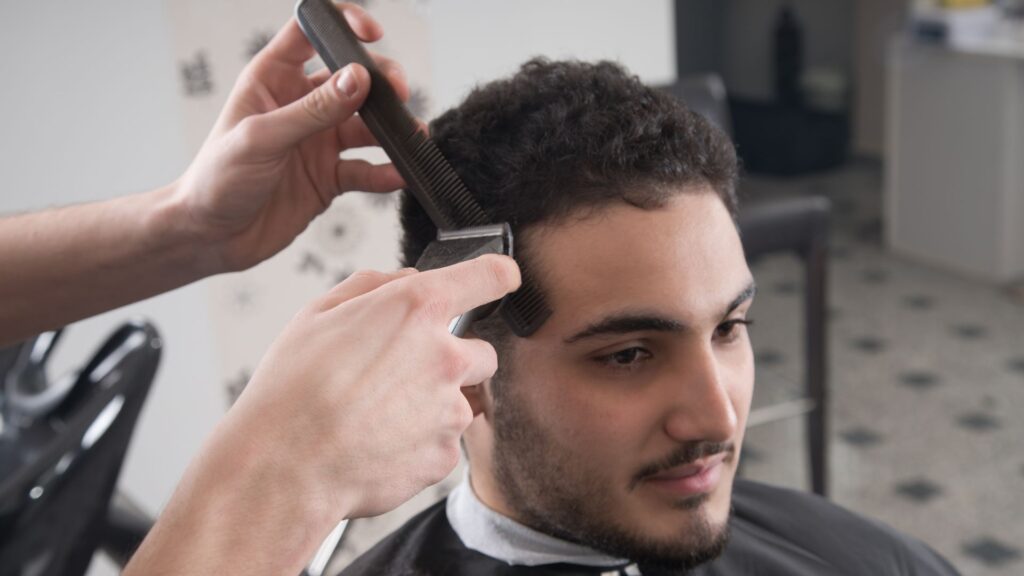
Every head has a unique map of growth directions, and that map is set well before a single haircut ever happens. Cowlicks, whorls, and hairlines determine how hair falls, flips, or resists styling, and ignoring them is one of the fastest ways to end up with a cut that looks great in the chair and terrible three days later.
What Is a Cowlick, Really?
A cowlick is a spot where hair grows in a different direction than the surrounding hair, usually in a swirl pattern. Most people have one near the crown, but they can show up on the hairline, the nape, or even in the eyebrows. The name comes from old farm language, since the pattern resembles the swirl left behind when a cow licks a calf’s fur. Barbers have been working around cowlicks for generations, long before gel and pomade existed to fight them.
Why Growth Direction Changes the Game
A skilled barber will actually look at and feel your growth pattern before touching the clippers, because cutting against a strong cowlick without accounting for it leads to pieces that stick up or flip the wrong way as they grow. This is why the same haircut can look completely different on two guys with similar hair type but different growth patterns.
Common Growth Pattern Challenges
- Double crowns: Two separate swirl points on the crown that can create a part line that won’t lay flat
- Front hairline cowlicks: Often cause a piece of hair to stand up or flip no matter how much product is used
- Nape whorls: Can make the back of a fade grow out unevenly compared to the sides
Working With Your Pattern Instead of Against It
The best long-term fix isn’t fighting your cowlick every morning with a blow dryer. It’s choosing a cut that incorporates the direction of growth into the style itself. A good analogy here is coaching a left-handed athlete to throw right-handed. It’s possible, but you’re working against nature the entire time. Cut with the grain, and the style practically styles itself.
Once you understand your own growth pattern, it becomes a lot easier to see why certain cuts simply age better on your head than others, which brings us to the practical side of all this science: how to actually maintain your cut between visits.
How Often Should You Get a Haircut Based on Your Hair Type?
There’s no single universal answer here, because the right interval depends on texture, density, growth rate, and the specific style you’re wearing. That said, there are solid general guidelines worth following.
General Maintenance Windows
| Hair Type + Style Combo | Recommended Interval |
| Straight hair, skin fade | 1.5 to 2 weeks |
| Wavy hair, taper | 2.5 to 3.5 weeks |
| Curly hair, textured top | 4 to 5 weeks |
| Coily hair, fade with length | 5 to 6 weeks |
| Any texture, buzz cut | 2 to 3 weeks |
| Any texture, longer layered cut | 5 to 7 weeks |
Signs You’re Overdue, Regardless of the Calendar
Forget the calendar for a second and look for these signals instead:
- The fade line has completely disappeared into the rest of the hair
- You’re reaching for product just to control flyaways that weren’t there two weeks ago
- The shape around the ears and neckline looks bulky instead of clean
- Cowlicks are winning the morning battle more often than not
Stretching Time Between Cuts Without Looking Sloppy
If budget or scheduling means you need to stretch the gap, ask your barber to cut with that stretch in mind from the start. A slightly longer fade transition or a bit more length on top gives you more runway before things look rough, similar to how a dad buys his growing son jeans one size up on purpose, planning for growth instead of fighting it every month.
Knowing your ideal interval is useful, but it only gets you halfway there. The other half is understanding what actually happens day to day as hair lengthens, which is where a lot of guys get surprised.
Why Does a Fresh Cut Look Different After Just a Few Days?
That “fresh from the chair” look doesn’t last because several things are happening simultaneously in the first 72 hours after a cut, and most of it has nothing to do with actual hair growth.

It’s Not Just Growth, It’s Settling
Hair that’s just been cut, washed, and styled at the shop often sits differently than it will once it’s been slept on, washed at home, and exposed to humidity and wind. Cut hair needs a day or two to “settle” into its natural fall, especially around the crown and part line.
The Skin Shadow Effect on Fades
Right after a skin fade, the clipper work leaves the scalp visibly bare in spots. Within 24 to 48 hours, minor stubble regrowth combined with natural skin tone changes (like slight redness calming down) can make the fade look slightly different than it did walking out of the shop, even though almost no actual length has been added.
Product Buildup and Natural Oils
Styling product applied at the shop often looks and feels different once it’s washed out and reapplied at home. Natural scalp oils redistribute over a few days too, which changes how the hair sits and reflects light.
The first few days after a cut involve a lot of settling and adjusting that has nothing to do with growth rate, but once that settling period passes, actual hair growth takes over as the main factor in how the cut evolves.
What Can You Do to Make a Haircut Last Longer?
While you can’t change your genetics, there are practical steps that extend the life of a cut regardless of hair type.
Choose the Right Cut for Your Hair’s Behavior
This is the single biggest lever. A cut designed with your texture and growth pattern in mind will simply age better than one chosen purely for style without consideration of how your hair actually behaves.
Maintenance Habits That Help
- Wash less aggressively: Over-washing strips natural oils that help hair lay flat and look controlled
- Use the right product for your texture: Clay and paste work well for thick, straight hair, while curl creams and light oils suit curly and coily textures better
- Sleep with a silk or satin pillowcase: Reduces friction that causes frizz and flyaways overnight
- Get regular trims instead of waiting for a full regrowth cycle: A quick line-up or neckline cleanup between full cuts keeps things sharp without a full service
When a Touch-Up Beats a Full Cut
Many shops offer a quick neckline and edge cleanup between full appointments. This small service resets the clean lines around the ears and hairline without touching the length on top, essentially buying you another week or two before a full cut is needed.
Taking care of a cut between visits is half maintenance and half strategy, and understanding both sides means fewer surprise “bad hair days” and more consistency, which naturally leads to the question of how different cut types, like a classic Scissor Cut versus clipper work, actually hold up against each other long term.
How Do Scissor Cuts Compare to Clipper Cuts in Growth and Shape Retention?
This is one of the most common debates in any barbershop, and the honest answer is that each technique has real advantages depending on your goals.
Scissor Cuts vs. Clipper Cuts
| Factor | Scissor Cut | Clipper Cut |
| Growth appearance | Grows out softly, less noticeable | Grows out with visible contrast, especially on fades |
| Best for | Textured, natural-looking styles | Sharp lines, fades, precise shapes |
| Maintenance interval | Often longer (4 to 6 weeks) | Often shorter (2 to 3 weeks) |
| Texture suited | Works well on all textures, especially curly/wavy | Works best on straight to wavy hair for clean fades |
| Styling flexibility | More natural movement as it grows | Can look boxy or blocky as fade grows out |
Scissor work tends to taper hair gradually, creating soft transitions that blend naturally as they grow. Clipper fades create sharp, defined lines that look incredible fresh but show every bit of regrowth clearly.
Neither approach is objectively better. It comes down to how much maintenance you’re willing to commit to and what look you’re going for. A guy who wants a low-maintenance, natural style might lean scissor-heavy. A guy who loves that crisp, sharp fade needs to accept a tighter maintenance schedule or choose a slightly longer fade that buys more time.
Understanding the tradeoffs between these two core techniques sets you up to make smarter decisions in the chair, which naturally leads into how different grooming choices, including shaving, interact with overall hair and scalp health.
Does Shaving or Grooming Elsewhere Affect Scalp Hair Growth?
A common myth floating around barbershops and locker rooms alike is that shaving hair makes it grow back thicker or faster. This applies to facial hair, body hair, and sometimes gets incorrectly applied to scalp hair conversations too.

The Myth, Debunked
Shaving cuts hair at the surface level and has no effect on the follicle itself, which is where growth rate and thickness are actually determined. A razor shave on the face or neckline might make stubble feel coarser initially because the blunt cut edge feels different than a tapered natural tip, but it does not change how fast or thick hair grows back.
Where This Matters for Scalp Maintenance
For guys who get their neckline or edges cleaned up with a razor between full cuts, this is purely a styling and sharpness choice, not something that impacts how the rest of the scalp hair grows. A clean razor-shaved neckline just creates a crisper visual line compared to clipper-finished edges, similar to the difference between a sharp pencil line and a slightly smudged one.
Practical Takeaway
If you enjoy the clean look of a razor-finished hairline or neckline, go for it. It won’t speed up or slow down growth anywhere on your head. It’s purely an aesthetic and maintenance preference, same as choosing a straight part over a side part.
With the myths cleared up, it’s worth stepping back and looking at the bigger picture of what actually influences hair health and growth over the long haul, since genetics and daily habits both play a role.
What Factors Beyond Genetics Influence Hair Growth and Health?
Genetics set the baseline for texture, density, and growth pattern, but daily habits and overall health can meaningfully affect how healthy that hair looks and how well it grows.
Nutrition’s Role
Hair follicles need protein, iron, zinc, and B vitamins to function properly. Significant deficiencies in any of these can slow growth or weaken hair strands, making cuts look less full and shapes harder to maintain.
Stress and Hair Cycles
High or prolonged stress can push more hairs into the resting (telogen) phase prematurely, leading to noticeable shedding a few months later. This is a well-documented pattern, though it usually resolves once stress levels normalize.
Age-Related Changes
As men age, hair can gradually become finer in texture even if overall density holds steady for a while. This is why a cut that worked great at 25 might need slight adjustments at 45 to account for subtle texture changes.
Scalp Health
A healthy scalp supports healthy growth. Flaking, excess oil buildup, or irritation can all affect how hair lies and grows. Regular washing suited to your scalp type and texture keeps the environment right for strong growth.
All of these factors work together with genetics to determine not just how fast your hair grows, but how good it looks while doing it, which brings everything back to the most practical point of this whole conversation: working with your barber instead of guessing on your own.
How Can Your Barber Help You Choose a Cut That Grows Out Well?
At the end of the day, the person with the most practical insight into how your specific hair will age is the professional holding the clippers and scissors.
What a Good Consultation Looks Like
Before touching a single tool, a thoughtful stylist examines texture, density, growth direction, and even your lifestyle (how often you’re willing to style it, how often you can realistically get back in the chair) before recommending a cut.
Questions Worth Asking in the Chair
- “How will this cut look in two weeks compared to today?”
- “Given my cowlick or growth pattern, is there a better shape for me?”
- “What’s the easiest way to maintain this at home between visits?”
Building a Long-Term Relationship
A barber who sees you regularly starts to understand your hair’s quirks better than you do yourself sometimes. That history means better recommendations over time, fewer surprises, and cuts that are tailored to how your hair actually behaves rather than a generic template.
Trusting that relationship and asking the right questions turns haircuts from a gamble into a predictable, reliable part of your routine, which is really the whole point of understanding the science in the first place.
Frequently Asked Questions
Why does my hair grow out unevenly on one side?
Uneven growth appearance is usually caused by a cowlick or whorl pattern rather than an actual difference in growth rate between sides of the scalp. Hair direction near the crown or hairline can make one side appear to grow faster or flip differently, even though the underlying growth rate is typically the same across the scalp.
Is it true that cutting hair more often makes it grow back thicker?
No. Cutting hair, whether with scissors, clippers, or a razor, only affects the visible shaft and has no influence on the follicle beneath the skin, which controls thickness and growth rate. This is one of the most persistent myths in grooming, but it has no basis in how hair actually functions.
Why does my fade grow out faster than my friend’s?
Fade visibility depends heavily on hair texture and growth rate. Straight, dense hair tends to show regrowth on a fade more quickly than curlier or finer hair because there’s less natural curl to disguise new length near the skin.
How long can curly hair go between haircuts compared to straight hair?
Curly hair can often stretch 4 to 6 weeks between cuts because the curl pattern conceals new growth effectively. Straight hair typically needs attention every 2 to 3 weeks, especially for fades or tapers, since growth is immediately visible without any curl to mask it.
Does a cowlick ever go away or change over time?
Cowlicks are determined by the direction hair follicles are angled in the scalp, a pattern set before birth. This pattern generally stays consistent throughout life, though its visual impact can change slightly with hair length, texture shifts from aging, or overall hair density changes.
Will a razor shave make my hairline grow back differently?
No. A razor shave only cuts hair at the surface and does not affect the follicle, so it has no impact on how hair grows back at the hairline or anywhere else. It simply creates a different finish at the edge compared to a clipper, often described as sharper or cleaner looking.
How do I know if my haircut is better suited to scissors or clippers?
If you want sharp, high-contrast lines like a skin fade, clipper work is generally the better tool. If you prefer softer, more natural-looking transitions that grow out gradually, a Scissor Cut often holds its shape longer with less noticeable regrowth in between visits.
Why does my hair look great for the first few days but then seem to change shape?
This is usually a combination of hair settling into its natural fall after being cut and styled at the shop, along with early-stage regrowth starting to interact with the established shape. Most of this shift happens within the first week and has more to do with settling than actual growth.
Conclusion
Hair growth itself is fairly predictable biology, but how a cut ages depends on a mix of texture, density, growth pattern, and the technique used to create it in the first place. Knowing your own hair, from cowlicks to curl pattern, puts you in a much better position to choose a cut that looks good on day one and still looks intentional on day twenty. The next time you sit in the chair, don’t just ask for a style. Ask how that style is going to behave as it grows, and let your barber plan for the whole journey, not just the first photo.