
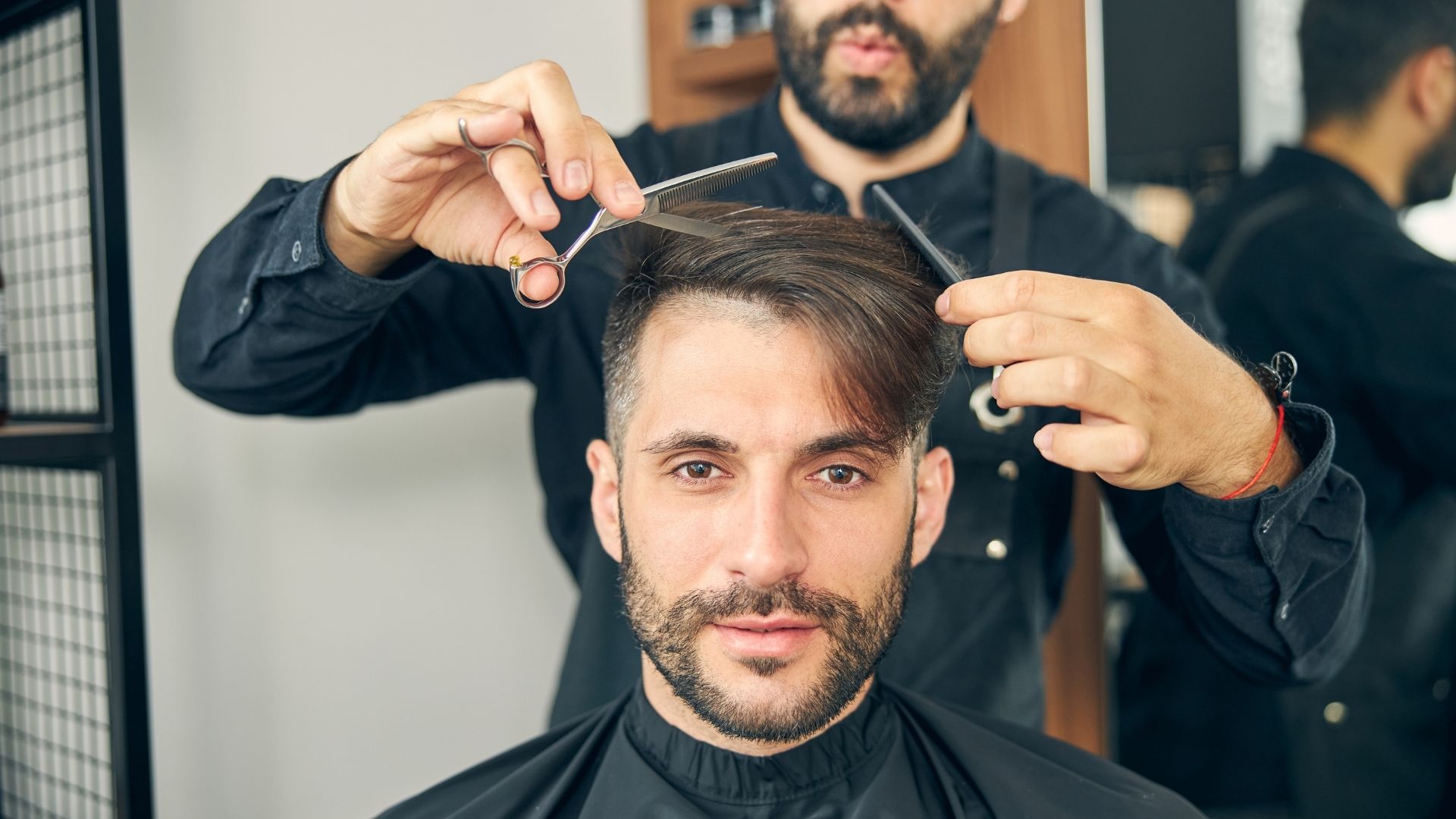
Why a Boy’s Haircut Matters More Than You Think
The First Time in the Big Chair
He’s too small for the leather chair, so I slide the booster seat into place and lift him up. His sneakers dangle a foot above the footrest. The cape swallows him whole, and only his head pokes out, eyes wide, watching the clippers hum on the counter like they might bite.
His dad stands two steps away, arms crossed, trying to look casual. I notice he’s nervous too. Maybe more nervous than the boy.
I’ve watched this scene play out thousands of times. The smell of talc, the snip of steel scissors near a tiny ear, the little flinch when the cold comb first touches the scalp. Then something shifts. The shoulders drop. The boy looks in the mirror and sees someone slightly older looking back.
Perhaps that’s why first haircuts stick with us. Most men I know can still remember theirs, or at least the feeling of it.
A Haircut Is a Lesson in Disguise
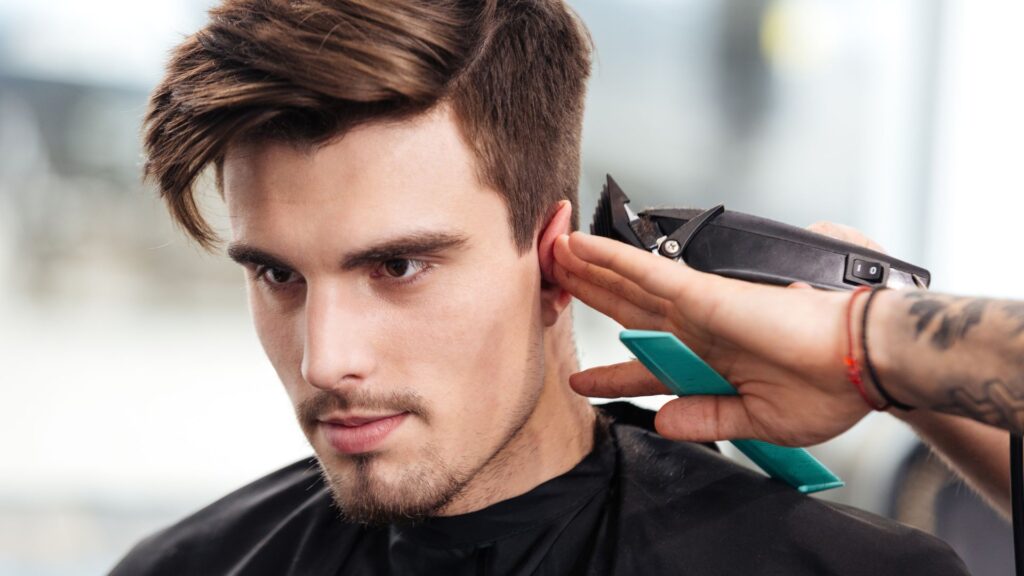
A haircut looks like a simple chore. Hair grows, you cut it, repeat. But I’ve noticed that, over the years, those twenty minutes in the chair teach a boy more than most people realize.
He learns to sit still and trust someone with sharp tools near his face. He learns to ask for what he wants. Later, he learns that how he looks can shape how people treat him, and that taking care of himself is a form of respect, not vanity.
It’s a bit like learning to tie your shoes. Nobody remembers the exact day it clicked, but it quietly carries you through the rest of your life. A boy who learns to care for his hair at eight tends to be the young man who shows up to his first interview looking sharp at twenty-two.
What This Guide Covers
Think of this as a map of Haircuts by Age, from the first wispy trim to the clean, confident cut he’ll wear into his first office. Along the way, we’ll talk about how boys’ hair works, how styles have changed, which cuts suit each stage, how to handle every hair type, and how to pick cuts for school, sports and big events.
We’ll also look at the mistakes parents often make, what all of this costs, what boys are asking for right now and how fathers and sons can make the shop a place they both look forward to. There’s an FAQ near the end and a practical action plan to close.
You don’t have to read it all at once. Come back to the chapter that fits the boy in your life right now.
And since every good cut starts with understanding the hair itself, that’s where we’ll begin.
How Boys’ Hair Actually Works
Baby Hair, Kid Hair, Grown Hair
A boy’s hair doesn’t stay the same for long. The soft fuzz he’s born with often isn’t the hair he’ll keep. According to the Mayo Clinic, it’s common for newborns to lose some or all of their hair during the first six months, especially on the back of the head where they lie. What grows back can be a different color, thickness or texture entirely.
Through early childhood, hair is usually finer and softer than adult hair. It tangles easily and holds styles poorly. By the middle years, strands thicken. Then puberty arrives and changes the rules again.
According to the American Academy of Dermatology, scalp hair grows roughly half an inch per month. That steady growth is why the cut you loved in June looks shaggy by August.
| Stage | Typical Ages | Hair Characteristics | What It Means for Cuts |
| Infant | 0 to 2 | Very fine, may shed and regrow | Minimal trimming, scissors preferred |
| Early childhood | 3 to 7 | Fine, soft, tangles easily | Short, simple, low-fuss cuts |
| Middle childhood | 8 to 12 | Thicker, texture settling in | More style options, opinions emerge |
| Adolescence | 13 to 17 | Oilier scalp, texture may shift | Routines, products, experimentation |
| Young adulthood | 18 to 25 | Mostly settled texture | Signature cut, professional polish |
Scalps, Whorls and Stubborn Cowlicks
Run your fingers over the crown of any boy’s head and you’ll likely find a little spiral where the hair grows outward in a circle. That’s a whorl. Research by geneticist Amar Klar, published in the journal Genetics in 2003, found that most people’s crown whorls spiral clockwise, though a sizable minority spiral the other way, and some people have two.
Then there’s the cowlick, that patch near the front or crown that stands up no matter how much water you slap on it. Every parent has fought one before school photos. Most have lost.
Here’s what I’ve learned: you can’t win a war against a growth pattern. You can only work with it. A short cut that ignores a double crown leaves tufts standing up like antennae. A part placed against the natural fall of the hair will flop over by lunchtime. A good cutter studies these patterns before the clippers start, the way a coach studies the field before kickoff.
Why Puberty Changes Everything
According to the Mayo Clinic, boys typically begin puberty somewhere between ages 9 and 14. Along with the voice cracks and growth spurts, hormones ramp up the oil glands in the scalp. Hair that used to stay fluffy for days suddenly looks greasy by afternoon.
Texture can shift too. I’ve seen straight-haired boys come back at fourteen with a gentle wave, and wavy-haired boys whose curls tighten. It seems puberty doesn’t just change how a boy feels about his hair. It changes the hair itself.
This is the stage where routines matter most, and where a cut that worked last year might suddenly feel wrong.
Of course, boys have been wrestling with their hair for generations, so it helps to look back before looking ahead.
A Short History of Boys’ Haircuts
Bowl Cuts and Kitchen Chairs
Ask your grandfather about his childhood haircuts and there’s a good chance he’ll mention a kitchen chair, a towel around the neck and possibly an actual bowl. Through the Depression era and well beyond, many boys got their cuts at home. Money was tight, and a pair of shears in a steady hand did the job.
The bowl cut was practical, not fashionable. It kept hair out of the eyes and cost nothing. Saturday trips to the shop, when they happened, were a treat: a peppermint from the jar, the smell of tonic, men talking baseball while the radio played.
Crew Cuts, Mop Tops and Flat Tops
After World War II, the crew cut became the standard for American boys. It echoed the clean military look their fathers brought home. Flat tops, butch cuts and the Ivy League followed through the 1950s, short, neat and easy.
Then the 1960s arrived, and the Beatles’ mop tops turned the shop chair into a battleground. Boys wanted hair over their ears. Fathers did not. Plenty of dinner tables became negotiating rooms. It seems every generation has its version of this argument. Only the hairstyle changes.
From Rattails to Fades
The 1970s brought longer, shaggier cuts. The 1980s gave us the hi-top fade, the rattail and the mullet. The 1990s brought curtains, frosted tips and the return of the bowl cut, this time on purpose. The 2000s were spiky, gel-hardened and faux-hawked.
Today, fades, textured crops, natural curls and even modernized mullets share the same school hallway.
| Era | Popular Boys’ Cuts | Main Influence |
| 1930s | Bowl cut, home trims | Economic necessity |
| 1940s to 1950s | Crew cut, flat top, Ivy League | Military, postwar order |
| 1960s | Mop top, longer fringes | British rock bands |
| 1970s | Shag, collar-length styles | Counterculture, rock |
| 1980s | Hi-top fade, rattail, mullet | Hip-hop, sports, TV |
| 1990s | Curtains, bowl cut, frosted tips | Boy bands, sitcoms |
| 2000s | Spiked gel, faux hawk | Pop stars, skate culture |
| 2010s to today | Fades, textured crops, curls, modern mullet | Athletes, social media, self-expression |
Looking at that list, I notice something comforting. Every era thought its style was the final word. None of them were. With that perspective in mind, let’s go back to the very beginning of a boy’s own haircut history.
The First Haircut
Signs He’s Ready
There’s no magic birthday for a first haircut. Some boys need a trim at ten months. Others get by with curls until they’re past two. Instead of watching the calendar, watch the hair.
| Sign | What It Looks Like | What It Suggests |
| Hair in the eyes | Constant blinking, pushing it away | Time for a fringe trim |
| Persistent tangles | Knots at the nape and behind ears | A tidy-up helps daily comfort |
| Uneven growth | Long back, short front | Shaping evens it out |
| Overheating | Sweaty neck, especially in summer | Shorter back and sides |
| Family tradition | A planned milestone | Whenever it feels right |
Some families wait for cultural or religious milestones. Some want it done before photos for a first birthday. Whatever your reason, it’s yours. I’d gently suggest one thing: choose a time when he’s well-rested and fed. A hungry toddler is no one’s ideal client.
Making the Visit Calm, Not Scary
The buzz of clippers can sound like a swarm of bees to a small child. The cape feels strange. The stranger with the comb is, well, a stranger. Perhaps it helps to see the shop through his eyes before you bring him in.
A few things I’ve seen work again and again:
- Visit first without a cut. Let him watch you or an older sibling get a trim.
- Sit him on your lap. For the youngest boys, a parent’s lap feels safer than any booster seat.
- Bring a distraction. A favorite toy or snack (nothing sticky, please).
- Let him touch the tools. Feeling a turned-off clipper vibrate in his palm takes away the mystery.
- Keep your own voice calm. Kids read us like weather reports.
Keepsakes and Little Traditions
Many parents save a lock of hair from the first cut. Some shops hand out first-haircut certificates. I’ve seen grandmothers tear up and fathers quietly snap a photo of the clippings on the floor.
These little rituals matter. They mark a moment that will never come again. Years later, that envelope with a curl inside might mean more than any photo. What small tradition might your family start?
Clippers vs. Scissors for Little Ones
For a first cut, the choice of tool shapes the whole experience.
| Factor | Clippers | Scissors |
| Noise | Buzzing, can startle | Quiet snips |
| Speed | Fast, good for wiggly kids | Slower, needs stillness |
| Look | Even, tidy, shorter | Soft, natural edges |
| Best for | Thicker hair, short styles | Fine baby hair, first trims |
| Sensory feel | Vibration on the scalp | Cool metal, light touch |
For most first cuts, I lean toward scissors for the top and a quiet trimmer around the ears only if he’s comfortable. Speed matters less than trust. You’re not just cutting hair. You’re building the foundation for every visit that follows.
Once the first cut is behind you, the real adventure begins, usually covered in sand and juice.
The Playground Years: Ages 3 to 7
Cuts That Survive Sandboxes
At this age, a haircut’s job is simple: stay out of the way. Little boys roll in grass, nap in car seats, wear syrup as an accessory and refuse combs with surprising strength.
The best cuts here are short or medium, easy to wash and forgiving as they grow. Think of a short crop, a classic crew cut or a soft scissor cut with a little length on top. If he has curls, a gentle shape that keeps them off his neck and out of his eyes often works beautifully.
I usually ask parents one question at this stage: how much do you want to brush it in the morning? The honest answer tends to choose the cut for us.
Buzz Cut vs. Crew Cut
These two classics show up in playgrounds everywhere, and parents often confuse them.
| Factor | Buzz Cut | Crew Cut |
| Length | One even length all over | Shorter sides, a bit longer on top |
| Morning effort | None | Minimal, a quick brush |
| Look | Very sporty, very short | Neat, classic, slightly dressier |
| Grow-out | Even, but looks fuzzy fast | More graceful shape |
| Visit interval | 2 to 4 weeks | 3 to 5 weeks |
| Sun and scalp | More scalp exposed, needs a hat in summer | A bit more coverage |
The buzz cut wins for pure ease. The crew cut wins for shape and versatility. If you’re torn, perhaps start with a crew cut. It can always go shorter, but it can’t grow back on demand.
Sitting Still: Tricks That Actually Work
Asking a four-year-old to sit still for twenty minutes is like asking a puppy to guard a ham sandwich. It’s possible, but you need strategy.
- Book mid-morning. Most young kids are freshest then.
- Keep the cut simple. Fewer steps means less waiting.
- Narrate the steps. “Now I’m going to tickle behind your ear” lands better than surprise.
- Count together. “Let’s count to ten while I do this side.”
- Praise specific behavior. “You held your head so still for that part” teaches more than “good boy.”
I noticed long ago that the kids who struggle most aren’t misbehaving. They’re overwhelmed. Slowing down, explaining and giving small breaks often turns a meltdown into a high-five.
Then, sometime around second or third grade, he stops just tolerating the haircut and starts having thoughts about it.
The Middle Years: Ages 8 to 12
When He Starts Having Opinions
One day you’ll bring him in for his usual cut and he’ll quietly say, “Can I get it like Jayden’s?” That’s a big moment, even if it doesn’t feel like one.
Between eight and twelve, boys start noticing each other. They see cuts on classmates, teammates and athletes. They begin to connect how they look with how they feel. Perhaps for the first time, the haircut becomes partly his.
This is a wonderful age to let him start making choices within a few gentle boundaries. Ask him what he likes about the cut he’s describing. Is it the short sides? The spiky top? The line on the side? You’ll learn a lot about how he sees himself.
Fade vs. Taper for School Days
These two get mixed up all the time, and for school-age boys the difference matters.
| Factor | Fade | Taper |
| How short | Sides often go down to skin | Gradually shorter, rarely to skin |
| Where | Sides and back | Mostly neckline and sideburns |
| Look | Sharp, bold, modern | Neat, classic, subtle |
| Grow-out | Loses crispness in 2 to 3 weeks | Grows out gracefully for 4 to 5 weeks |
| Dress code friendly | Usually, depends on design | Almost always |
| Best for | Boys who love a crisp look | Families who want fewer visits |
If budget and schedule allow regular visits, a fade can look fantastic. If you’d rather stretch time between cuts, a taper might give you more good days for the money. Neither is better. They simply serve different weeks.
Teaching the First Comb and Rinse
This is the age to start handing over small responsibilities. A boy who learns to wash, rinse and comb his own hair at nine often builds habits that last a lifetime.
Start simple. Show him how much shampoo he actually needs (about the size of a nickel for short hair). Teach him to rinse until there are no bubbles left. Hand him a wide-tooth comb and let him find his part.
It might look a little crooked at first. That’s okay. Remember teaching him to ride a bike? You held the seat, then let go, and the wobbles were part of the deal.
Those wobbles get bigger, and louder, as he heads into the teenage years.
The Teen Years: Ages 13 to 17
Identity, Experimentation and Letting Go
Teenagers use hair to figure out who they are. The quiet kid might grow it long. The athlete might buzz it off. Your son might try three styles in a year and regret two of them.
According to Pew Research Center’s 2023 survey of U.S. teens, about 63 percent use TikTok and roughly 59 percent use Instagram. That means a steady stream of styles, trends and comparisons lands in front of him daily. It’s no wonder his requests change so often.
I’ve come to see teenage hair experiments as low-stakes practice for bigger choices. Hair grows back. Learning to choose for yourself, live with it and adjust is a skill he’ll need far beyond the shop. Perhaps the hardest part isn’t the haircut. It’s the letting go.
Oily Scalps, Breakouts and New Routines
Here’s where puberty shows up on the scalp. According to the American Academy of Dermatology, about 85 percent of people between ages 12 and 24 experience at least minor acne. Oily scalps, forehead breakouts and flakes often come along for the ride.
A haircut can help. Heavy fringes sitting on the forehead can trap oil and sweat, so a lighter or shorter front sometimes makes a difference. Washing more often, using a gentle shampoo and keeping heavy products away from the hairline all play a part.
| Teen Concern | Likely Cause | Practical Fix |
| Greasy by afternoon | Hormonal oil production | Wash daily or every other day |
| Forehead breakouts | Fringe, products, sweat | Lighter fringe, water-based products |
| Flaking | Dry scalp or dandruff | Gentle or anti-dandruff shampoo |
| Flat, limp hair | Oil weighing it down | Shorter sides, textured top |
| Product buildup | Heavy pomades, skipped washes | Clarifying wash once a week |
If breakouts are persistent or painful, a dermatologist is worth a visit. Hair and skin are close neighbors, and sometimes one is quietly causing trouble for the other.
Short vs. Long: The Great Teenage Debate
Few conversations come up more often in my chair than this one.
| Factor | Short Cuts | Longer Styles |
| Morning time | Under 2 minutes | 3 to 10 minutes |
| Visit interval | 3 to 5 weeks | 6 to 10 weeks |
| Sports and helmets | Easy, dries fast | Sweaty, can tangle |
| Grow-out phase | None | 3 to 6 awkward months |
| Self-expression | Through shape and lines | Through length and movement |
| Oil control | Easier | Needs more washing |
Long hair isn’t lazy and short hair isn’t boring. A teen who wants length might simply need help getting through the awkward middle stage with a few shaping trims. A teen who wants short might be craving something clean and controlled during a messy season of life. Have you asked him why he wants what he wants?
When to Say Yes and When to Talk It Through
So he wants bleached tips, a design shaved above his ear or a mullet that makes his grandmother clutch her pearls. What now?
I’d suggest asking a few gentle questions before reacting. Is it safe for his hair and scalp? Does it break a school or team rule? Will it grow out in a reasonable time? If the answers are yes, no and yes, perhaps it’s worth letting him try.
Bleaching is the one area I’d slow down on. Lighteners can damage hair and irritate skin, especially on young scalps, and they’re best done by a trained professional with a patch test first. A shaved design, on the other hand, is gone in two weeks.
Choosing your battles is part of raising a teenager. Hair is often one of the easiest places to say yes.
Whatever style he chooses, though, it all depends on the hair he was born with.
Working With Every Hair Type

Straight and Fine
Straight, fine hair shows every line and every mistake. It also lies flat and can look thin, especially on younger boys. Cuts with a little texture on top help it look fuller, and shorter sides keep it from hanging limp.
Avoid heavy thinning on this hair type. Fine hair needs all the weight it can keep. A good cutter will point-cut the ends to add movement instead of carving out bulk.
Wavy and Thick
Wavy hair is often hiding in plain sight. Cut it short and the waves disappear. Grow it out and it bends in directions no one expected.
Thick, wavy hair tends to puff out at the sides as it grows. Keeping the sides shorter and leaving texture on top often works well. Some boys with wavy hair look their best with a medium-length scissor cut that lets the natural movement show.
Curly Hair
Curly hair shrinks when it dries, sometimes dramatically. That’s why cutting curls wet and pulling them straight can lead to surprises. Many cutters prefer to shape curls dry, curl by curl, so they can see how each one sits.
Curls also need moisture. Washing too often can strip them, leaving frizz. A gentle conditioner and a leave-in product can help them clump together and shine.
I noticed early in my career that many curly-haired boys were taught to fight their hair. Brushed flat, buzzed off, hidden under hats. These days, more of them are learning to wear their curls with pride. That’s a shift worth celebrating.
Coily Hair and Textured Cuts
Coily hair has a tight pattern, high shrinkage and incredible versatility. Fades, tapers, high tops, sponge twists, waves and freeforms all start here. Shape and edge work matter a great deal, and line-ups can look razor-crisp.
Care matters too. According to the American Academy of Dermatology, tight braids, cornrows and other styles that pull on the hair can lead to traction alopecia, a type of hair loss caused by repeated tension. For boys, that means watching for soreness, bumps or thinning along the edges and loosening styles that feel tight.
| Hair Type | Natural Behavior | Cuts That Often Work | Care Tip |
| Straight and fine | Lies flat, shows lines | Crew cut, textured crop, short scissor cut | Avoid heavy thinning |
| Wavy and thick | Bends, puffs at sides | Textured top with tapered sides | Keep sides controlled |
| Curly | Springs, shrinks, frizzes | Curly top with taper, shaped curls | Moisturize, cut dry if possible |
| Coily | Tight pattern, high shrinkage | Fades, waves, twists, high tops | Avoid tight tension, keep scalp moisturized |
| Mixed texture | Varies across the head | Customized shapes | Ask for a cut that blends zones |
The right person in the chair next to the clippers makes all the difference here. A barber who knows how to read texture will often spend the first few minutes just looking and feeling, before a single snip. That quiet study is the cut’s real foundation.
Knowing his hair type sets the stage. Next comes the everyday life that hair has to survive.
School, Sport and Everyday Life
Picture Day and Dress Codes
Picture day has a way of sneaking up on families. Suddenly it’s the night before, his hair is over his ears and you’re debating a kitchen trim. (Please don’t. We’ll get to that.)
A fresh cut looks best about four to seven days old, once the edges settle and the color of the newly exposed skin evens out. Book accordingly.
Dress codes vary by school, especially private schools and some sports programs. Some restrict shaved designs, unusual colors or hair below the collar. It’s worth checking the handbook before he falls in love with a style he can’t wear Monday morning.
Helmets, Pools and Sweaty Practices
Football helmets, hockey helmets, bike helmets, ball caps. They all flatten hair and trap heat. Swimmers deal with chlorine, which can dry and roughen hair. Wrestlers and martial artists often prefer very short cuts for practical reasons.
| Activity | Challenge | Cut That Works | Care Tip |
| Football, hockey | Helmet sweat and hat hair | Short sides, short to medium top | Rinse after practice |
| Swimming | Chlorine dryness | Short crop or buzz | Rinse before and after, condition |
| Soccer, basketball | Sweat, hair in eyes | Taper or fade with short top | Headband for longer styles |
| Wrestling, martial arts | Grappling, mat contact | Very short or buzzed | Wash promptly after mats |
| Baseball | Caps all day | Taper with flexible top | Choose a cut that looks good flattened |
A short cut during a sports season can make life easier for everyone. It’s like choosing the right cleats. The style matters less than how it performs on game day.
Lice Season and Shared Hats
Every parent dreads the note home from school. According to the Centers for Disease Control and Prevention, an estimated 6 to 12 million head lice infestations occur each year in the United States among children aged 3 to 11.
Here’s something reassuring: lice aren’t a sign of poor hygiene. They spread through head-to-head contact, and they don’t care whether hair is clean or dirty. Shorter hair can make checking and combing easier, though it doesn’t prevent lice entirely.
The scalp can also pick up fungal infections. According to the American Academy of Dermatology, ringworm of the scalp, known as tinea capitis, is most common in children. Discourage sharing hats, combs and helmets when you can, and see a doctor if you notice scaly, itchy patches or broken hairs.
Everyday life is one thing. Then there are the days when everyone dresses up.
Dressing Up for the Big Days
Timing the Cut Before an Event
Weddings, graduations, recitals, religious ceremonies and family portraits all call for a sharper look. But timing matters more than most parents realize.
| Event | Ideal Cut Timing | Why |
| Wedding (in the party) | 4 to 6 days before | Edges sharp, cut settled |
| School pictures | 4 to 7 days before | Natural, not freshly shorn |
| Graduation | 3 to 5 days before | Crisp but relaxed |
| Recital or performance | 3 to 7 days before | Comfortable, won’t distract |
| Family portraits | 5 to 7 days before | Even color at the edges |
| Holiday gatherings | 1 week before | Shops get busy, book early |
A cut done the morning of an event can look a little raw. A cut done two weeks before can look grown out. Somewhere in between, there’s a sweet spot.
Formal Styles That Still Look Like Him
Formal doesn’t have to mean stiff. A boy can look polished without looking like he’s wearing someone else’s hair.
For shorter cuts, a neat side part or a lightly combed-forward crop works well. For curls, a fresh shape-up and a little defining cream can look elegant. For longer hair, tucking it behind the ears and adding a touch of product keeps it tidy.
I once had a nine-year-old ring bearer come in wanting “the same as Dad.” His father had a slicked-back look with heavy pomade. We gave the boy a softer side part with a little cream instead. In the photos, they matched in spirit, but the boy still looked like himself. That’s usually the goal.
Gel vs. Clay
Product is where many young boys go overboard. A little goes a long way.
| Factor | Gel | Clay |
| Hold | Strong, often stiff | Medium to strong, flexible |
| Finish | Shiny or wet look | Matte, natural |
| Feel | Hard, can crunch | Soft, textured |
| Washes out | Easily with water | Needs shampoo |
| Common ingredients | Water, polymers (like PVP), glycerin, alcohol | Clays (like kaolin or bentonite), waxes, oils |
| Best for | Young kids, spiky looks, special occasions | Teens, textured crops, everyday styling |
For younger boys, a light, water-based gel is easy to wash out. For teens, a matte clay often gives a more modern finish. Either way, start with an amount the size of a pea. You can always add more, but you can’t take it back without a shampoo.
After the dress-up years come the years when looking sharp starts to carry real weight.
From Graduation to the First Office
The Interview Cut
Somewhere between the last day of school and the first day of a real job, a young man realizes his haircut is part of his first impression. Research by Janine Willis and Alexander Todorov at Princeton University, published in Psychological Science in 2006, found that people form judgments about others from a face in as little as a tenth of a second.
That doesn’t mean he needs a corporate helmet of hair. It means his cut should look intentional, clean and well-kept. A fresh neckline, tidy sideburns and a shape that suits his hair say, “I care about the details.”
For an interview, I usually recommend a cut about five days ahead. Fresh enough to look sharp, settled enough to look natural.
Classic Side Part vs. Textured Crop
These two cuts dominate the early career years, and they offer quite different messages.
| Factor | Classic Side Part | Textured Crop |
| Look | Polished, traditional | Modern, relaxed |
| Styling time | 3 to 5 minutes | 1 to 2 minutes |
| Product | Pomade or cream | Matte clay or paste |
| Best hair types | Straight, fine to medium | Wavy, thick, cowlicky |
| Settings | Law, finance, formal offices | Tech, creative, casual workplaces |
| Forgiveness | Lower, lines show | Higher, messy is part of it |
Neither is the “right” office cut. Perhaps the better question is which one fits his hair, his morning and the kind of workplace he’s walking into.
Building a Grown-Up Routine
The young man who walks into his first office has hopefully picked up a few habits along the way. If not, now is the time.
A simple grown-up routine might look like this:
- Wash with a shampoo suited to his scalp, daily or every other day.
- Condition if his hair is curly, coily, long or dry.
- Style with one reliable product, not five.
- Book the next cut before leaving the shop.
- Keep a small kit with a comb, travel-size product and a lint roller for the collar.
It’s not complicated. It’s just consistent. Like showing up to practice, the routine itself is what builds the result.
None of this happens alone, though. Most boys learn it by watching someone they look up to.
Father and Son in the Shop
Side-by-Side Chairs
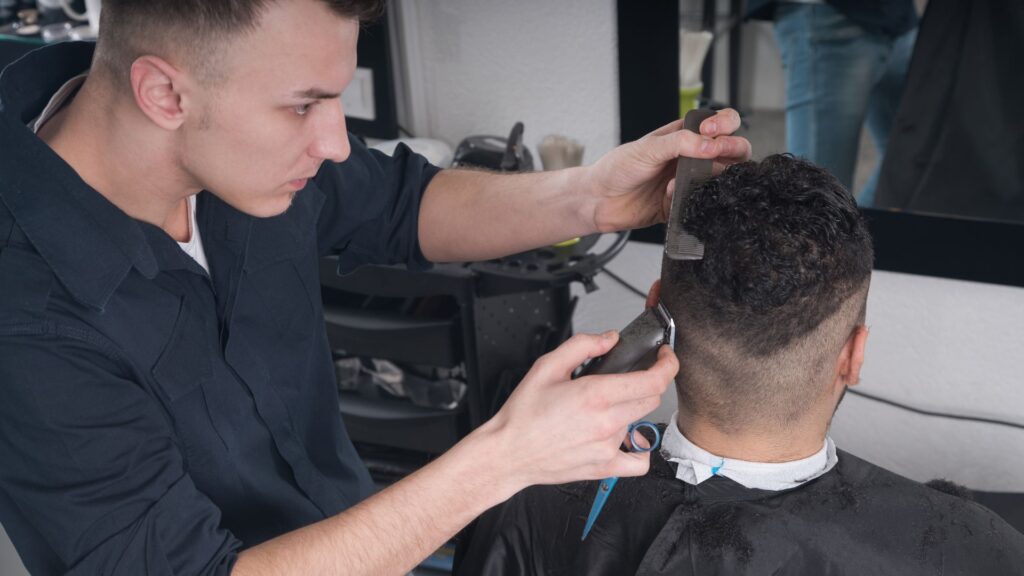
There’s something special about a dad and son sitting in neighboring chairs, capes on, watching each other in the mirror. The boy sneaks glances at his father. The father pretends not to notice but sits a little straighter.
I’ve noticed boys often copy how their fathers sit, talk and even tip their heads for the clippers. They’re learning how men take care of themselves, one visit at a time.
If you can, book your cuts together now and then. It turns a chore into a shared outing. Some of my regulars have been doing it for over a decade, and the sons now drive the fathers.
Conversations That Only Happen Here
Something about the shop invites conversation. Maybe it’s the warm towel, the background hum of clippers or the fact that nobody’s looking directly at each other. Talking to a reflection in a mirror is easier than talking face to face.
I’ve heard boys tell their fathers about crushes, tryouts, bad days and big plans while sitting in that chair. Things they might not have said at the dinner table. Perhaps it’s a little like a long car ride. Side by side, eyes ahead, words come easier.
Letting Him Speak for Himself
At some point, a dad has to stop answering for his son. It’s a small moment, but meaningful.
Next time you’re in, try waiting a beat when the cutter asks, “What are we doing today?” Let him answer. He might fumble. He might ask for something you wouldn’t choose. That’s okay.
Learning to describe what he wants, ask questions and say “a little shorter, please” builds confidence he’ll carry into job interviews, doctor visits and every situation where he needs to speak up. You’re not just teaching him to get a haircut. You’re teaching him to advocate for himself.
Of course, even the most loving parents stumble here and there.
Mistakes Parents Make
Waiting Until It’s a Crisis
The most common mistake I see is simple: waiting too long. Hair is in his eyes, the back is curling over his collar, picture day is tomorrow and every shop in town is booked.
When hair gets too long, the cut that follows often has to be more dramatic. A boy who’s used to a medium length may walk out feeling shorn and self-conscious. A regular rhythm of visits keeps changes gentle.
Home Cut vs. Shop Cut
There’s no shame in trimming at home. Plenty of families do, and for a simple buzz cut it can work well. But it’s worth knowing the trade-offs.
| Factor | Home Cut | Shop Cut |
| Cost | Clippers at $30 to $100 once | $15 to $45 per visit |
| Skill | Usually learning as you go | Trained hands, practiced eye |
| Seeing the back | Tricky with a wiggly kid | Full view, proper angles |
| Safety around ears | Riskier | Steady, experienced work |
| Best for | Buzz cuts, quick neckline cleanups | Anything with shape, blending or curls |
| Experience | Kitchen chair, towel, maybe tears | A ritual he looks forward to |
I can’t count the number of boys who’ve come in wearing a hat, asking me to “fix what Mom did.” Or Dad. Usually Dad. A home cut can save money, but a rescue cut often costs more than the original would have.
Forcing Your Own Style
Many fathers want their sons to look like younger versions of themselves. That’s natural. But a boy’s hair type, head shape and personality might call for something different.
| Mistake | Why It Happens | Better Approach |
| Waiting too long | Busy schedules | Book the next visit before leaving |
| Copying Dad’s cut | Nostalgia, habit | Choose cuts that suit his hair |
| Too much product | Wanting a “finished” look | Start with a pea-sized amount |
| Ignoring his opinion | Wanting control | Offer choices within limits |
| Kitchen-chair fixes | Trying to save time | Leave shaping to a pro |
| Booking right before events | Last-minute planning | Book 4 to 7 days ahead |
| Fighting his hair type | Unfamiliar texture | Learn to work with it |
It seems the hardest part of being a parent is accepting that our kids aren’t copies of us. Their hair is just one of the places that truth shows up.
That brings us to the practical side: what all of this actually costs.
Cost, Value and Booking Smart
What Boys’ Cuts Usually Cost
Prices vary by region, shop and experience. According to the U.S. Bureau of Labor Statistics, employment in hair-cutting and styling occupations is projected to grow faster than the average for all occupations over the coming decade, which suggests skilled hands remain in steady demand.
| Service | Typical Price Range | What You’re Paying For |
| Toddler or first cut | $15 to $30 | Patience, gentle handling |
| Kids’ basic cut | $15 to $30 | Quick, tidy work |
| Kids’ fade or design | $25 to $45 | Blending skill, detail |
| Teen cut | $25 to $45 | More styling, consultation |
| Young adult cut | $30 to $55 | Full service, personal shape |
| Father-son combo | $45 to $90 | Shared visit, often discounted |
Treat these as rough guides. City shops charge more. Small-town shops may charge less. Some shops offer loyalty cards or family packages that make regular visits easier on the wallet.
Cost Per Day and Visit Rhythm
Here’s a way of thinking about value that many parents find helpful. Divide the price of a cut by the number of days it looks good.
| Cut | Price | Days Looking Good | Cost Per Day |
| Kids’ fade | $35 | 14 | ~$2.50 |
| Taper | $28 | 28 | ~$1.00 |
| Crew cut | $25 | 25 | ~$1.00 |
| Textured crop | $35 | 35 | ~$1.00 |
| Longer scissor cut | $35 | 49 | ~$0.71 |
Suddenly the “cheaper” cut might not be the cheaper choice. A taper that holds its shape for a month can deliver better value than a fade that needs refreshing every two weeks. It all depends on what matters most to your family.
Walk-In vs. Appointment
When you’re searching for a barber near me on a Saturday morning with a restless eight-year-old in the back seat, this question suddenly matters a lot.
| Factor | Walk-In | Appointment |
| Flexibility | Come when you can | Fixed time |
| Wait time | Unpredictable | Minimal |
| Same cutter each time | Not guaranteed | Usually yes |
| Best for | Older kids, quick trims | Toddlers, anxious kids, events |
| Busy seasons | Long waits before school starts | Book weeks ahead |
For young kids, appointments usually win. Waiting forty-five minutes is hard for any child. For teens and quick cleanups, walk-ins can work fine. If you find a cutter your son trusts, booking with that same person each time builds comfort and consistency.
Gifting a Cut
A haircut makes a surprisingly thoughtful gift. A gift card for a first cut, a father-son visit or a young man’s first “grown-up” appointment with a hot towel finish can mark a milestone in a way objects rarely do.
I’ve seen grandfathers bring grandsons in for their first cut, uncles gift a graduation shave and moms quietly book a father-son appointment as a birthday surprise. It seems the best gifts aren’t really about the hair. They’re about the time spent together in the chair.
With budgets sorted, let’s look at what boys are actually asking for these days.
What’s Trending With Boys Right Now
Textured Crops and Modern Mullets
Walk through any middle school hallway and you’ll see two styles everywhere: the textured crop, with its short sides and choppy fringe, and the modern mullet, shorter on top and sides with some length left at the back.
The mullet surprises parents who remember the 1980s version. Today’s take is usually softer, often paired with a taper and blended carefully. It’s one of the clearest examples of a style coming back around, the way bell-bottoms and vinyl records did.
Curls Worn Proud
More boys with curly and coily hair are choosing to grow and shape their natural texture instead of buzzing it off. Curly tops with low tapers, defined curls with crisp edges and longer twists are all showing up more often.
I find this trend genuinely moving. Boys who once felt pressure to tame their hair are learning to see it as part of who they are. Perhaps that’s one of the healthiest shifts I’ve seen in my years behind the chair.
Sensory-Friendly Cuts and Quieter Shops
According to the CDC’s 2023 report, about 1 in 36 children in the United States has been identified with autism spectrum disorder. Many of these kids, along with others who have sensory sensitivities, find haircuts overwhelming: the noise, the vibration, the cape, the bright lights.
More shops are adapting. Quiet hours, scissors-only cuts, extra time, dimmer lighting and letting kids hold or explore tools first all help. Some cutters work while a child sits on a parent’s lap or even on the floor.
| Trend | What It Looks Like | Why It Matters |
| Textured crops | Short sides, choppy top | Easy, modern, low effort |
| Modern mullets | Short top, length at the back | Self-expression with nostalgia |
| Natural curls | Shaped curls with tapers | Celebrates real texture |
| Low and burst fades | Subtle, curved fades | Clean but not harsh |
| Sensory-friendly visits | Quiet times, gentle tools | Every child feels welcome |
| Father-son bookings | Shared appointments | Builds tradition and routine |
If your son struggles with haircuts, it might be worth calling ahead and asking what accommodations a shop can offer. A good shop will be happy to talk it through.
By now you probably have a few specific questions, so let’s answer the ones I hear most.
Frequently Asked Questions
When should my son get his first haircut?
There’s no set age. Watch for practical signs: hair in his eyes, constant tangles, uneven growth or a sweaty neck in warm weather. Some families also follow cultural or religious traditions. Choose a time when he’s rested and fed, and consider a quick visit to the shop beforehand so the space feels familiar.
How often should a boy get his hair cut?
It depends on the style. Fades often need refreshing every two to three weeks, tapers and crew cuts every three to five weeks, and longer scissor cuts every six to eight weeks. Since hair grows roughly half an inch a month, even longer styles benefit from regular shaping to stay tidy and healthy.
What’s the best haircut for a toddler who won’t sit still?
Keep it simple. A short scissor cut or a basic crew cut with minimal steps usually works best. Book a mid-morning appointment, bring a favorite toy and let him sit on your lap if needed. A cutter who explains each step in a calm voice can make a big difference.
Is a fade appropriate for school?
In most schools, yes. Fades are common and widely accepted. Some private schools or programs have rules about very short sides, shaved designs or unusual colors, so it’s worth checking the handbook. A taper is often a safe alternative if you’re unsure.
How do I handle my son’s curly hair at home?
Wash less often than you might with straight hair, use a gentle conditioner and consider a leave-in product to reduce frizz. Avoid brushing curls when dry, which can cause frizz and breakage. Ask your cutter about shaping curls dry so you can see how they’ll actually sit.
My teenager wants a dramatic style. Should I allow it?
Ask a few questions first. Is it safe for his hair and scalp? Does it break any school or team rules? Will it grow out in a reasonable time? If it’s safe, allowed and temporary, letting him try can build confidence and decision-making skills. Be more cautious with bleaching, which is best handled by a trained professional.
Should I cut my son’s hair at home to save money?
For simple buzz cuts and quick cleanups, home cuts can work. For anything involving blending, shaping or curls, a professional usually gives better results. Home mistakes often lead to a corrective visit, which can cost more than the original cut would have.
What haircut should my son get for his first job interview?
A clean, well-kept cut that suits his hair type and the workplace. A classic side part fits formal offices well, while a textured crop suits more relaxed workplaces. Book the cut about five days before the interview so it looks sharp but settled.
With the questions covered, let’s put everything into a simple plan you can actually use.
Your Action Plan and a Final Word
An Age-by-Age Checklist
| Age | Focus | Key Actions |
| 0 to 2 | Comfort and trust | Wait for real need, use scissors, keep it short and calm |
| 3 to 7 | Practical, low-fuss cuts | Book mornings, choose simple shapes, narrate the steps |
| 8 to 12 | Opinions and habits | Offer choices, teach washing and combing |
| 13 to 17 | Identity and routine | Respect experiments, manage oil, set safety limits |
| 18 to 25 | Polish and independence | Find a signature cut, book his own visits |
You don’t need to get every stage perfect. Each one simply builds on the last, like grades in school or seasons on a team.
Questions Worth Asking at Every Visit
Whether he’s four or twenty-four, these questions keep every haircut on track:
- “What would you suggest for his hair type?”
- “How will this look in three weeks?”
- “How much styling will it need each morning?”
- “Is there a growth pattern we should work with?”
- “When should we come back?”
And as he gets older, let him ask them himself. That shift, from you asking to him asking, might be the most important milestone of all.
A Final Word From the Chair
I’ve watched boys climb into my chair barely tall enough to see the mirror. I’ve watched those same boys come back years later in a pressed shirt, nervous about a job interview, asking for “something sharp but not too much.” Some now bring sons of their own. Perhaps that’s what a haircut really is: not just hair falling onto a cape, but small moments stacked over years. The talc on the counter, the hum of clippers, the hot towel, the quiet conversation in the mirror. A boy learning, a little at a time, how to take care of himself. So when you bring him in next time, maybe slow down for a moment. Let him pick a little more. Let him speak a little more. Watch who he’s becoming. If any of this rings true, take it with you. If it doesn’t quite fit your family, that’s fine too. Every boy grows into his own hair in his own time. All we can do is offer a steady chair, a sharp pair of scissors and a little patience along the way.