
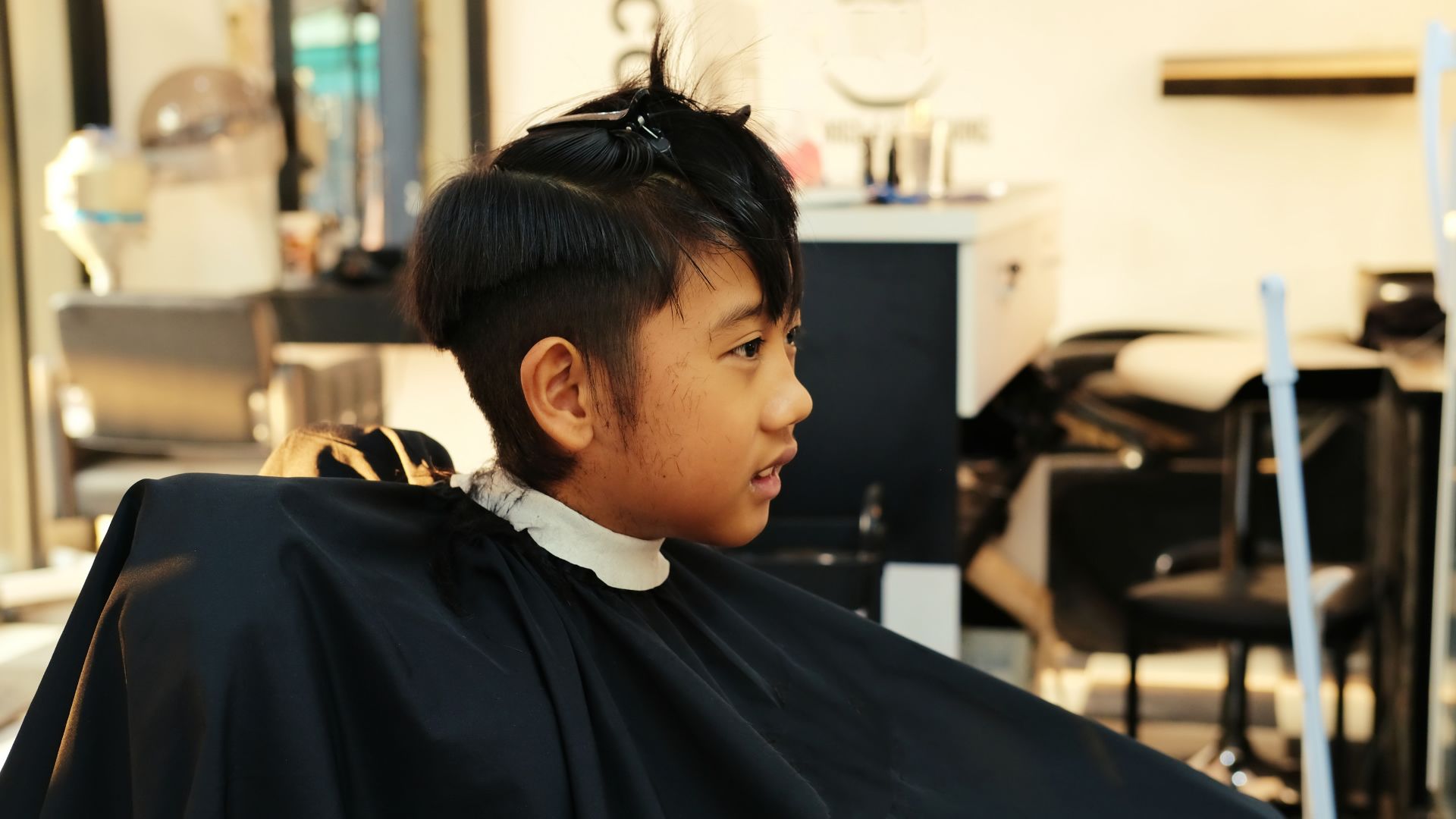
I can usually spot him before the bell over the door stops ringing.
He’s four, maybe five. He’s holding his dad’s hand with both of his, half hidden behind a pant leg. His eyes go straight to the clippers hanging by my station, then to the kid in the next chair getting his neckline cleaned up. The buzz is steady and loud. He squeezes tighter.
That’s when I put my tools down.
After more than twenty years behind the chair, I’ve learned that a nervous child’s haircut doesn’t start when the cape goes on. It starts the moment he walks through the door. If I rush him, I lose him. If I give him a minute, a smile and a little room, I usually win him over before the first snip.
So I don’t reach for the booster seat right away. I crouch down, nod at his sneakers and say, “Those light up? No way. Show me.” Nine times out of ten, he stomps once, the heels flash red, and the ice cracks a little.
Fear Is Not Bad Behavior
Here’s something every parent should hear: a scared kid is not a bad kid.
When a child cries, squirms or bolts for the door, it’s easy to feel embarrassed. You might worry that everyone in the shop is judging you. They aren’t. Every dad sitting in those waiting chairs has been there, or will be.
Fear in the chair is a normal response to a strange situation. A child’s nervous system is doing exactly what it was built to do: spot something unfamiliar and sound the alarm. Loud buzzing near the ears? Alarm. A stranger touching your head with sharp tools? Alarm. Being told to sit perfectly still? Double alarm.
My job isn’t to win a battle against that fear. It’s to turn the alarm down, one notch at a time, until the haircut feels safe.
What You’ll Walk Away With
Think of this as a parent’s Haircut Guide for the nervous child, written from the barber’s side of the chair. By the end, you’ll know:
- Why haircuts scare kids, from the sound of clippers to the itch of loose hair
- What a good barber does differently before, during and after the cut
- How to prepare your child at home so the visit feels familiar
- Which mistakes make fear worse, even when parents mean well
- What it costs, and when paying for extra time is worth it
Before we fix the fear, though, we need to understand it.
Why a Haircut Feels Huge to a Small Kid
The Sounds
To you, clippers hum. To a three-year-old, they roar.
Clippers work right next to the ear, sometimes touching it. The vibration travels through the skull, so a child doesn’t just hear the buzz, he feels it in his bones. Add the clatter of a busy shop, a blow-dryer at the next station and the TV in the corner, and it’s a lot of noise for a small person.
Some kids are startled by the sudden click of a clipper switching on. Others are bothered by the snip of scissors right by the ear, which sounds much louder up close than it does across the room.
The Sensations
Then there’s the feel of it all.
Cold spray water running down the neck. The tug of a comb through a tangle. Tiny cut hairs sliding under the collar and prickling the skin like sand in a swimsuit. The weight of a cape fastened around the throat. The cool blade of the clippers on the back of the neck.
Adults have learned to ignore most of this. Kids haven’t. For them, each sensation arrives fresh and loud.
The Loss of Control
Think about what we ask of a child in the chair. Sit still. Don’t turn your head. Look down. Look up. Let this stranger touch you. Don’t move your hands out from under the cape.
That’s a lot of “don’ts” for someone whose whole day is usually about moving, exploring and choosing. Kids often fight the haircut not because it hurts, but because they feel trapped. Taking back even a little control, like choosing the cape color, can change everything.
The Mirror and the Stranger
Finally, there’s the face in the mirror and the stranger behind him.
Some children don’t like watching their own hair fall away. To a young kid, hair can feel like part of who he is. Others feel uneasy with an unfamiliar adult standing behind them, out of view, where they can only see him in reflection.
| Fear Trigger | Why It Scares Kids | What a Good Barber Does |
| Clipper noise | Loud, vibrating, close to the ear | Starts with scissors, shows clippers first, uses quieter trimmers |
| Spray water | Cold, sudden, drips down the neck | Warms the bottle, sprays a hand first, uses a damp comb instead |
| Loose hair | Itchy, prickly under the collar | Uses a neck strip, snug cape, brushes often |
| Sitting still | Feels trapped and bossed around | Gives choices, short breaks, permission to wiggle between passes |
| A stranger behind them | Can’t see what’s happening | Works from the side, narrates every step |
| Watching hair fall | Feels like losing part of himself | Turns the chair from the mirror or saves a lock as a keepsake |
Not every child feels all of these. Some feel just one, very strongly. Knowing which one is the key, and that depends a lot on age and temperament.
Who Gets Nervous, and Why
Fear Changes With Age
A toddler’s fear looks nothing like an eight-year-old’s.
According to the American Academy of Pediatrics’ HealthyChildren.org, separation anxiety tends to peak between about 10 and 18 months and usually eases by around age three. That’s why many babies and young toddlers panic when they’re placed in a chair away from mom or dad.
| Age | Common Fears in the Chair | What Usually Helps |
| Under 2 | Separation, strangers, noise | Sit on a parent’s lap, scissors only, very short visit |
| 2 to 3 | Noise, sitting still, loss of control | Simple choices, toys, quick pace |
| 4 to 5 | Clippers, “getting hurt,” the unknown | Tell-show-do, touching tools, praise |
| 6 to 8 | Looking “weird,” mistakes, past bad cuts | Involve him in style choices, show progress in the mirror |
| 9 to 12 | Embarrassment, peers, looking different | Respect, privacy, real conversation |
| Teens | Self-image, getting it “right” | Treat him like an adult client, listen closely |
A five-year-old fears the clippers. A ten-year-old fears walking into school on Monday looking different from his friends. Both fears are real. They just need different answers.
Sensory Sensitivities, Anxiety and Autism
Some kids carry more than the usual jitters.
According to the CDC, about 9.4 percent of children ages 3 to 17, roughly 5.8 million kids, have been diagnosed with anxiety. The CDC’s autism monitoring network estimated in its 2025 report that about 1 in 31 eight-year-olds has been identified with autism spectrum disorder. Many autistic children experience sounds, touch and lights more intensely than other kids.
Sensory differences aren’t limited to autism, either. A 2009 study by Ben-Sasson and colleagues in the Journal of Abnormal Child Psychology found that roughly one in six children in a school-age sample showed signs of sensory over-responsivity, meaning everyday sensations like tags, noise or light touch felt overwhelming.
So if your child reacts strongly to haircuts, he’s far from alone. In a busy week, I’ll see several kids who need a gentler approach.
The Kid With One Bad Memory
Then there’s the child who used to be fine.
He sat happily for years, then one day a clipper nicked his ear or someone held his head too firmly. Now he panics at the door. Kids remember how something felt more than what actually happened. One bad cut can cast a long shadow.
The good news? A bad memory can be rewritten with a run of good ones. It takes patience, the way a kid who got hit by a pitch needs a few gentle innings before he stops flinching at the plate.
Fear of the chair is nothing new. Kids have been squirming in barbers’ chairs for well over a century.
A Short History of Kids in the Barber’s Chair
From Barber-Surgeons to the Corner Shop
For centuries, barbers did far more than cut hair. In medieval Europe, barber-surgeons pulled teeth, set bones and performed bloodletting. The red and white barber pole is widely linked to that history, with the stripes often said to represent blood and bandages.
You can imagine why a child back then might not have loved the barber.
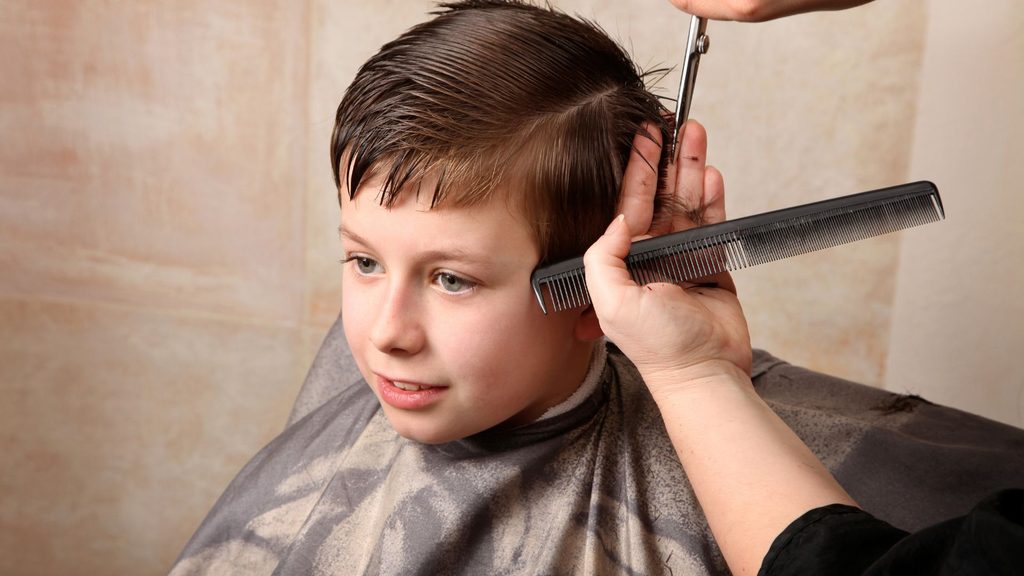
By the late 1800s and early 1900s, the trade had settled into something friendlier. The corner barbershop became a gathering place in towns and cities across America. Fathers brought sons on Saturday mornings. Boys listened to grown men talk ball games and politics while the smell of bay rum and talc hung in the air. A first haircut there was a small step into the world of men.
The Horse-Head Chair and the Booster Board
Barbers figured out early that small kids needed special seating.
In the early twentieth century, barber supply companies sold children’s chairs shaped like horses, complete with carved heads and painted manes. A boy could “ride” his way through a trim. Many shops also used a simple booster board laid across the arms of a regular chair, which is still common today.
Later decades brought chairs shaped like race cars, airplanes and fire trucks, especially in kid-focused salons. The idea was always the same: turn the scary chair into a fun ride.
I still keep a padded booster board by my station. It’s worn smooth on the edges from decades of little legs kicking against it.
First Haircut Traditions Around the World
A child’s first haircut has carried deep meaning in many cultures.
| Tradition | Culture or Faith | Typical Age | Meaning |
| Upsherin | Jewish (especially Hasidic) | Around age 3 | Marks the start of formal learning and religious life |
| Mundan | Hindu | Often in the first or third year | Cleansing and blessing for a healthy future |
| Aqiqah head shaving | Muslim | Often the 7th day after birth | Gratitude, with hair weighed for charity |
| Full-month shaving | Chinese | Around one month | Welcoming the baby, wishing for thick hair |
| First haircut keepsake | Common in the U.S. | Often 1 to 2 years | Saving a lock and a certificate as a memory |
| Saturday cut with Dad | American shop culture | Childhood into teens | Bonding, routine and growing up |
What strikes me about these traditions is how often the family gathers around the child. The haircut isn’t something done to him. It’s something celebrated with him. That’s a good lesson for nervous kids today, too.
History tells us why the chair matters. Now let’s talk about how a barber gets the room ready before a nervous child even sits down.
Setting Up a Calm Shop Before He Walks In
Timing the Appointment
Timing is half the battle.
A tired, hungry child has very little patience left. A nap-deprived three-year-old in a late-afternoon slot is like a pitcher in the ninth inning with nothing left in his arm. You can still play, but the odds aren’t great.
| Factor | Morning Appointment | Late Afternoon Appointment |
| Child’s energy | Usually rested | Often tired or cranky |
| Shop noise | Often quieter early | Busier after school and work |
| Barber’s pace | Less pressure, more flexibility | Tighter schedule |
| Hunger risk | Low after breakfast | Higher before dinner |
| Best for | Nervous or sensory-sensitive kids | Older, relaxed kids |
When parents call about a nervous child, I nearly always suggest the first slot of the day or a quiet weekday morning. Fewer people, less noise, and no line of customers watching the clock.
Preparing the Station
Before a nervous child arrives, I set up with a few small changes:
- Tools out of sight until I’m ready to show them, one at a time
- Spray bottle filled with warm water, not cold from the tap
- A soft neck strip and a lightweight cape
- A clean, fresh comb and brush laid out where he can see them
- TV volume down and the loudest tools at other stations paused if possible
- A small basket of fidget toys and a picture book
Clean tools matter for every kid, nervous or not. The CDC estimates 6 to 12 million head lice infestations happen each year in the U.S. among children ages 3 to 11. That’s one more reason every comb and clipper should be cleaned and disinfected between clients. Parents notice, and kids feel it in the calm, orderly look of the station.
Standard Visits vs. Sensory-Friendly Visits
Some shops now offer sensory-friendly appointments. Here’s how they usually differ from a standard kid’s cut.
| Feature | Standard Kid’s Cut | Sensory-Friendly Visit |
| Length of slot | 15 to 20 minutes | 30 to 60 minutes |
| Shop environment | Normal noise and traffic | Quiet hours, dimmed music, fewer clients |
| Tools | Clippers and scissors as needed | Scissors first, quiet trimmers, gradual introduction |
| Pace | Steady | Child sets the pace, breaks allowed |
| Goal | Full haircut | Comfort first, full cut when ready |
| Price | Lower | Often higher for the extra time |
A sensory-friendly visit isn’t about a fancier cut. It’s about buying time. Time is what lets a scared kid relax.
All that prep sets the stage. But the first few minutes in person are where trust is truly built.
The First Five Minutes Decide Everything
Greeting at Eye Level
A grown man towering over a little boy is intimidating, even when he’s smiling.
So I get low. I kneel or sit on a stool so I’m at his height. I say his name. I talk to him first, not just to his dad. Then I ask him something easy: “What’s your favorite dinosaur?” or “Are you a Cubs fan or a Sox fan?”
I don’t ask, “Are you ready for your haircut?” That question invites a “no.” Instead, I let him warm up to me as a person before I’m a barber.
Tell, Show, Do
Pediatric dentists have used a method called Tell-Show-Do since the late 1950s, when it was described by dentist Dr. Addelston. The American Academy of Pediatric Dentistry still lists it as a core technique for helping anxious children. It works beautifully in a barber’s chair too.
| Step | What It Means | What It Sounds Like in the Chair |
| Tell | Explain in simple words | “This is my buzzy tickler. It cuts hair short, like a tiny lawn mower.” |
| Show | Demonstrate where he can watch | “Watch, I’ll buzz it on my arm. See? It just tickles.” |
| Do | Perform the step gently | “Now I’ll touch it to the back of your neck for one second.” |
| Praise | Notice the brave moment | “You did it! That was awesome sitting so still.” |
Kids fear what they can’t predict. Tell-Show-Do removes the surprise from each step, so nothing comes out of nowhere.
Letting Him Hold the Tools
One of my favorite tricks is simple: I let the child hold the tools.
He gets to hold a comb. He gets to feel the guard on the clippers. With the blades off, he can turn the clippers over in his hands. Sometimes I’ll switch them on and let him rest his palm on the body to feel the hum.
Once a kid has held the clipper, it stops being a monster. It becomes a tool, like a toothbrush or a spoon. And when he decides it’s not scary, that decision sticks far better than anything I could say.
Trust opens the door. The right tools and techniques keep it open.
Tools and Techniques That Calm Instead of Scare
Scissors vs. Clippers
For many nervous kids, the choice of tool matters more than anything else.
| Factor | Scissors | Clippers |
| Noise | Quiet snipping | Steady buzz and vibration |
| Speed | Slower | Much faster |
| Feel on the skin | Light, little contact | Vibrating metal on skin |
| Best for | Very anxious or sound-sensitive kids | Kids comfortable with the sound, short styles |
| Precision | High for longer styles | High for short sides and necklines |
| Risk of startle | Low | Higher at switch-on |
I often start a scared child with scissors only. Once he’s settled, I may introduce clippers for the neckline, the part he can’t see. With some kids, we do a full scissor cut for the first several visits. The style might take a few extra minutes, but a calm child is worth every one of them.
Quieter Tools, Softer Touches
Not all clippers are equally loud. Many modern cordless trimmers run quieter and lighter than heavy-duty corded clippers. For nervous kids, I reach for a small trimmer first.
A few other small swaps make a big difference:
- Clipper-over-comb instead of bare blades on the skin, so less metal touches him
- A damp comb instead of a spray bottle for kids who flinch at spritzing
- A soft neck brush after every section to keep the itch away
- Warm hands. Cold fingers on a small neck are a surprise nobody likes
Little details like these are like taping a kid’s fingers before a basketball game. Small, quick, and they prevent a lot of trouble.
Where He Sits Matters
| Position | Best For | Upside | Downside |
| Parent’s lap | Babies, young toddlers | Safe, familiar | Harder angle for the barber |
| Booster seat | Ages 3 to 7 | Good height, feels “big” | Can feel high up and exposed |
| Novelty chair (car, horse) | Ages 2 to 6 | Fun, distracting | Not every shop has one |
| Regular chair | Ages 7 and up | Feels grown-up | Must be adjusted for height |
| Standing or floor seat | Sensory-sensitive kids who can’t sit up high | Child feels grounded | Barber must work around movement |
For some kids, especially those with sensory needs, the high chair itself is the problem. I’ve done cuts with a child sitting on a beanbag, on the floor, or standing next to Dad. It’s not textbook, but a good haircut is a good haircut wherever it happens.
Tools and seating set the stage. What happens in his mind during the cut matters just as much.
Distraction, Choice and a Sense of Control
Screens vs. Conversation
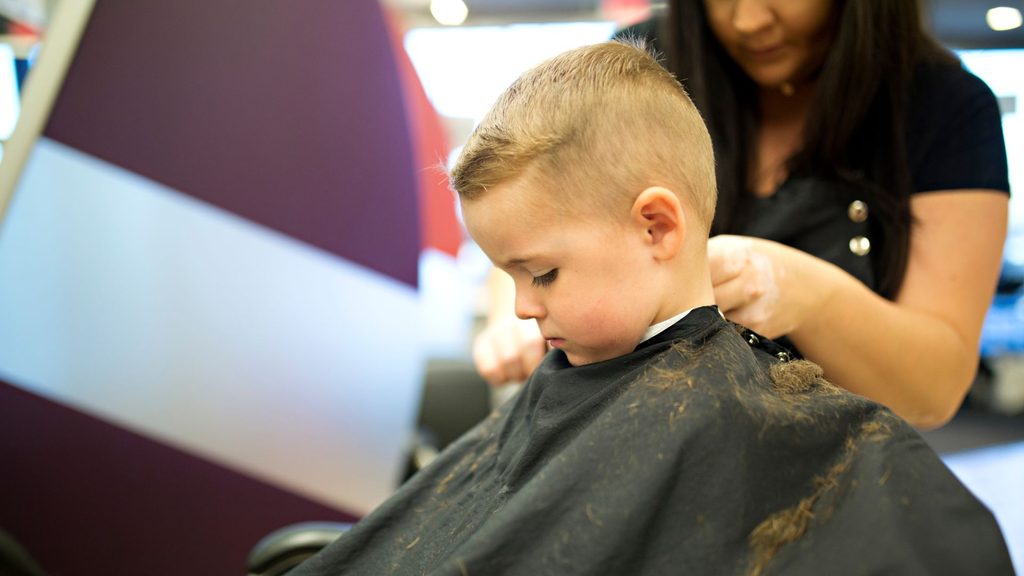
Distraction works. A 2018 Cochrane review by Birnie and colleagues found that distraction techniques reduced pain and distress for children during needle procedures. A haircut is far gentler than a shot, so the lesson carries over nicely.
The question is what kind of distraction to use.
| Factor | Tablet or Phone | Conversation and Games |
| Engagement | Very high | Depends on the child |
| Head position | Often looks down, hard to cut | Easier to guide head gently |
| Builds trust with barber | Low | High |
| Long-term comfort | Child may depend on the screen | Child learns the haircut is safe |
| Best for | Very young or highly anxious kids | Most kids over 4 |
A tablet can rescue a tough visit. I’m not against it. But I prefer to use it as a bridge, not a crutch. Over several visits, we try to swap screen time for chatting, counting, “I Spy” in the mirror or a story. Kids who learn to sit through a cut without a screen tend to feel prouder too.
Giving Small Choices
Choices hand control back to the child. They don’t have to be big:
- Red cape or blue cape?
- Scissors first or comb first?
- Do you want to watch in the mirror or look at a book?
- Should we do the left side or the right side next?
- Do you want spray or the wet comb?
Notice there’s no choice about whether to get a haircut. That’s the parent’s call. But within the cut, I give him as many yeses as I can. Every small choice tells him: you’re part of this, not just sitting through it.
Breaks, Countdowns and Stop Signals
A nervous child needs to know the haircut will end.
I use countdowns for the hard parts: “Five buzzes on the back, then we’re done. Ready? One… two…” Kids can tolerate almost anything if they know when it stops.
I also teach a stop signal. A raised hand means “pause.” When he raises it, I stop, every single time. That simple promise is powerful. Once a child knows he can pause the cut, he rarely needs to.
Short breaks help too. A sip of water, a stretch, a high five. Think of it like timeouts in a basketball game. They reset nerves and let everybody catch their breath.
For some kids, though, these steps are just the beginning. Children with sensory or developmental differences often need a more tailored plan.
Kids With Sensory, Developmental and Medical Needs
Autism-Friendly Appointments
Autistic children often thrive on predictability. Surprises that other kids shrug off can feel overwhelming.
When I cut for an autistic child, I lean on a few habits:
- Same barber, same chair, same time when possible
- A clear sequence we repeat every visit: hello, cape, comb, scissors, sides, back, brush, done
- Visual supports, like a simple picture card showing each step
- Fewer words, spoken calmly
- Permission to stim with fidget toys, rocking or humming
- Flexible goals, where half a haircut can still count as a win
Some parents bring noise-canceling headphones. Those can help a lot with clipper sounds, though I’ll need to lift them gently for work around the ears. Others bring a weighted lap pad or a favorite blanket. Families often know what calms their child far better than I do, and I want to hear it.
Over-Responders vs. Under-Responders
Not every child with sensory differences reacts the same way. Some feel too much. Others seek more input.
| Factor | Sensory Over-Responder | Sensory Under-Responder |
| Reaction to clippers | Covers ears, panics | May lean into the vibration |
| Reaction to touch | Flinches at light touch | Prefers firm, steady pressure |
| Loose hair | Extremely itchy, upsetting | Barely noticed |
| Movement | Freezes or tries to flee | Constantly wiggles |
| What helps | Scissors, quiet room, slow pace | Firm hand on shoulder, fidget toys, steady rhythm |
A firm, steady touch often feels better than a light, ticklish one for many sensory-sensitive kids. Light touches can feel like a bug crawling on the skin. A calm, confident hand on the shoulder feels safe, like a coach’s hand before a big play.
Tender Scalps, Skin Conditions and Medical Worries
Some kids are nervous because a haircut genuinely hurts.
Eczema, dry patches, scabs or cradle cap can make the scalp sore. Kids with very curly or coily hair may have tender scalps that ache when combed. Children recovering from illness may have sensitive skin or thinning patches.
Parents should always mention these things before the cut. I’ll use a wide-tooth comb, skip the clippers on sore spots, and keep tension light. If a scalp looks inflamed or infected, I’ll gently suggest a check-up with your pediatrician before we cut over that area.
Hair type plays a bigger role in a child’s comfort than many parents realize.
Hair Type and the Nervous Child
Fine and Straight Hair
Fine, straight hair is usually the gentlest to cut. It combs easily, rarely tangles badly and works well with scissors alone.
The challenge is that fine hair shows every uneven snip, and a wiggly child makes precision tricky. I keep scissor cuts simple for nervous kids with fine hair: a soft, even shape that hides small movements. Nobody needs a razor-sharp line on a four-year-old.
Thick, Wavy and Cowlick-Heavy Hair
Thick hair takes longer. More hair means more combing, more snipping and more time in the chair, which tests a nervous child’s patience.
Cowlicks add another wrinkle. A stubborn crown whorl can stand straight up if cut too short. I usually leave a bit more length there so it lies down. Explaining it in kid terms helps: “Your hair grows in a little tornado right here. We’re going to leave the tornado some room.”
For thick hair, clippers often save time on the sides. If a child can tolerate them, a few minutes of clipper work can shorten the whole visit significantly.
Curly and Coily Hair and Tender Heads
Curly and coily hair is beautiful, and it needs special care with nervous kids.
Tight curls tangle easily, so combing can pull and hurt. Many kids with coily hair have tender scalps, and a rough detangle can turn a calm child into a scared one fast. Edge-ups and line-ups add more close clipper and trimmer work around the face, which some kids find scary.
| Hair Type | Common Comfort Issue | Barber’s Gentle Approach | Parent Prep at Home |
| Fine and straight | Precision with a wiggly child | Simple scissor shapes | Brush before arriving |
| Thick and wavy | Long time in the chair | Clippers on sides if tolerated | Practice sitting for 15 minutes |
| Cowlicks and whorls | Hair sticking up after the cut | Leave extra length at the crown | Point out the “tornado” so it’s not a surprise |
| Curly | Tangles and pulling | Detangle with fingers, wide-tooth comb | Condition and detangle the night before |
| Coily | Tender scalp, edge-up nerves | Light tension, trimmer before razor, soft edges | Moisturize, keep hair stretched or twisted |
For first cuts or very nervous kids with coily hair, I skip sharp razor edge-ups. A soft, natural hairline is just as handsome and much kinder on young skin. The crisp lines can come later, when he’s ready and excited for them.
A lot of the comfort in the chair actually starts at your kitchen table.
What You Can Do at Home Before the Visit
Talk It Up the Right Way
Words matter. The way you describe the haircut shapes how your child feels walking in.
| Instead of Saying | Try Saying | Why It Works |
| “It won’t hurt.” | “It might tickle a little.” | Avoids planting the idea of pain |
| “Don’t be scared.” | “Lots of kids feel nervous. That’s okay.” | Normalizes the feeling |
| “If you cry, no treat.” | “After, we’ll get pancakes together.” | Builds a positive link, not a threat |
| “Sit still or else.” | “Your job is to be a statue for a little bit.” | Turns stillness into a game |
| “The barber’s going to cut your hair off.” | “The barber will make your hair shorter and neater.” | Less scary, more accurate |
Keep it short and calm. Talking about the haircut for days can actually build more worry. Mention it the day before or the morning of, in a matter-of-fact way, like any other errand.
Practice Runs and Social Stories
Practice turns the strange into the familiar.
At home, you can:
- Play barber with a stuffed animal, a comb and a spray bottle
- Run an electric toothbrush near his ears to mimic the buzz
- Practice the cape with a towel clipped around his shoulders
- Count to twenty while he sits like a statue, then celebrate
Social Stories, a tool developed by educator Carol Gray in the early 1990s, help many kids, especially autistic children. A social story is a short, simple story with pictures that describes an event step by step: “I go to the shop. I say hi to the barber. I sit in the chair. The barber puts on a cape…” Reading it a few times before the visit lets a child rehearse in his mind.
Some families also take a “just looking” visit. They stop by, say hello, maybe watch another kid get a cut, then leave. No pressure. Next time, the shop is a place he’s already been.
Picking the Right Shop
Not every shop is the right fit for a nervous child, and that’s okay.
When you’re searching for a barbershop near me for an anxious kid, ask a few questions on the phone:
- Do you have barbers who enjoy cutting kids? Some love it. Some would rather not.
- When are your quietest hours?
- Can I book extra time if my child needs it?
- Are you comfortable with scissor-only cuts?
- Can my child visit first just to look around?
- Have you worked with autistic or sensory-sensitive kids?
Listen to the tone of the answers as much as the answers themselves. If the person on the phone sounds patient and interested, that’s a good sign. If he sounds rushed, keep looking.
Even with great prep, a few common mistakes can undo all that good work.
Mistakes That Make Fear Worse
Bribes vs. Rewards
Many parents use treats, and that’s fine. The difference is in how.
| Factor | Bribe | Reward |
| When it’s offered | In the middle of a meltdown | Planned before the visit |
| What it teaches | Fussing leads to treats | Bravery leads to celebration |
| How it feels to the child | A deal to stop crying | Pride in doing something hard |
| Long-term effect | Fussing may grow | Confidence tends to grow |
| Example | “Stop crying and I’ll get you candy!” | “After your haircut, we’re going to the park.” |
Plan the reward before you walk in. Make it about the effort, not perfection. A child who cried a little but finished the cut still earned his pancakes.
Rushing, Restraining and Pushing Through
The biggest mistake I see, from parents and sometimes from barbers, is forcing it.
Holding a screaming child’s head down to finish a cut might get the hair short today. But it teaches him that the chair is a place where he’s overpowered. Next time, the fear is bigger. And there’s a real safety risk with sharp tools near a struggling child.
If a child is in full panic, I stop. We take a break, try a smaller goal, or end the visit and try again another day. A half-finished haircut is a far smaller problem than a lasting fear.
Teasing, Threats and “Big Boys Don’t Cry”
| Mistake | What It Teaches | Better Approach |
| “Big boys don’t cry.” | Feelings are shameful | “It’s okay to feel scared. You’re being brave.” |
| “If you don’t sit still, he’ll cut your ear.” | The barber is dangerous | “Sitting still helps him do a great job.” |
| Laughing at his fear | His feelings don’t matter | Acknowledge, then gently encourage |
| Comparing to siblings | He’s failing | Celebrate his own progress |
| Showing your own frustration | The haircut is a big problem | Stay calm and steady, even if you’re not |
| Booking during nap time | Tired kids are fragile | Choose a rested time |
Kids take their cues from you. If you’re tense, they’ll know. If you’re calm and a little bored, like this is just another Saturday errand, that steadiness rubs off. It’s like a father on the sidelines at Little League. When Dad stays cool, the kid at bat breathes easier.
Lessons stick better through real stories. Here are a few from my own chair.
Stories From the Chair
The Boy Who Cut My Hair First
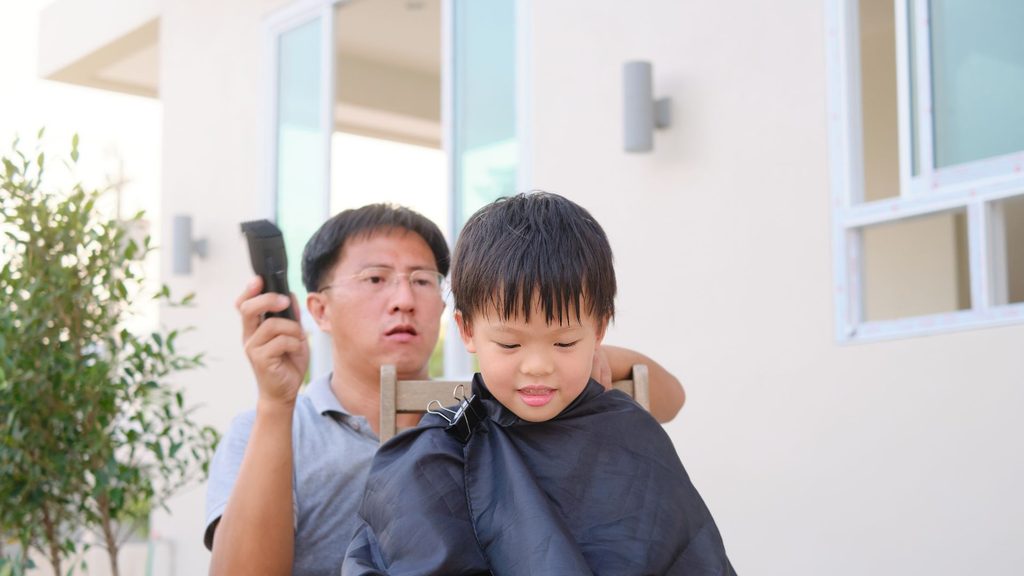
Leo was four and wanted nothing to do with me. Three visits in a row, he made it as far as the booster seat before sliding off and running to his mom.
On the fourth visit, I tried something different. I sat down in the chair myself, handed him a comb and said, “Your turn to be the barber.” He looked at me like I’d lost my mind. Then he climbed up on the footrest and started combing my hair, very seriously. I let him “cut” a bit with his fingers, snip-snip.
“Now it’s my turn,” I said. He hopped into the chair without a word. We finished the whole cut with scissors that day. He’s eleven now and still asks to comb my hair “just for old times’ sake.”
The Twins and the Kitchen Timer
A mom brought in six-year-old twins, Eli and Sam. Eli was relaxed. Sam was panicking before he even saw the chair.
Sam’s real fear, it turned out, was that the haircut would never end. So I grabbed a kitchen timer from the back. “Ten minutes. When it dings, we’re done, no matter what.” I set it where he could see it.
He watched the numbers tick down the whole time. With about a minute left, he actually started grinning, counting along out loud. The timer dinged as I brushed off his neck. “We beat it!” he shouted. Now Sam asks for “the timer haircut” every visit.
The Dad Who Sat in the Chair Too
Jordan, age five, was autistic and terrified of clippers. His father, a tall, quiet electrician, didn’t say much at first visit, but he watched everything.
On the second visit, he asked, “What if you buzz me first?” So I gave Dad a quick cleanup on his neckline while Jordan watched from a chair beside him. Dad gave a thumbs-up and said, “Just tickles, buddy.”
Then Jordan climbed onto his father’s lap in my chair, headphones on, holding Dad’s hands. We did the sides with scissors and just the very back with the trimmer. Five buzzes, counted out loud.
When it was done, Jordan reached up and patted his dad’s freshly cut neck, then his own. Same feel. He smiled. His father didn’t say a word, but his eyes said plenty.
Those visits take time and patience. That brings us to the practical side: what it all costs.
Cost, Time and Real Value
What Kids’ Cuts Usually Cost
Prices vary widely by region and shop, but here’s a general picture.
| Service | Typical Price Range | Typical Time | Notes |
| Basic kid’s cut | $15 to $30 | 15 to 20 minutes | Often for ages 12 and under |
| First haircut with keepsake | $20 to $40 | 15 to 30 minutes | May include a lock of hair and certificate |
| Extended or sensory-friendly visit | $30 to $60 | 30 to 60 minutes | Extra time, quieter setting |
| Kid’s cut with design or line-up | $25 to $45 | 20 to 30 minutes | More precise clipper and trimmer work |
| Parent and child together | $45 to $80 combined | 45 to 60 minutes | Great for modeling calm |
| “Just looking” visit | Often free | 10 minutes | A good shop is happy to welcome you |
An extended visit might cost more, but think of what it buys. A calm cut today often means shorter, smoother cuts for years to come. It’s like paying for a few extra swim lessons. You’re not just buying the lesson. You’re buying a kid who isn’t afraid of the water.
Home Cuts vs. Shop Cuts
Some parents decide to cut at home to avoid the stress. That can work, with trade-offs.
| Factor | Home Haircut | Shop Haircut |
| Upfront cost | $40 to $100 for clippers and scissors | Per-visit fee |
| Comfort for the child | Familiar setting | New environment, gets easier with routine |
| Quality of cut | Depends on parent’s skill | Professional, consistent |
| Safety with a wiggly child | Higher risk of nicks | Trained hands, proper tools |
| Builds comfort for future cuts | Child may avoid shops later | Child learns shops are safe |
| Best for | Very short, simple cuts, or between visits | Most styles and most kids |
Home cuts can be a great bridge for very anxious children. But at some point, most kids benefit from learning that a professional chair is safe. A blend works well for many families: simple trims at home, with regular shop visits to build comfort and keep the shape right.
Gifts That Help a Nervous Kid
If you’re a grandparent, uncle or family friend looking for a thoughtful gift, these can genuinely help.
- A prepaid set of kid’s cuts at a patient, kid-friendly shop
- Kid-sized noise-canceling headphones
- A personalized cape in his favorite color or with his name
- A picture book about a first haircut to read at home
- A small “barber kit” toy set for practice play
- A first haircut keepsake frame for the lock of hair and a photo
The best gifts don’t just make the haircut easier. They make it feel special.
Families have more options now than ever, and the trade itself is changing to meet them.
Trends and Insights From Behind the Chair
Sensory-Friendly Hours Are Growing
Over the last several years, I’ve watched more and more shops add sensory-friendly hours. Lights dimmed, music off, fewer clients and longer slots.
It’s part of a wider shift. Movie theaters, grocery stores and museums have started offering sensory-friendly times too. Families who once dreaded haircuts now have real options. Some barbers even travel to homes for kids who can’t handle a shop at all.
Lessons Borrowed From Pediatric Dentists and Child Life Pros
Barbers are learning from other professions that work with nervous kids.
Pediatric dentists gave us Tell-Show-Do. Child life specialists, the hospital professionals who help kids cope with medical procedures, have shown how much preparation, play and choices can reduce fear. The American Academy of Pediatrics has long supported child life programs in hospitals for exactly that reason.
| Profession | Technique | How Barbers Use It |
| Pediatric dentistry | Tell-Show-Do | Explain, demonstrate, then cut |
| Child life specialists | Medical play | Let kids “cut” a doll or the barber’s hair |
| Occupational therapy | Sensory diets, deep pressure | Firm touch, weighted lap pads, fidgets |
| Special education | Visual schedules, social stories | Picture cards showing haircut steps |
| Pediatric nursing | Distraction and countdowns | Counting buzzes, games, timers |
None of these ideas are complicated. They just require patience and a willingness to treat a child’s fear as real.
Dads Leading by Example
The trend I love most is simpler. More dads are getting cuts with their kids.
A father who sits in the chair first, laughs at the buzz and walks out looking sharp is showing his son something that no barber can teach on his own: this is safe, this is normal, and this is something we do together. It’s the same reason kids want to swing a hammer when they see Dad build a deck. They copy what they see.
Some of my favorite Saturday mornings are side-by-side cuts. Two chairs, two capes, father and son looking at each other in the mirror, making faces. That’s what the shop is for.
With the trends covered, here are the questions parents ask me most.
Frequently Asked Questions
What age should my child get his first haircut?
There’s no single right age. Many children get a first haircut between 12 months and 2 years, often when hair starts falling in their eyes or looking uneven. Some cultural and religious traditions set specific ages. If your child has very little hair or seems likely to panic, there’s no rush. Hair can wait. A calm first experience matters more than an early one.
Should I hold my toddler on my lap during the haircut?
For babies and young toddlers, yes, a lap is often the safest and calmest option. Your child feels secure, and the barber can work around you. Wear a cape or an old shirt you don’t mind covering in hair. Around age three or four, many kids are ready to try a booster seat, especially if you stay close and in view.
What if my child screams through the whole haircut?
First, don’t panic or apologize too much. Every barber has seen it. A good barber will slow down, try scissors, offer breaks, or stop and try again another day. If your child is in full distress, it’s usually better to end the visit early than to push through. Plan a shorter, gentler visit next time and practice at home in between.
Are clippers safe for young children?
Yes, in trained hands. Professional clippers with guards don’t cut skin when used correctly, and they’re often faster than scissors, which shortens time in the chair. The main concern is a child moving suddenly. That’s why many barbers start nervous kids with scissors and introduce clippers slowly, often only at the neckline.
How do I find a barber who’s good with nervous or autistic kids?
Call ahead and ask directly. Ask whether any barbers enjoy cutting kids, whether they’ve worked with autistic or sensory-sensitive children, and whether you can book quiet hours or extra time. Ask other parents, especially in local autism or parenting groups. A good fit usually reveals itself quickly in how patient the barber sounds.
Should I use a tablet or phone to distract my child?
It can help, especially for very young or very anxious kids. The downside is that kids often look down at screens, which makes cutting harder, and they may come to depend on them. Many barbers suggest using a screen at first, then gradually replacing it with conversation, games or books as the child gets more comfortable.
How often should a nervous child get a haircut?
Regular, predictable visits usually help more than long gaps. Every four to six weeks works for most kids. Frequent short visits build familiarity, so the shop starts to feel normal. Long gaps can make each visit feel like starting over, and longer hair often means more tangles and more time in the chair.
Can I tip more for a difficult haircut?
You don’t have to, but many parents do, and barbers appreciate it. A nervous child’s cut often takes more time, patience and skill than a standard one. If your barber went the extra mile, a slightly larger tip or a kind review is a thoughtful way to say thanks. Bringing your child back to the same barber is a compliment too.
Now let’s turn everything into a plan you can actually use.
Your Calm Haircut Plan and a Final Word
The Before, During and After Checklist
| Stage | Parent’s Job | Barber’s Job |
| A week before | Call the shop, ask questions, book a quiet slot | Note the child’s needs and fears |
| A few days before | Read a social story, play barber at home | Plan tools and seating |
| The day before | Mention the cut calmly, plan the reward | Prepare warm water, clean tools, quiet station |
| Morning of | Make sure he’s fed, rested, in a soft shirt | Clear the schedule around the visit |
| Arrival | Stay calm, let him explore | Greet at eye level, build rapport |
| During | Stay in view, encourage, stay steady | Tell-Show-Do, choices, countdowns, breaks |
| After | Celebrate effort, deliver the reward | Praise bravery, offer a sticker or lollipop |
| Before next visit | Talk about what went well | Remember what worked |
Tracking Progress Visit by Visit
Progress with a nervous child rarely looks like a straight line. It looks more like a kid learning to ride a bike: wobbly, a few spills, then suddenly he’s off down the block.
Keep a simple note after each visit:
- What went well? “He held the clippers.”
- What was hard? “Spray bottle on the neck.”
- What helped? “Counting the buzzes out loud.”
- What to try next time? “Damp comb instead of spray.”
Share these notes with your barber. Over a few visits, you’ll see a pattern. Most kids get noticeably calmer within three to five visits when the approach stays consistent.
A Final Word From the Chair
At the end of a cut, I like to brush the last bits of hair from a child’s neck, dust a little talc across his nape and spin the chair, slowly, toward the mirror. That moment, with a nervous kid, is something special. Sometimes he grins. Sometimes he touches his hair to check it’s really him. Sometimes he just looks over at Mom or Dad, eyes shining, waiting to hear, “You did it.” So how can a barber make haircuts easier for nervous children? By slowing down. By explaining before doing. By giving choices, honoring breaks and never forcing the moment. By treating a small person’s fear as something real and worth respecting. And by working with you, because no barber does this alone. Here’s your next step: pick one idea from this guide, maybe a practice run, a quiet morning slot or a simple “raise your hand to pause” rule, and try it at your child’s next cut. Tell your barber what scares him and what calms him. Then be patient. Hair grows back about half an inch a month, according to the American Academy of Dermatology, so every visit is a fresh chance to build a little more trust.